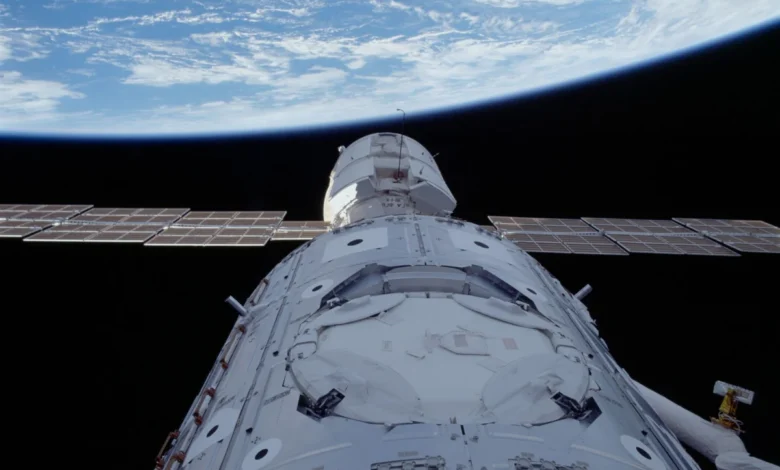
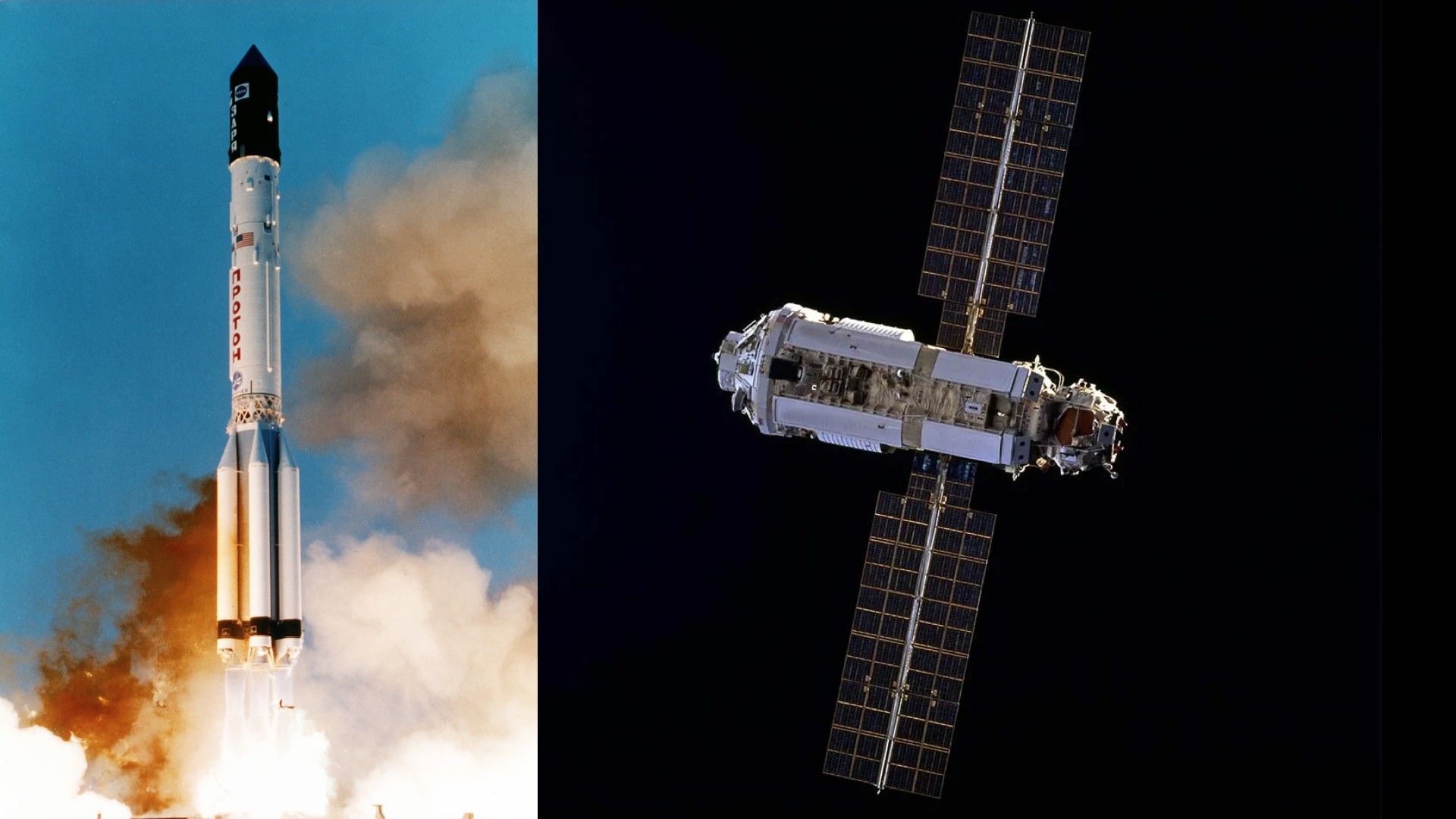
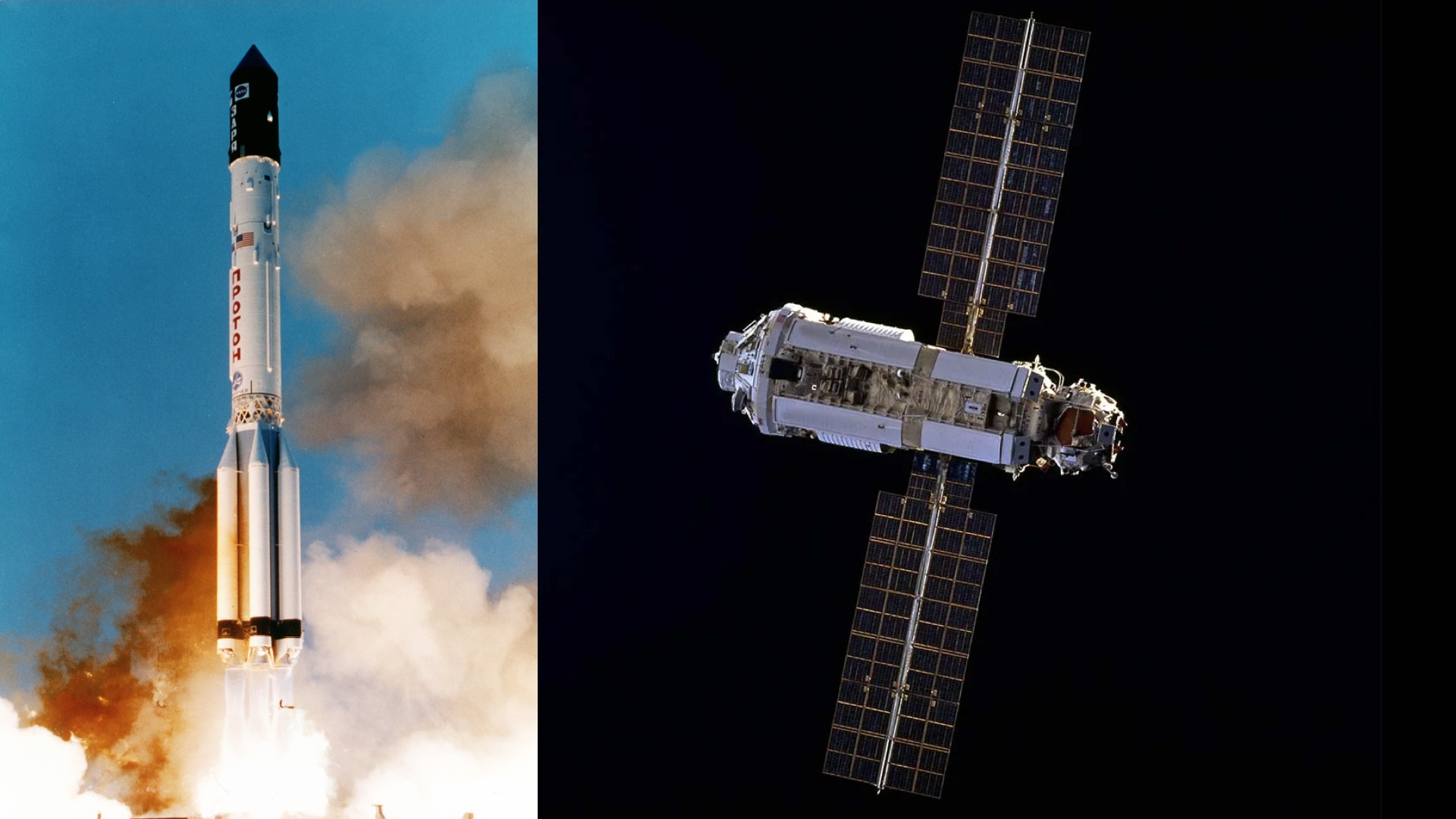
On November 20, 1998, a Russian Proton-K rocket ignited at the Baikonur Cosmodrome in Kazakhstan, carrying into the vacuum of space a 42,000-pound pressurized cylinder that would change the course of human exploration forever. This module, named Zarya—meaning "dawn" in Russian—was the first component of what would eventually evolve into the International Space Station (ISS). While the station today spans the width of an American football field and serves as a permanent, bustling laboratory for international researchers, its origins were humble, solitary, and marked by a complex geopolitical marriage of engineering necessity and fiscal pragmatism.
The Genesis of the Functional Cargo Block
The Zarya module, formally known as the Functional Cargo Block (FGB), was not merely a passive storage unit. It was designed as a robust, autonomous powerhouse capable of providing propulsion, attitude control, power distribution, and communications for the nascent orbital complex. Its design pedigree traced back to the Soviet-era Salyut space stations and the TKS spacecraft, reflecting decades of Russian expertise in long-duration orbital habitation.
The financial arrangement behind Zarya was a diplomatic landmark. Though constructed by the Khrunichev State Research and Production Space Center in Moscow, the module was funded entirely by NASA. The decision to contract a Russian firm was driven by a desire for cost-efficiency; internal estimates suggested that a comparable module built by American contractors, such as Lockheed Martin, would have cost more than double the $220 million price tag negotiated with the Russians. This collaboration signaled a new era of post-Cold War cooperation, transitioning from the space race of the 20th century to a model of shared international investment.
Chronology of the First Assembly
The launch of Zarya was the primary milestone in a high-stakes construction project that required precision ballet in low Earth orbit. Following its successful insertion into a stable orbit, the world turned its attention to the United States. Just two weeks later, on December 4, 1998, the Space Shuttle Endeavour launched on mission STS-88, carrying the American-made Unity node.
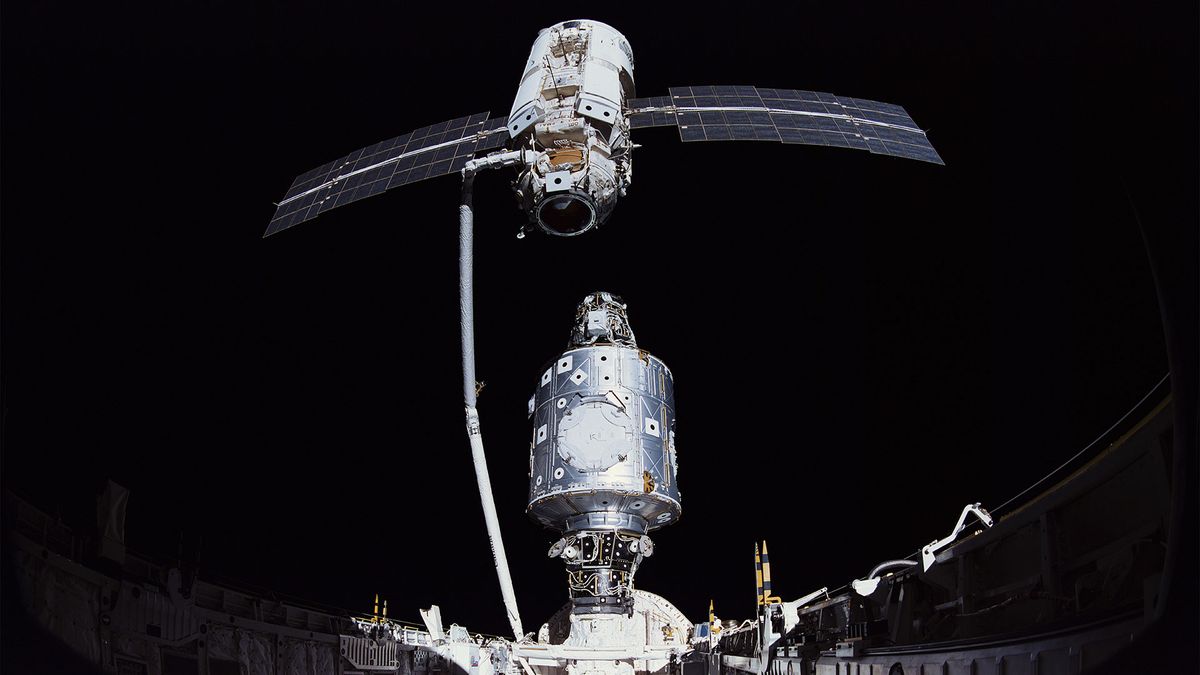
The assembly process was a feat of unprecedented engineering. Astronauts aboard the shuttle utilized the robotic Canadarm to grapple the Zarya module and maneuver it into position to meet the Unity node. Once the two modules were physically joined, the crew conducted three spacewalks to connect power and data cables, effectively "waking up" the station. This initial coupling proved that the disparate engineering standards of the American and Russian space programs could be harmonized, a prerequisite for the station’s future expansion.
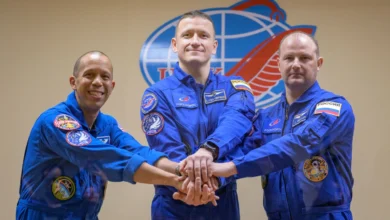
However, the station remained in a "dormant" state for nearly two years. It was not until the launch of the Zvezda service module in July 2000 that the ISS gained the life-support capabilities, living quarters, and command systems required to sustain a permanent human presence. Once Zvezda was docked, the station was officially ready for the first long-duration residents: the Expedition 1 crew, consisting of Commander Bill Shepherd and cosmonauts Yuri Gidzenko and Sergei Krikalev, who arrived in November 2000.
Technical Specifications and Evolutionary Growth
Zarya measures approximately 41 feet in length and 13.5 feet in diameter, offering about 1,650 cubic feet of internal volume. During its early years, it served as the sole brain and heart of the station. As the ISS grew, its role evolved. Today, Zarya is primarily utilized for storage and as an external fuel repository. Its docking ports remain critical, serving as the interface for Russian Progress cargo resupply vehicles and Soyuz crew transport craft, which continue to ferry astronauts and supplies to the station.
The growth of the ISS from a single module to a massive, multi-national orbital laboratory is unparalleled in the history of aerospace engineering. Following Zarya and Unity, the station expanded through the addition of massive, backbone-like truss segments, expansive solar arrays, and dedicated science laboratories like the European Space Agency’s Columbus module and the Japanese Experiment Module (Kibo).
The complexity of this expansion cannot be overstated. Because many of these components were too large to be tested together on the ground, the assembly in orbit was the first time they were physically integrated. This "build-as-you-go" methodology required a level of modular design that had never been attempted at such a scale.
Geopolitical and Scientific Implications
The International Space Station has served as a crucible for international diplomacy. At its peak, the partnership involved 15 nations, including the United States, Russia, Canada, Japan, and member states of the European Space Agency. This collaboration has endured through significant geopolitical turbulence, maintaining a rare, non-political channel for scientific cooperation.
From a scientific perspective, the implications of the ISS are profound. Research conducted aboard the station has pushed the boundaries of human knowledge in fields ranging from protein crystallization and fluid dynamics to the long-term physiological effects of microgravity on the human body. The station has essentially functioned as a testbed for the technologies required for future deep-space exploration, including missions to the Moon and Mars.
A New Era of Competition and Cooperation
While the ISS remains the gold standard for international collaboration, the landscape of space exploration is shifting. The emergence of the Tiangong space station, operated by the China National Space Administration (CNSA), represents the first modern rival to the ISS. As China successfully modularizes its own station, the global space community is witnessing a shift toward a more competitive environment in low Earth orbit.
Nevertheless, the legacy of Zarya remains unchallenged. It proved that human beings could successfully assemble a permanent, multi-module base in the harsh environment of space. It demonstrated that complex engineering could be managed across international borders and that the "dawn" of the ISS was not merely a technical achievement, but a social and diplomatic one.
Looking Toward the Future
As the ISS approaches its third decade of continuous occupation, conversations regarding its retirement are becoming increasingly prominent. NASA and its international partners have begun planning for the transition to commercial space stations, where private entities will likely lease space for research and manufacturing.
The decommissioning of the station will be as complex as its construction, requiring a controlled reentry to ensure that the massive structure does not pose a hazard to populations on the ground. However, even as the hardware eventually returns to Earth or is deorbited, the data and the collaborative framework established by the Zarya module will continue to influence aerospace endeavors for generations.
The Zarya module serves as a permanent reminder of a time when the world reached a consensus that the exploration of space was a mission too grand for any single nation to undertake alone. Every piece of equipment, every solar array, and every scientific breakthrough that has occurred on the ISS since 1998 owes its existence to that first, critical launch from the Baikonur Cosmodrome. The station stands as a monument to human ingenuity, a testament to what can be achieved when nations set aside their differences to build something that touches the stars.