The scientific community has long operated under the assumption that the gravitational waves detected by terrestrial observatories provide a direct, unvarnished window into the most violent collisions in the cosmos. However, a startling discovery regarding the signal designated GW231123 has challenged this premise, suggesting that what we perceive as "impossible" stellar events may actually be sophisticated optical illusions created by the curvature of spacetime itself.
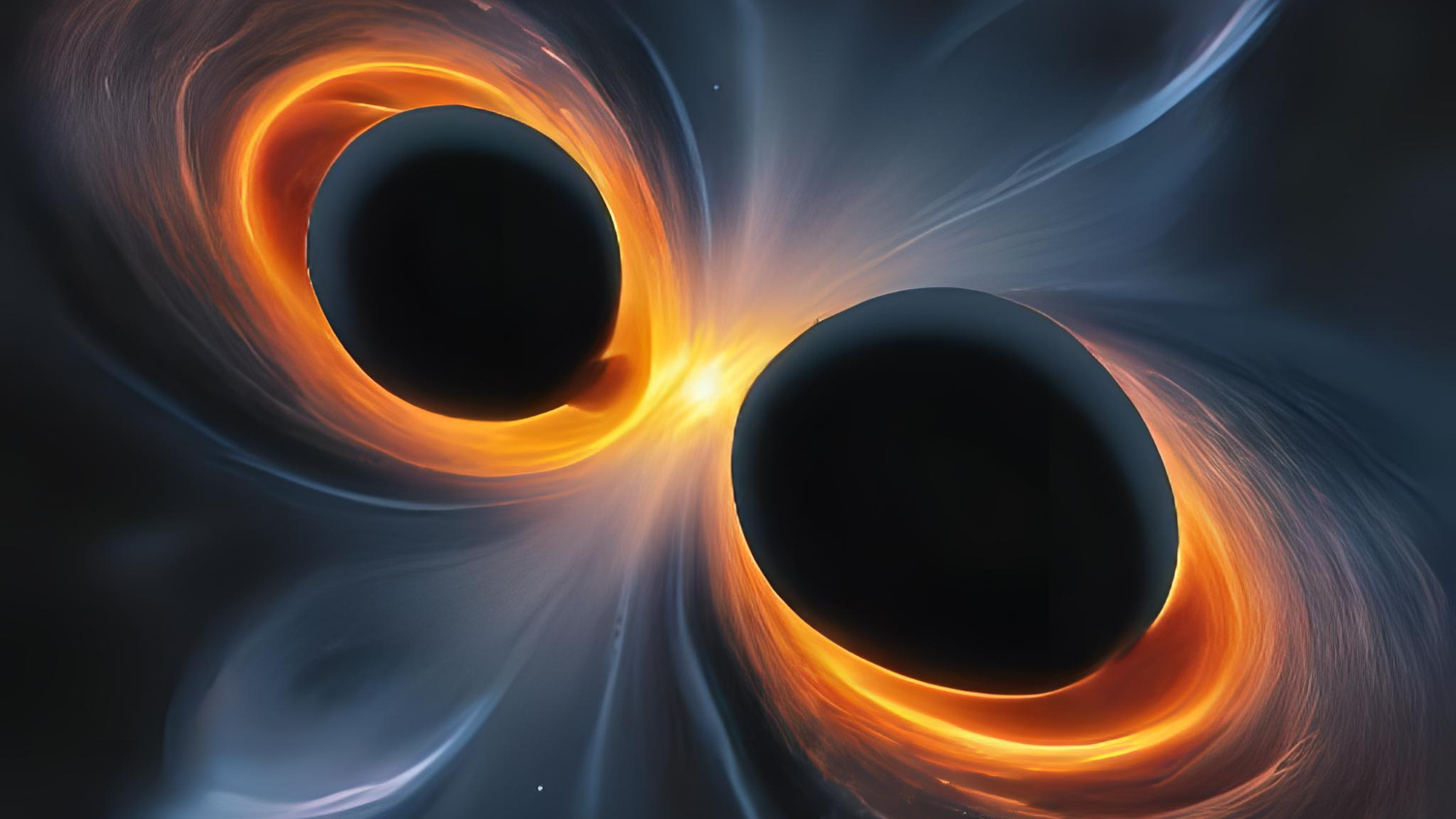
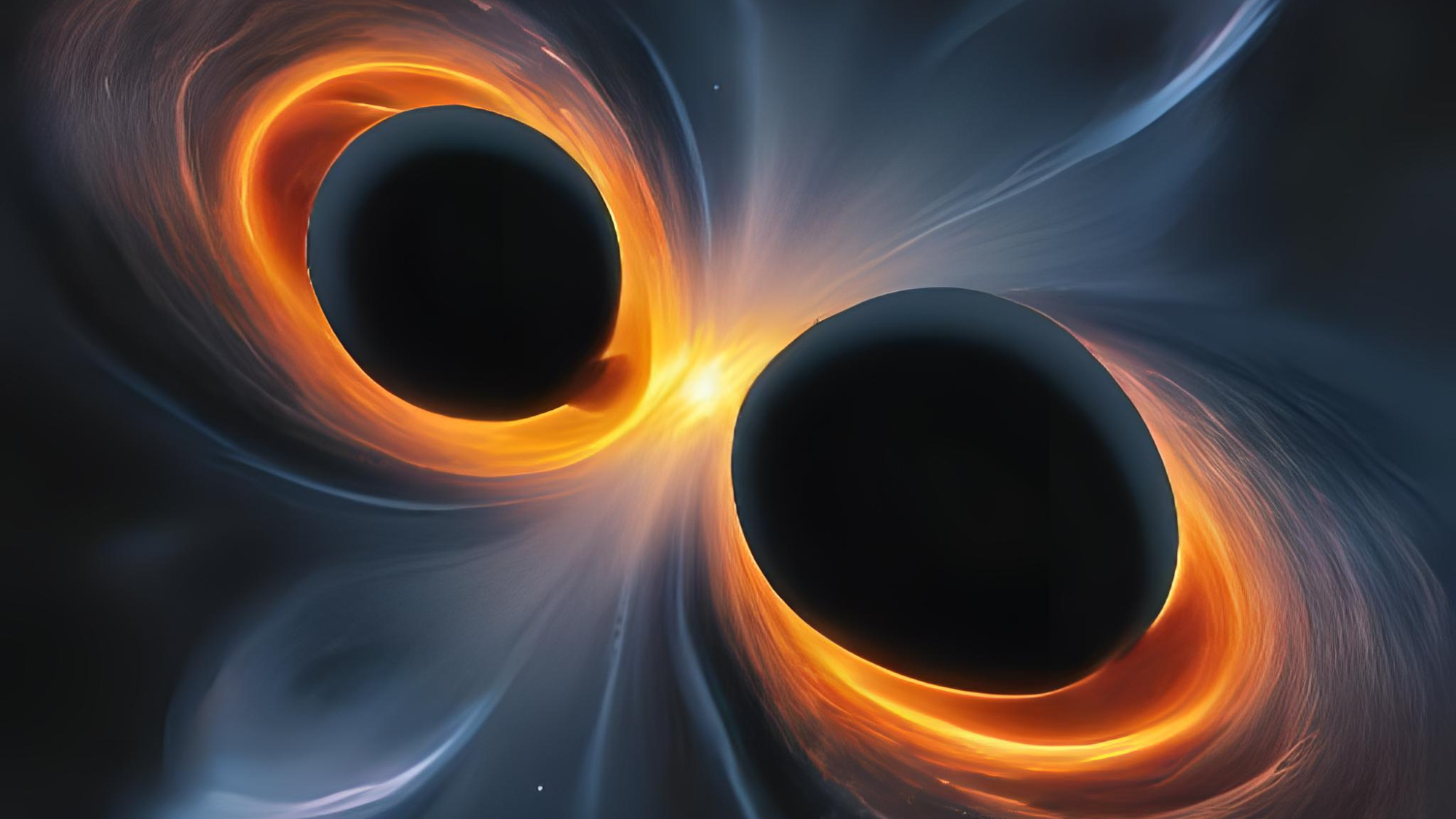
On November 23, 2023, the Laser Interferometer Gravitational-Wave Observatory (LIGO) registered a signal that immediately confounded astrophysicists. The detected ripples in spacetime, characteristic of a binary black hole merger, indicated the collision of two entities with masses that defied current stellar evolution models. Specifically, the data pointed to a primary black hole of approximately 140 solar masses colliding with a companion of 100 solar masses.
In the realm of stellar astrophysics, these figures are problematic. Standard models for the life cycle of massive stars typically struggle to produce black holes in the "mass gap"—a range where pair-instability supernovae are expected to completely destroy a star rather than leaving behind a black hole remnant. Furthermore, the signal suggested these massive objects were spinning at velocities that seemed physically inconsistent with their size, leading many to label the event "forbidden."
A New Perspective on the Impossible
The recent publication of research in the Astrophysical Journal Letters proposes a elegant solution: the black holes were not as massive as they appeared. By applying the principles of general relativity, a team of researchers led by members of the Albert Einstein Institute (AEI) has argued that the signal GW231123 was subject to gravitational lensing.
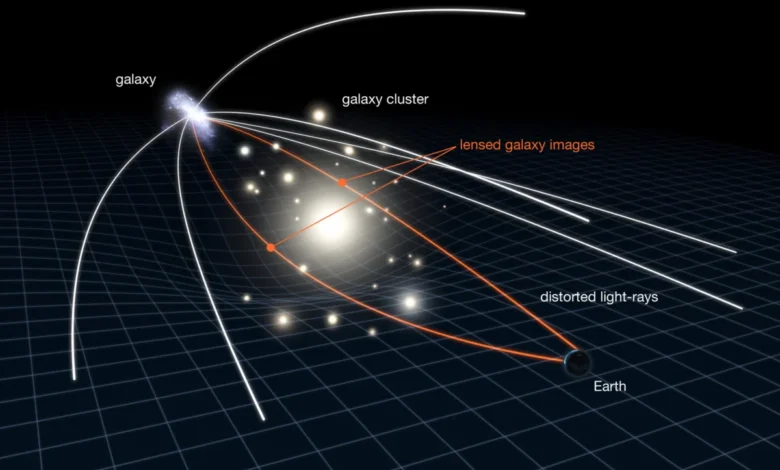
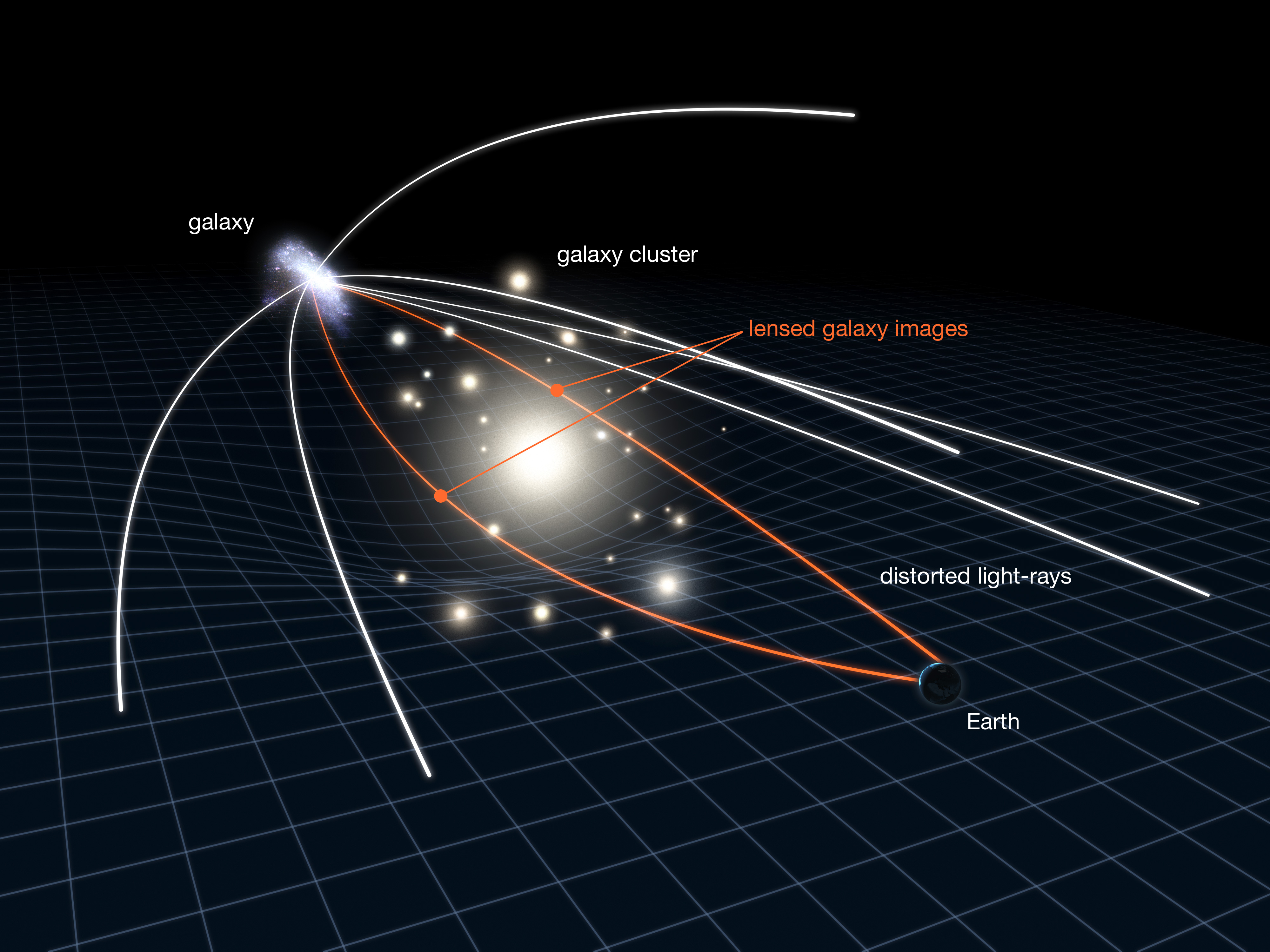
Gravitational lensing occurs when a massive foreground object—such as a compact stellar remnant, a wandering black hole, or even a dense globular cluster—sits between the source of a signal and the observer. As light or, in this case, gravitational waves pass near this foreground mass, the fabric of spacetime is warped, causing the signal to be deflected, magnified, and sometimes split.
When gravitational waves are lensed, their intensity is amplified, and their wave patterns are distorted. To a detector like LIGO, which interprets signal strength and frequency to calculate the mass of the source, this distortion can create a "mass inflation" effect. By re-modeling the event with the inclusion of a lensing source, the research team determined that the actual mass of the system was likely closer to 140 solar masses total, rather than the 240-solar-mass system initially reported. This revision brings the event back into alignment with standard, observable physical models and removes the need to explain the "forbidden" high-speed spins.
The Physics of the Illusion
To understand the significance of this finding, one must look at the foundation laid by Albert Einstein in 1915. General relativity posited that mass does not merely exist within space, but rather dictates the geometry of space and time. This curvature is what we experience as gravity.
For decades, astronomers have utilized this phenomenon to study the distant universe. By observing light from galaxies billions of light-years away as it bends around foreground galaxy clusters, researchers have gained access to deep-field images that would otherwise remain invisible. The application of this technique to gravitational wave astronomy is a relatively new frontier.
"Like light, gravitational waves can also be deflected, magnified and split into multiple signals by massive objects," noted Miguel Zumalacárregui, a group leader at the AEI. "For gravitational waves, diffraction and interference effects give us an additional way to identify and study lensed signals."
The research team developed a custom mathematical framework to simulate how a lens might alter the signal from GW231123. They found that if a compact object of roughly 190 to 850 solar masses—or a distributed structure like a globular cluster—were situated precisely between the merger and our solar system, the resulting data would match the anomalous readings recorded by LIGO.
Chronology of the Discovery
The identification of this "forbidden" event and its subsequent re-evaluation follows a rigorous scientific timeline:
- November 23, 2023: LIGO registers the gravitational wave signal GW231123. Preliminary data analysis suggests a collision between black holes of 140 and 100 solar masses, exceeding predicted limits.
- Late 2023 – Early 2024: Astrophysicists struggle to reconcile the high mass and high spin rates with existing stellar evolution theory, leading to a period of debate regarding the potential existence of "second-generation" black hole mergers or exotic physics.
- August 25, 2024: The research team publishes their findings in the Astrophysical Journal Letters, introducing the hypothesis that gravitational lensing accounts for the anomalous signal characteristics.
- Present: The astronomical community begins to integrate the potential for "lensing bias" into future gravitational wave detection protocols.
Implications for Future Astronomy
While the lensing hypothesis resolves the immediate conflict with stellar evolution models, it introduces a new set of questions. The most pressing involves the nature of the lens itself. Finding a compact, isolated object of 100 to 1,000 solar masses is a rare occurrence in the known galaxy, and such an object would be a significant discovery in its own right.
"The nature of the lens remains a major mystery in our analysis," Zumalacárregui stated. "Future work will need to establish whether such lenses can form, or whether an ensemble of lighter objects, including stars, can explain this event."
The implications of this study are profound for the field of gravitational wave astronomy. If a significant percentage of detected signals are being lensed, the current "catalog" of black hole mergers may be skewed. Astronomers may have been inadvertently measuring the magnification effects of the intervening universe rather than the intrinsic properties of the black holes themselves.
As detector sensitivity improves—through planned upgrades to LIGO, the Virgo interferometer, and the future development of the Laser Interferometer Space Antenna (LISA)—the ability to distinguish between a "true" high-mass merger and a lensed, lower-mass signal will become a standard diagnostic tool. This will allow for more precise mapping of the distribution of invisible matter throughout the cosmos, including dark matter and compact, non-luminous objects.
Broader Scientific Context
This finding serves as a testament to the maturation of gravitational wave science. In the years following the initial detection of gravitational waves in 2015, the field has transitioned from "discovery mode" to "precision diagnostics." Scientists are no longer merely observing that these events occur; they are beginning to understand the complex environmental factors that influence the data we receive.
The ability to look through the "lens" of the universe and correct for distortions is essential for the next generation of cosmological inquiry. By accounting for the interference of foreground structures, researchers can now more accurately determine the populations of black holes across different cosmic epochs, potentially shedding light on how the first stars in the universe evolved into the supermassive black holes that reside at the centers of galaxies today.
In conclusion, while the mystery of the "forbidden" merger appears to be solved, it has effectively opened the door to a more nuanced understanding of the universe. The "illusion" of GW231123 has forced a re-examination of how we interpret the subtle, invisible threads that connect the most massive events in existence, proving that in the vacuum of space, things are rarely as they seem at first glance. The pursuit of these signals will continue to serve as a cornerstone of modern physics, bridging the gap between theoretical relativity and observable reality.