Salesforce CEO Marc Benioff Declares the End of SEO While Internal Strategy Documents Affirm Its Continued Necessity


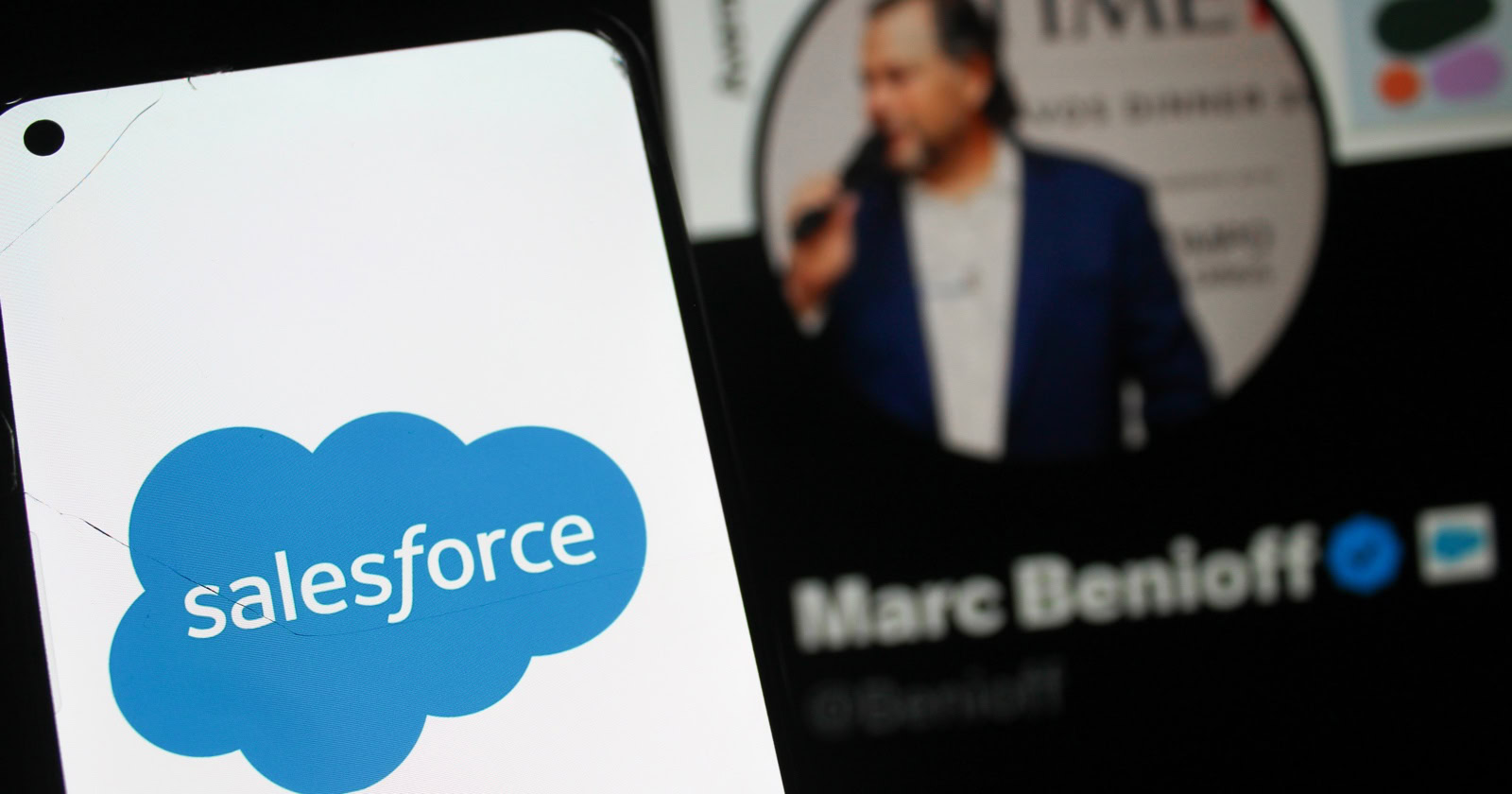
The digital marketing landscape experienced a moment of acute friction on November 18, when Salesforce CEO Marc Benioff took to X to publicly proclaim "Goodbye SEO." The provocative declaration was intended to draw attention to Palmata, an AI-driven platform recently integrated into the Salesforce ecosystem following the company’s acquisition of Contentful. Benioff’s assertion, which posited that the traditional search paradigm—characterized by clicks, referrals, and measurable analytics—is being rapidly eclipsed by AI assistants like ChatGPT, Claude, and Gemini, sparked an immediate and polarized response from the search engine optimization (SEO) community.
However, a closer examination of Salesforce’s own internal documentation reveals a significant divergence between the CEO’s marketing rhetoric and the company’s strategic guidance. While Benioff’s post suggested that the era of traditional search is effectively over, a dedicated SEO and AEO (Answer Engine Optimization) guide published by Salesforce in September explicitly identifies SEO as the foundational element of modern digital visibility. This contradiction highlights the growing tension between legacy search strategies and the emerging, opaque world of Generative AI-driven discovery.
The Genesis of the Conflict
The controversy stems from the marketing push for Palmata, a tool designed to monitor how brands are represented within AI-generated responses. In his social media commentary, Benioff argued that consumer behavior has undergone a fundamental shift: instead of traversing search engine results pages (SERPs) and navigating to websites, users are now directly querying AI models to make purchasing decisions.
"No click. No referral. Nothing in your analytics," Benioff stated, characterizing this shift as a move toward a "zero-click" environment where the traditional funnel is bypassed. Palmata serves as a response to this shift by providing businesses with insights into how AI assistants describe their brand, offering recommendations to influence those outputs, and simulating the impact of such changes before they go live.
Chronology of the Salesforce-Palmata Integration
To understand the strategic positioning of this debate, one must look at the recent timeline of events involving Salesforce and its new AI assets:
- June 2024: Contentful introduces Palmata to the market, positioning it as an essential tool for navigating the burgeoning AI-search landscape.
- September 1, 2024: Salesforce officially completes its acquisition of Contentful, bringing Palmata into its Marketing Cloud suite.
- September 11, 2024: Salesforce publishes its comprehensive guide on SEO and AEO. Authored by Senior Director of SEO Graham Hardt, the document emphasizes that SEO is "not going away" and remains the core pillar for any digital strategy.
- November 18, 2024: Marc Benioff posts his "Goodbye SEO" statement, signaling a pivot in the company’s public-facing narrative toward AEO as the primary driver of future growth.
The Duality of Salesforce’s Messaging
The disconnect between the CEO’s public declarations and the internal guidance provided to customers is striking. The Salesforce guide, which is linked directly from the Palmata FAQ, maintains a balanced view that contradicts the "Goodbye SEO" headline.
In the guide, Graham Hardt articulates that SEO and AEO are not mutually exclusive, but rather represent "two visibility layers for the same audience." The documentation argues that while AEO helps brands gain traction in AI responses, these models are trained on the high-quality, structured content that is produced specifically because of SEO best practices. By dismissing SEO, the company risks undermining the very content pipeline required to feed the AI models that Palmata aims to optimize.
Industry Skepticism: The SEO Community Responds
The backlash from the SEO community was swift and multifaceted. Many practitioners argued that Benioff’s comments conflated the evolution of search with the obsolescence of search.
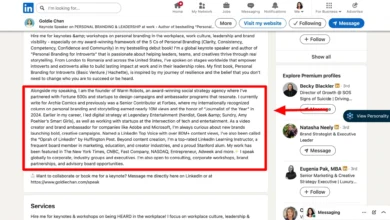
Aleyda Solis, founder of Orainti, challenged the binary narrative. In a public response, she noted that AI search fundamentally relies on the same technical and content fundamentals that have governed the web for decades. According to Solis, AI search optimization is an evolution of SEO, not a replacement for it. She emphasized that monitoring AI brand perception—the core function of tools like Palmata—is a reactive metric, whereas traditional SEO remains a proactive engine for brand growth and traffic acquisition.
Pedro Dias, a former Google product manager, offered a more critical perspective on the industry’s obsession with "traffic." Dias suggested that the anxiety surrounding the death of SEO often stems from a misunderstanding of what the discipline provides. He argued that SEO has never been solely about traffic, but rather about relevance and visibility in the places where users make decisions.
Others, such as Lily Ray, expressed exhaustion regarding the "gold rush" mentality currently pervading the AI tools market. Ray suggested that the market for AI optimization tools is becoming rapidly oversaturated, leading to a "noise-to-signal" problem for marketing executives who are being told they must abandon their existing digital foundations to adopt the latest AI-monitoring platforms.
Data and Reality: The "Foundation" Argument
Industry data consistently shows that while AI search is growing, it has not yet replaced the utility of standard search engines for complex, high-intent transactions. Research suggests that for many industries, organic search remains the single largest driver of revenue.
The rationale for maintaining a robust SEO strategy alongside AEO initiatives is supported by three primary factors:
- Source Attribution: AI models often struggle with direct source attribution. Brands that prioritize SEO ensure they have high-authority content that is more likely to be cited by AI models, which rely on trusted data sources to reduce "hallucinations."
- Strategic Redundancy: Relying solely on AI visibility exposes a brand to the volatility of model updates. SEO provides a diversified traffic source that is controlled by the brand rather than the platform owner.
- Data Quality: AI models are not closed loops. They ingest the entirety of the open web. If a company stops investing in SEO, the quality of its indexable content degrades, eventually leading to a drop in both organic traffic and AI-generated brand mentions.
Implications for Marketing Executives
For marketing executives, the message from Salesforce is confusing. On one hand, they are being told by the CEO to shift budgets toward AI visibility platforms like Palmata. On the other, they are being told by Salesforce’s own technical experts that SEO is the foundation upon which that AI visibility is built.
The reality, as outlined in the Salesforce SEO and AEO guide, is that the most successful organizations will be those that track both sets of metrics. This involves a bifurcated approach: maintaining high-performance technical SEO to ensure discoverability and indexability, while simultaneously deploying tools like Palmata to monitor brand sentiment and visibility within LLM-based responses.
Looking Ahead: The Future of Discovery
The "Goodbye SEO" rhetoric likely serves a dual purpose: it generates buzz for a new product, and it taps into the genuine anxiety that many stakeholders feel regarding the disruption caused by AI. However, history suggests that foundational digital marketing practices rarely disappear entirely; they merely adapt to new interfaces.
Just as mobile optimization became a facet of SEO rather than its replacement, AEO is likely to become a facet of the broader organic visibility umbrella. The long-term winners in this space will be the brands that do not abandon their SEO efforts, but rather leverage them to dominate the inputs that define the future of AI. As the dust settles on this debate, the consensus among technical practitioners remains clear: until AI models can generate revenue without human input, the human-centric principles of SEO will continue to dictate the health of the digital economy.