Cosmic vampire feeding on a massive star explains why AT 2016blu faked 27 supernova explosions

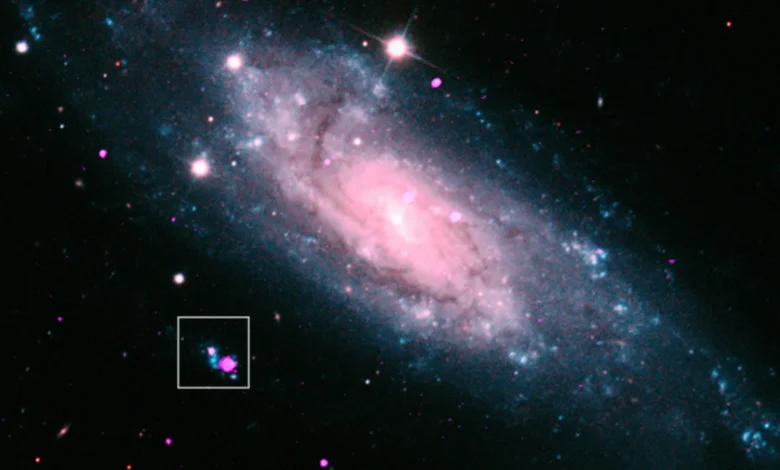
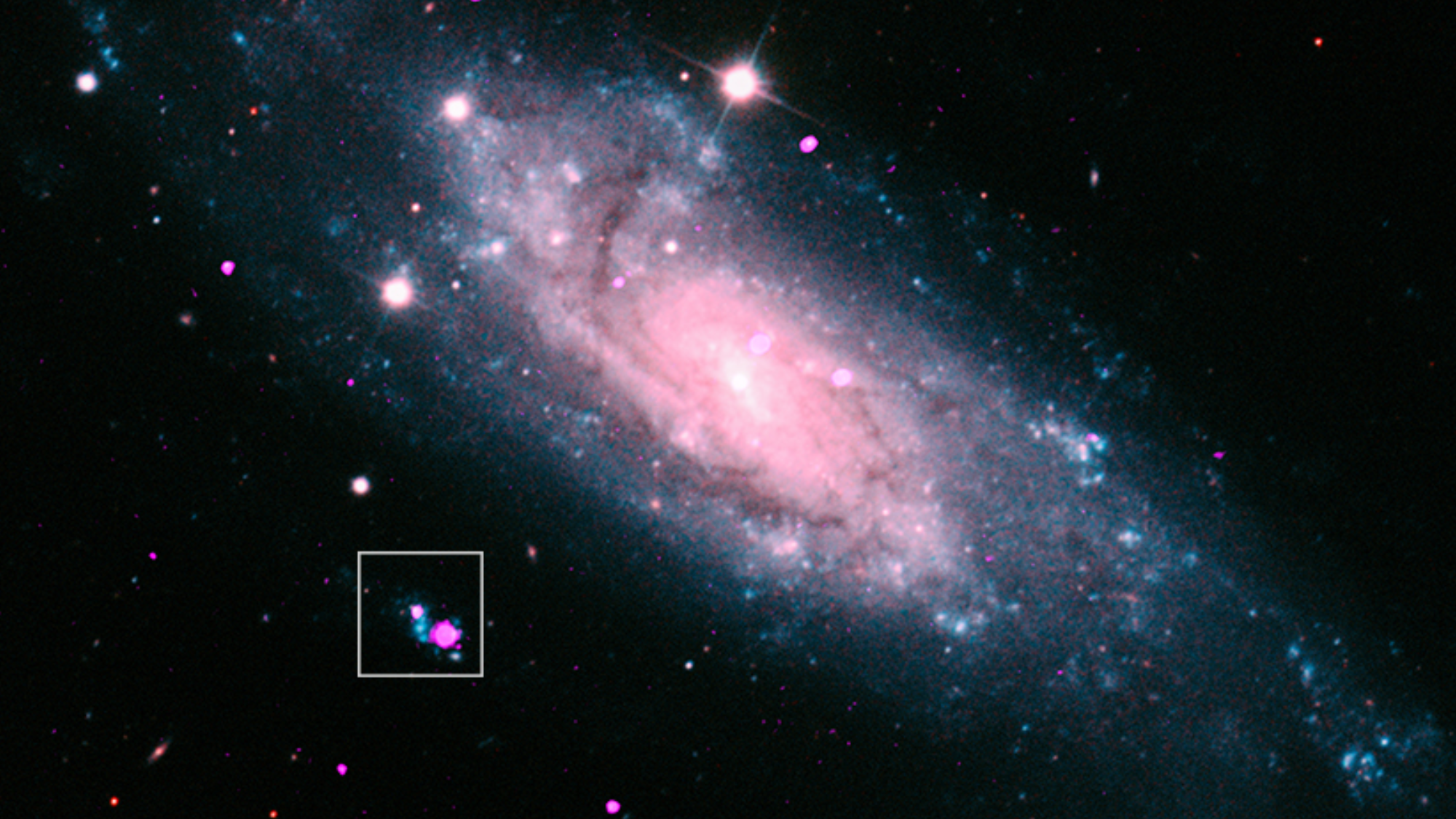
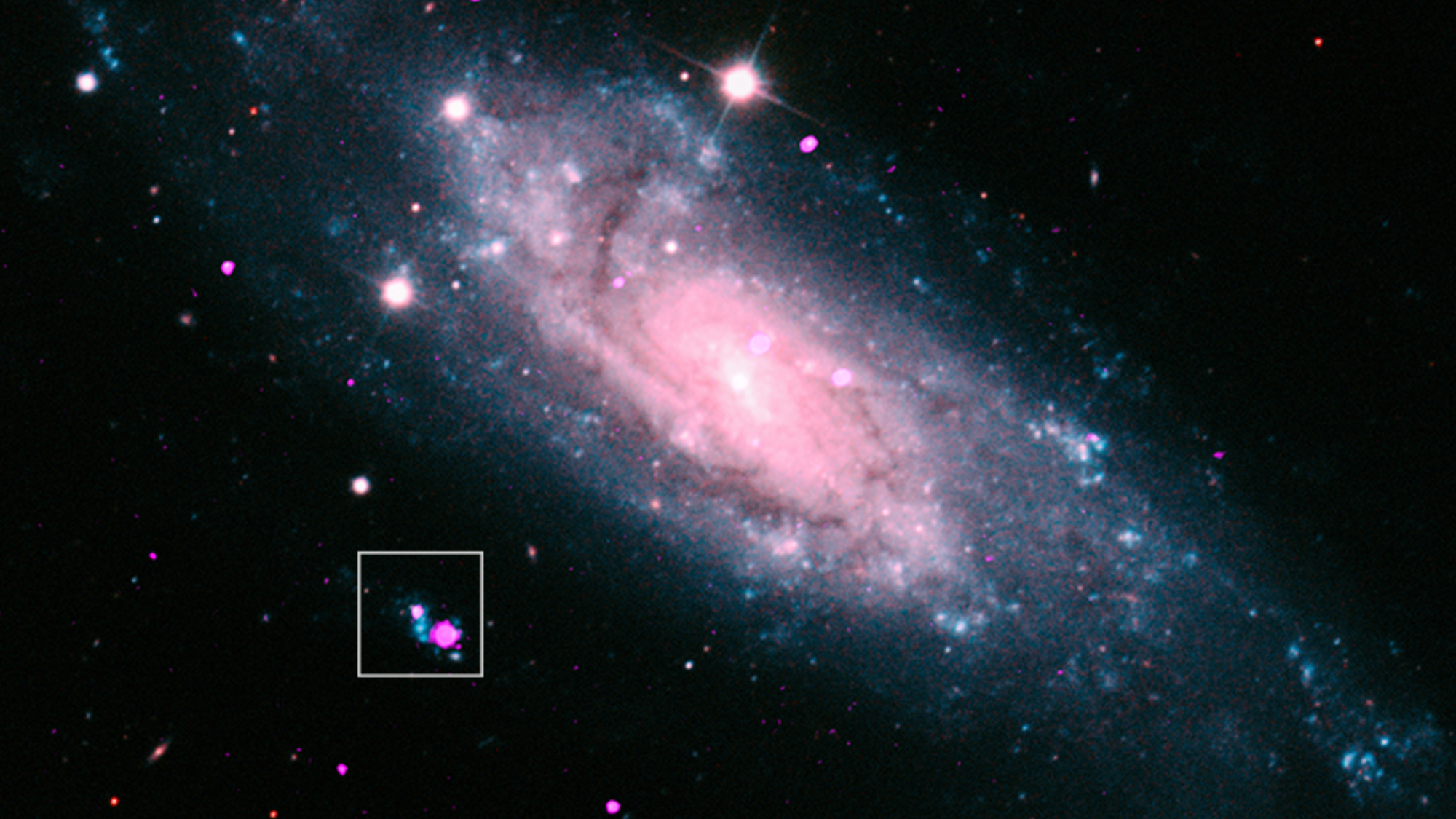
For over a decade, astronomers have been perplexed by a recurring celestial event in the spiral galaxy NGC 4559, located 25 million light-years away in the constellation Coma Berenices. A star, designated AT 2016blu, has repeatedly brightened and faded with a rhythmic, 113-day periodicity. Each flare-up bore the visual hallmarks of a supernova—a massive, terminal explosion—yet the star remained resolutely intact after every outburst. Now, new data from NASA’s Chandra X-ray Observatory has finally unmasked this "supernova imposter," revealing that the star is being subjected to a violent, periodic feeding frenzy by a compact, high-gravity companion: a black hole or a neutron star.
The Mystery of the Persistent Imposter
The discovery of AT 2016blu initially followed the standard protocols of time-domain astronomy. When it was first observed in 2012, researchers categorized it as a potential supernova candidate. Supernovae represent the catastrophic death of massive stars, occurring when nuclear fusion in the stellar core ceases and the object collapses under its own gravity. However, the transient nature of AT 2016blu defied this model. While a true supernova is a one-time event that permanently destroys the progenitor star, AT 2016blu continued to cycle through periods of intense brilliance followed by comparative darkness.
These "supernova imposters" have long been a subject of intense debate in astrophysics. They are typically associated with Luminous Blue Variables (LBVs)—stars of immense mass and luminosity that are intrinsically unstable. These stars frequently shed their outer layers in massive eruptions, creating the optical illusion of a supernova. However, the regularity of AT 2016blu’s 113-day cycle suggested that something more complex than simple stellar instability was at play. The mechanism behind these recurring pulses remained elusive until a team of researchers, led by Mojgan Aghakhanloo of the University of Virginia, managed to coordinate high-resolution X-ray observations with the star’s outburst cycle.
Chronology of the Discovery
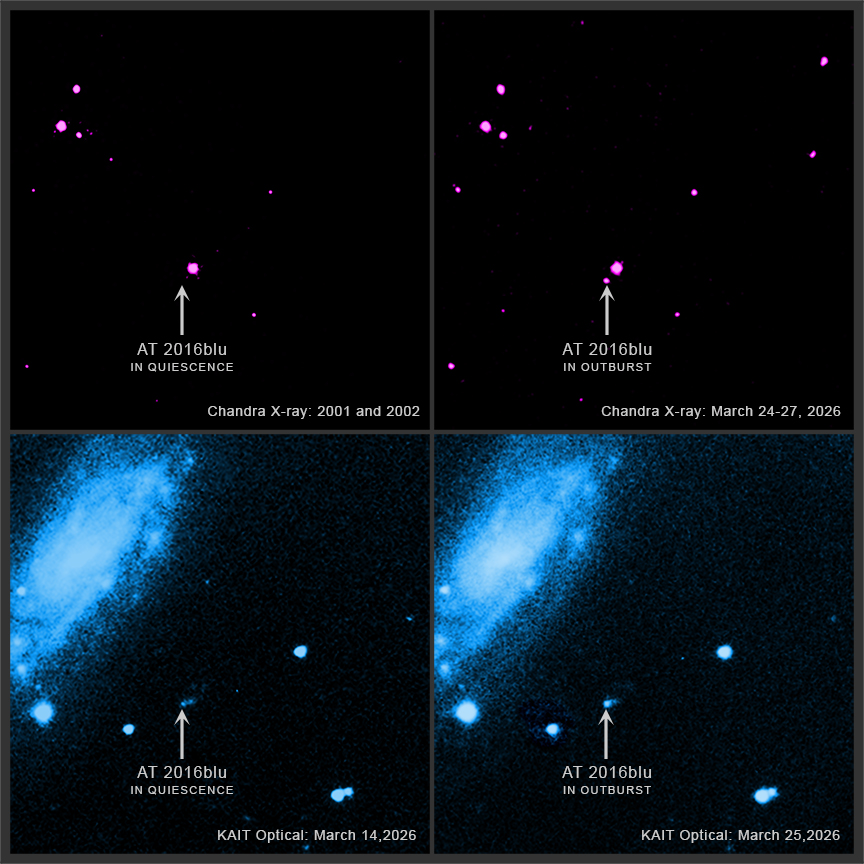
The investigation into AT 2016blu relied on archival data and strategic observation planning. Chandra had previously captured data in the vicinity of NGC 4559 in 2001 and 2002, during which the object appeared quiescent, showing no signs of the dramatic periodic behavior seen in later years. The turning point occurred when the team realized that the optical light curves required a corresponding X-ray signature to confirm a binary interaction.
In March 2026, the team successfully utilized the Chandra X-ray Observatory to monitor the system during an expected outburst. The results were conclusive: a powerful surge of X-ray radiation was detected, perfectly synchronized with the optical brightening. This observation confirmed that the energy release was not the result of a single, localized explosion, but rather an accretion-driven phenomenon. The data indicates that the system is a binary, consisting of an LBV and a compact object—either a neutron star or a stellar-mass black hole—orbiting each other on a highly elliptical path.
The Mechanism of a Cosmic Vampire
The "vampiric" nature of the system arises from the gravitational interplay between the two stars. As the compact object travels along its 113-day elliptical orbit, it periodically makes a close approach to the LBV. During this periastron passage, the gravitational pull of the compact object becomes sufficient to strip significant quantities of stellar material from the outer atmosphere of the larger, unstable blue star.
This stolen material does not simply fall into the compact object; instead, it is accelerated into a swirling, high-energy accretion disk. The friction within this disk reaches extreme temperatures, causing it to glow with intense X-ray radiation. This process explains the X-ray detection made by Chandra. Furthermore, these X-rays serve as a "trigger" for the optical display. The high-energy radiation from the accretion disk irradiates and heats the surrounding envelope of gas—material previously ejected by the LBV—causing it to ionize and glow brilliantly in visible light. This secondary effect is what telescope observers on Earth mistake for a supernova explosion.
Quantitative Analysis and Mass Transfer
The scale of this mass transfer is significant by astronomical standards. Calculations performed by the research team suggest that the compact object siphons off at least 440 billion trillion pounds of material from the LBV during each orbital cycle. While this quantity is staggering, it represents a mere 800 millionths of the sun’s total mass.
Given that the LBV is estimated to be at least 33 times the mass of the sun, it can survive this repeated predation for a considerable period. However, the rate of accretion is remarkably high, exceeding the theoretical "Eddington limit" for a neutron star. The Eddington limit defines the maximum luminosity a body can achieve when there is a balance between the inward force of gravity and the outward force of radiation pressure. By exceeding this limit, the system confirms that the accretion process is inherently unstable and violent, naturally leading to the dramatic fluctuations observed by astronomers.
Implications for Ultra-Luminous X-ray Sources
The findings regarding AT 2016blu carry broader implications for our understanding of Ultra-luminous X-ray (ULX) sources. ULXs are objects that emit X-rays at rates far exceeding those of typical X-ray binaries. Their exact nature has been a topic of speculation for decades, with some theories suggesting they are intermediate-mass black holes, while others posit they are neutron stars undergoing extreme accretion.
AT 2016blu functions as a "Rosetta stone" for this class of objects. By demonstrating that an LBV can host an accretion-driven ULX, the study provides a concrete model for how such systems evolve. It establishes a link between the unstable lives of massive binary stars and the observed X-ray signatures of the wider galaxy. While another object, SN 2010da, has been identified as a similar impostor, that system involves a red supergiant companion rather than a compact object. The case of AT 2016blu, therefore, remains a unique and critical benchmark for researchers seeking to define the diversity of binary interactions in the universe.
Future Research and Scientific Context
The research, published in The Astrophysical Journal on November 9, marks a significant milestone in high-energy astrophysics. By utilizing the unique timing capabilities of the Chandra X-ray Observatory, the University of Virginia team has provided a clear, evidence-based explanation for a phenomenon that has puzzled the scientific community for 15 years.
This discovery highlights the necessity of multi-wavelength astronomy. While optical telescopes provided the initial warning of an "event," it was only through the lens of X-ray data that the underlying physics could be disentangled. As astronomers continue to monitor the night sky for transient events, the lessons learned from AT 2016blu will be essential in differentiating between true terminal explosions and the complex, vampiric relationships of binary systems. The team’s work underscores that in the vast, often chaotic environment of deep space, some of the most dramatic "explosions" are not the ends of lives, but the ongoing struggles of stars trapped in a gravitational dance.
The successful identification of this system opens new avenues for exploring the late-stage evolution of massive binary stars. As more transient sources are detected by modern survey telescopes, the model established by the researchers at the University of Virginia will likely serve as a foundational template for identifying other "cosmic imposters," potentially revealing a population of similar, previously misunderstood stellar systems across the local universe.