In an era defined by rapid technological disruption, the global labor market is undergoing a fundamental structural shift. As artificial intelligence and machine learning protocols automate routine cognitive and manual tasks, the economic value of uniquely human capabilities—empathy, complex communication, and strategic advocacy—has reached an all-time high. According to the World Economic Forum’s Future of Jobs Report 2025, the most sought-after competencies for the coming decade are no longer purely technical; they are deeply social. Cognitive flexibility, leadership, and emotional intelligence are now the primary benchmarks for professional longevity. Yet, these soft skills remain notoriously difficult to quantify and integrate into standardized educational curricula, which often prioritize rote memorization over interpersonal mastery.
Against this backdrop, programs like TED-Ed Student Talks have emerged as a critical pedagogical intervention. By providing a structured environment for students aged 6 to 18, the program seeks to bridge the gap between abstract academic knowledge and the practical, real-world application of communication. By formalizing the process of idea development—from initial concept to public discourse—the initiative aims to equip the next generation with the tools necessary to navigate an increasingly automated professional landscape.
A Chronology of Skill Development
The evolution of a student speaker within this framework is not a linear process, but rather a cyclical journey of discovery, refinement, and delivery. The program operates on a structured timeline that typically spans a full academic semester.
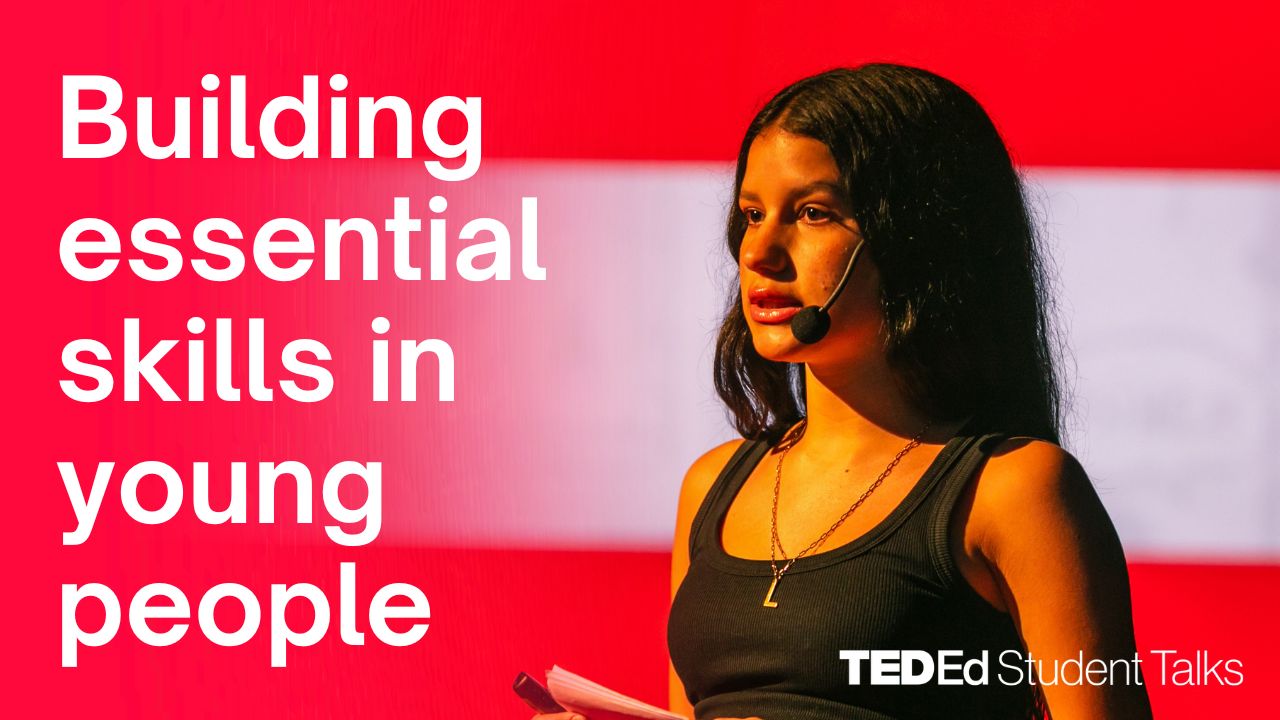
In the first phase, students undergo an ideation period. This stage is designed to encourage personal inquiry, forcing participants to identify topics that are both meaningful to their own lived experiences and relevant to a broader audience. Unlike traditional essay writing, this phase emphasizes internal reflection.
The second phase involves collaborative peer feedback. By presenting early drafts of their ideas to classmates, students learn to iterate based on constructive criticism. This mirrors the professional environment where projects are rarely completed in isolation. The feedback loop forces students to detach from their initial drafts, fostering the intellectual humility required to refine complex ideas for clarity.
The final phase is the public dissemination of these ideas. Whether through a stage presentation or a digital recording, the act of performance serves as the capstone of the program. It is here that the synthesis of research, emotional intelligence, and rhetoric is tested.
The Quantifiable Value of Human-Centric Skills
The demand for these skills is supported by robust data. A recent analysis of labor trends by LinkedIn indicates that 92% of talent professionals report that soft skills are equally or more important than hard skills when hiring. The implications for the educational sector are profound. If the modern economy rewards the ability to influence and inspire, schools must move beyond the classroom as a site of passive information consumption.
The TED-Ed model functions by treating students as active contributors to a global knowledge economy. By shifting the focus from "what" to learn to "how" to communicate, the program addresses the growing skills gap that employers identify as a major barrier to productivity. Educators involved in the program have noted that students who participate in structured speaking engagements demonstrate higher levels of student agency, a metric that correlates strongly with long-term career success and civic participation.
Empathy as a Strategic Competency
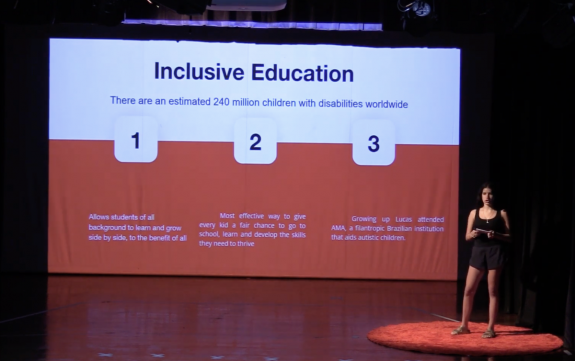
While often dismissed as a secondary trait in corporate settings, empathy is increasingly recognized as a key driver of team performance. In the context of Student Talks, empathy is not an abstract concept but a practiced mechanism. When students like Lia Costa choose to present on the nuances of Autism Spectrum Disorder, they are performing a high-level cognitive task: perspective-taking.
Costa’s approach, which involved integrating her cousin’s personal narrative and artistic output into her presentation, serves as a case study in how to translate human experience into actionable awareness. By humanizing a condition that many in her audience understood only as a clinical diagnosis, she successfully shifted the conversation from stigma to compassion. This ability to reframe complex social issues for a lay audience is a high-value skill in journalism, public policy, and corporate leadership.
Communication in the Age of Complexity
One of the most persistent challenges for modern students is the "curse of knowledge"—the inability to explain a complex topic to those who lack their specific expertise. Owen Hawthorne’s work on CRISPR and genetic oncology illustrates the program’s focus on translating dense scientific research into accessible rhetoric. By framing CRISPR not merely as a technical procedure but as a source of societal hope, Hawthorne demonstrated the ability to bridge the gap between laboratory data and public perception.
This aligns with the findings of the 2025 Future of Jobs Report, which identifies "analytical thinking and innovation" alongside "complex problem-solving" as essential workforce pillars. Lareen Abdelwahed, another program participant, emphasized that the process of "un-tangling" emotions—converting internal, subjective feelings into a coherent narrative—was perhaps the most rigorous aspect of her development. This exercise in self-articulation is a prerequisite for effective leadership; an individual who cannot communicate their own internal state will struggle to manage the internal states of a team.
Advocacy and Civic Agency
The transition from student to advocate marks the final stage of the program’s pedagogical objective. When students like Arush P and Kira Aryslanova speak on issues such as environmental sustainability and linguistic diversity, they are practicing the mechanics of democratic participation.
Arush P’s reflection on his experience—noting that his ideas transformed from private concerns into "catalysts for collective resilience"—underscores the program’s goal of fostering civic agency. Research on youth civic engagement suggests that when students feel their voices carry tangible weight in the public sphere, they are significantly more likely to engage in community service and democratic processes as adults. By providing a platform where students are taken seriously, the program legitimizes their role as stakeholders in the future of the planet.
Professional and Institutional Implications
The broader implications of this pedagogical shift cannot be overstated. As AI systems become more proficient at data processing and pattern recognition, the human "premium" will be found in our ability to synthesize information with emotion, purpose, and moral clarity.
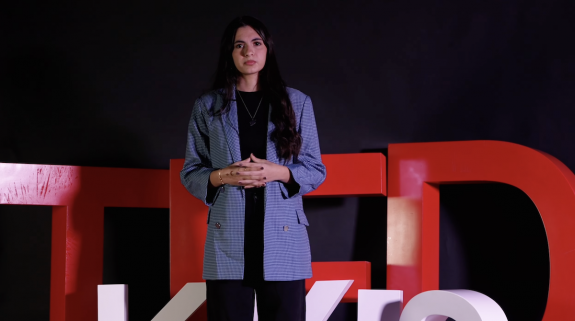
Critics of traditional education have long argued that the school system is stuck in an industrial-age model that prizes obedience and standardized output. Programs like TED-Ed Student Talks offer a template for a post-industrial education, where the goal is to cultivate "thinkers and speakers" rather than "processors."
For educators looking to implement similar frameworks, the takeaway is clear: structure is essential. The success of the Student Talks program is not derived from the act of speaking itself, but from the scaffolding provided by the program’s guidelines. By standardizing the process of creative expression, educators can help students navigate the anxiety of public performance while ensuring that the resulting discourse is grounded in research and logical structure.
Conclusion
As we look toward the 2030s, the educational landscape will likely continue to bifurcate. On one side, we will see an increasing reliance on AI-assisted personalized learning for hard-skill acquisition. On the other, we will see a heightened emphasis on human-centered forums that facilitate the development of the "soft" skills that machines cannot replicate.
The students who emerge from these programs are not just better speakers; they are better listeners, more analytical thinkers, and more compassionate citizens. In a world where information is abundant but meaningful connection is scarce, the ability to articulate an idea with clarity and empathy is arguably the most powerful tool an individual can possess. Through initiatives that challenge students to step onto the stage, we are not just preparing them for the workforce—we are preparing them for the world.