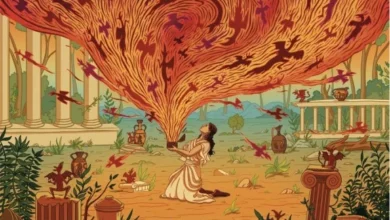
The enduring legacy of Homer’s Odyssey remains a cornerstone of Western literature, providing a narrative framework that has influenced storytelling for nearly three millennia. As audiences continue to engage with contemporary adaptations of Greek mythology, interest in the historical, scientific, and cultural underpinnings of these ancient texts has seen a marked resurgence. To better understand the complexities of this 12,000-line epic poem, scholars and educators have compiled a series of analyses designed to bridge the gap between ancient legend and modern comprehension. This report examines the historical validity, mythological framework, and enduring cultural impact of the Odyssey and the broader Trojan cycle.
Historical Context and the Homeric Question
The Odyssey, attributed to the poet Homer, is estimated to have been composed in the 8th century BCE. It serves as a sequel to the Iliad, detailing the arduous decade-long journey of the Greek hero Odysseus as he attempts to return to his home in Ithaca following the fall of Troy. The work is not merely a travelogue of monsters and deities; it is a profound exploration of human endurance, societal structure, and the consequences of hubris.
Historians often refer to the "Homeric Question," a scholarly debate concerning the authorship, date, and composition of the poems. Current consensus suggests that the Odyssey emerged from a long-standing oral tradition. These stories were likely recited by bards for generations before being transcribed into the text known today. The historical reality of Troy, long considered a purely mythological construct, was bolstered by the 19th-century excavations of Heinrich Schliemann at Hisarlik in modern-day Turkey. Evidence suggests that the city of Troy existed in various layers, with "Troy VI" and "Troy VIIa" being the primary candidates for the site of the legendary conflict, likely destroyed by war or seismic activity around 1180 BCE.
A Chronological Breakdown of the Trojan Cycle
The narrative trajectory of the Trojan cycle provides the necessary context for understanding the Odyssey. The chronology generally follows this progression:
- The Origins of Conflict: The abduction of Helen, queen of Sparta, by Paris of Troy, serves as the casus belli for the ensuing ten-year siege.
- The Siege of Troy: Chronicled in the Iliad, this period focuses on the wrath of Achilles and the eventual tactical victory of the Greeks.
- The Stratagem of the Trojan Horse: As detailed in classical accounts, the Greeks utilized a ruse—a massive wooden horse—to infiltrate the city walls, leading to the destruction of Troy.
- The Nostos (Return): The Odyssey begins here, focusing on the Greek heroes’ attempts to return home. Odysseus faces divine interference from Poseidon, resulting in his ten-year displacement.
- Re-establishment of Order: The poem concludes with Odysseus reclaiming his throne, asserting his identity through trial, and restoring stability to the island of Ithaca.
Scientific and Archaeological Perspectives
The integration of science into the study of mythology has provided new insights into why these stories have persisted. Researchers like Matt Kaplan have explored the possibility that the "monsters" described by Homer—such as the Cyclops or the cannibalistic Laestrygonians—may have been metaphorical representations of encounters with unknown foreign cultures or prehistoric megafauna, such as the Deinotherium.
Furthermore, the geological landscape of the Mediterranean played a crucial role in shaping these narratives. Navigational hazards, including the unpredictable currents of the Strait of Messina (often associated with Scylla and Charybdis), provided a tangible basis for the supernatural obstacles faced by Odysseus. By analyzing volcanic activity and tectonic shifts in the region, geologists have suggested that some of the more catastrophic events described in Greek myth may mirror actual environmental disasters that plagued the Bronze Age civilizations.
Mythological Archetypes and Societal Lessons
The Odyssey functions as an instructional manual for the values of the ancient Greek world, specifically the concept of xenia—the law of hospitality. The success or failure of various characters often hinges on their adherence to this social contract.
For instance, the myth of Baucis and Philemon serves as a stark warning regarding the treatment of strangers. In this narrative, Zeus and Hermes test a village by disguising themselves as beggars; only one elderly couple provides them with hospitality. This archetype underscores the cultural importance placed on respecting travelers, a theme that reverberates through the Odyssey when Odysseus is tested by various hosts throughout his journey.
Similarly, the tragedy of the priest Laocoön, who famously warned against the Trojan Horse, highlights the intersection of fate and human agency. His subsequent punishment by the gods—often interpreted as a consequence of his interference in a divine plan—illustrates the fatalistic nature of the Homeric worldview.
Modern Implications and Educational Initiatives
The continued study of the Odyssey is supported by digital initiatives that aim to modernize access to classical literature. Educational platforms, such as TED-Ed, have facilitated this by producing multimedia content that deconstructs the poem into manageable, thematic segments. By utilizing video essays, educators can present complex mythological concepts—such as the nature of the Underworld, as described in Virgil’s Aeneid and mirrored in Homeric tradition—to a wider, younger audience.
The pedagogical value of these studies is significant. By analyzing the Odyssey, students engage with fundamental questions regarding justice, identity, and the nature of the "hero." Recent analyses suggest that the modern fascination with these stories is rooted in their psychological depth; Odysseus is not a static character but one who experiences growth, trauma, and moral conflict, making him highly relatable to contemporary readers.
Commercial Integration and Public Engagement
Beyond academic circles, the cultural relevance of Greek mythology is increasingly reflected in the gaming and entertainment sectors. The rise of "mythology-themed" interactive media, such as the escape room puzzle game Pandora’s Legacy, demonstrates the public’s desire to participate in the narrative rather than simply observing it.
Industry analysts note that this trend serves a dual purpose: it sustains public interest in classical history while providing an accessible entry point for those intimidated by the archaic language of the original texts. The synthesis of high-level scholarship and entertainment design suggests that the Odyssey will remain an active participant in global pop culture for the foreseeable future.
Conclusion
The Odyssey serves as more than just a relic of the ancient past; it is a dynamic text that continues to inform our understanding of human nature. Through the integration of archaeology, geophysics, and literary analysis, the epic remains relevant, offering insights that transcend its eighth-century origins. As we continue to explore the monsters, heroes, and gods of Homer’s imagination, we are not merely looking backward, but are instead examining the foundational narratives that define our own cultural identity. Whether through academic pursuit or modern interactive media, the journey of Odysseus continues to resonate, reminding audiences that the quest for home and identity is an eternal human condition.
Related posts: