Historical Context and the Legacy of the Odyssey
The Odyssey, attributed to the blind poet Homer, is widely considered the foundational text of Western literature. Composed in the 8th century BCE, the poem serves as a sequel to the Iliad, focusing on the decade-long return journey of Odysseus, the King of Ithaca, following the fall of Troy. Historically, the narrative functions as a window into the transition between the Mycenaean period—often associated with the historical realities of the Trojan War—and the subsequent Iron Age in Greece.
Scholars have long debated the historicity of the Trojan War. Archaeological excavations, most notably those initiated by Heinrich Schliemann at Hisarlik in modern-day Turkey during the 1870s, provided the first material evidence that a city matching the description of Troy existed. Current archaeological consensus suggests that while the poetic accounts of gods and monsters are clearly allegorical, they are rooted in the collective memory of real conflict, maritime trade routes, and the strategic importance of the Dardanelles.
Analyzing the Narrative Structure
The complexity of the Odyssey is rooted in its non-linear structure. The poem does not begin at the start of Odysseus’s journey, but rather in medias res (in the middle of things), with the protagonist trapped on the island of Ogygia. This structural choice has been the subject of extensive literary analysis. Educational experts, such as Jill Dash, have emphasized that understanding the epic requires an appreciation for its oral traditions. Before being transcribed, the Odyssey was performed by aoidoi (bards) who utilized mnemonic devices, epithets, and formulaic language to maintain the rhythm of the performance over hours or days.
Chronology of the Trojan Epic Cycle
The events surrounding the Odyssey are best understood through the timeline of the Trojan Epic Cycle, which spans several generations:
- The Antecedents: The judgment of Paris and the abduction of Helen of Troy, which serves as the casus belli for the war.
- The Siege: A ten-year conflict characterized by duels and the eventual deployment of the Trojan Horse.
- The Return (Nostos): The immediate aftermath of the war, during which the Greek heroes face divine retribution and arduous journeys home.
- The Resolution: Odysseus’s return to Ithaca, the reclaiming of his throne, and the restoration of order in his household.
Scientific and Mythological Intersections
Recent interdisciplinary studies have sought to bridge the gap between myth and empirical reality. Research conducted by scholars like Matt Kaplan examines whether the "monsters" described by Homer—such as the Cyclops or Scylla—might be stylized accounts of natural phenomena or encounters with unknown species. For instance, some theories suggest that the Cyclops myth may have been inspired by the discovery of extinct pygmy elephant skulls in the Mediterranean, where the central nasal cavity could be mistaken for a single eye socket.
Furthermore, the moral landscape of the Odyssey is heavily influenced by the concept of xenia (guest-friendship). The trials faced by Odysseus are often direct consequences of failing to observe these social protocols or violating the sanctity of the gods. The myth of Baucis and Philemon, which underscores the virtue of hospitality, acts as a thematic counterpoint to the arrogance (hubris) of the suitors in Ithaca, providing a moral compass for the reader.
The Role of the Underworld and Classical Archetypes
The Greek Underworld, or Hades, occupies a central role in the epic, serving as a repository for the souls of those who died in the Trojan War. The inclusion of the Underworld in the Odyssey is more than a plot device; it is a profound reflection of the Greek understanding of mortality and the afterlife. Literary guides, such as those provided by Iseult Gillespie, suggest that the depiction of the Underworld—often populated by famous historical and mythical figures—serves to humanize the concept of death. By engaging with these narratives, contemporary audiences gain insight into how ancient civilizations grappled with existential dread and the desire for legacy.
The Evolution of Trojan Horse Iconography
The Trojan Horse remains perhaps the most famous military ruse in history. The tragedy of Laocoön, the priest who warned against the horse, represents the intersection of divine intervention and human fatalism. In artistic history, the depiction of Laocoön—particularly in the Hellenistic sculpture Laocoön and His Sons—is considered a masterpiece of emotional expression. The narrative serves as a warning against ignoring warnings in the face of apparent victory, a theme that has permeated political and military discourse for millennia.
Educational Implications and Modern Engagement
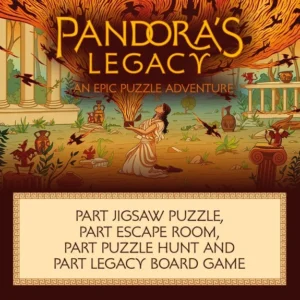
The proliferation of digital content focused on classical mythology indicates a robust public interest in humanities education. By breaking down the Odyssey into digestible segments, educators are facilitating a deeper understanding of historical literature. This trend is further supported by the gamification of mythology. Products like "Pandora’s Legacy" reflect a growing market for interactive storytelling that allows participants to engage with the thematic elements of Greek myths, such as the curiosity of Pandora or the strategic prowess of the Olympians.
Broader Impact and Critical Analysis
The study of the Odyssey is not merely an academic exercise; it provides a framework for understanding modern narratives. The "hero’s journey" archetype, as defined by Joseph Campbell, is heavily indebted to the structural arc of Odysseus. By examining the trials of the protagonist, one can see the origins of modern character development, conflict resolution, and narrative tension.
Furthermore, the transition from oral tradition to written text serves as a case study in the preservation of cultural memory. As we continue to analyze the Iliad and the Odyssey, we are essentially participating in a multi-millennial conversation about the human condition, the nature of power, and the inevitability of change.
Conclusion
As the digital age continues to reshape how we consume classical literature, the necessity of accurate and accessible historical context becomes increasingly apparent. Whether through scholarly analysis of the Trojan War’s origins or the creative adaptation of myths into interactive games, the Odyssey remains a vital component of the global cultural heritage. By integrating historical facts with the mythological narrative, we not only preserve these ancient stories but ensure their continued relevance for future generations of students and historians alike. The ongoing scholarly efforts to parse reality from fiction in these tales ensure that the legacy of Homer will continue to be a subject of rigorous investigation and appreciation for years to come.