The landscape of search engine optimization is currently undergoing its most significant transformation since the inception of the algorithm-driven web. As generative AI becomes a primary interface for information retrieval, the metrics that have defined success for the past two decades—organic rankings, click-through rates, and impression counts—are proving insufficient. On October 14, 2026, Tom Capper, Director of Search Product Strategy at STAT, will host a comprehensive webinar titled Tactical Solutions For The Biggest AI Search Measurement Challenges to address how enterprise-level organizations can adapt their reporting frameworks to this volatile new environment.
The Erosion of Traditional Search Metrics
For years, the SEO professional’s dashboard was built on a predictable foundation: tracking keyword positions across the "ten blue links" and monitoring traffic volume via analytics suites. However, the rise of AI Overviews (AIO) and the increasing consumer reliance on Large Language Models (LLMs) such as ChatGPT, Claude, and Gemini have fundamentally altered the user journey.
Data indicates that a substantial and growing percentage of queries now trigger an AI-generated summary at the top of the search engine results page (SERP). Furthermore, a significant demographic of users has bypassed traditional search engines entirely, opting to interact directly with LLMs to synthesize information, troubleshoot issues, or evaluate products. In these scenarios, the traditional "click" is no longer the primary outcome. Instead, visibility is increasingly defined by brand citation, entity association, and the ability to be featured within an AI-generated response.
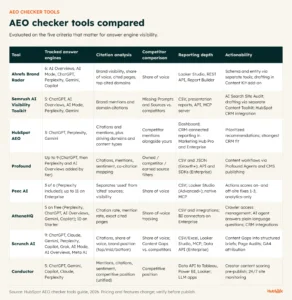
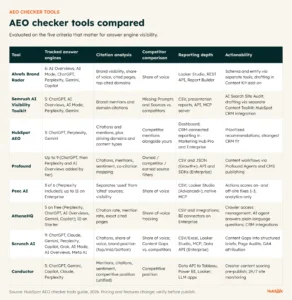
This shift presents a measurement crisis for SEO departments. Standard rank tracking software can identify when an AI Overview is present, but these tools often fail to answer more granular, high-value questions: Was the brand cited? How authoritative is the citation? What is the relative value of an AI mention compared to a traditional organic position? Without these insights, enterprise SEOs are left with significant gaps in their performance reporting, making it difficult to justify budget allocation or demonstrate ROI to stakeholders.
Chronology of the Search Evolution
The transition toward AI-integrated search has been rapid and multifaceted. The timeline of this shift highlights the urgency behind the upcoming STAT webinar:
- Early 2023: The "AI Race" begins in earnest with the widespread adoption of LLM chatbots, signaling a departure from standard search queries.
- Late 2023 – Early 2024: Search engines begin testing and deploying generative AI features directly into the results pages, initially in experimental capacities.
- Mid-2024: AI Overviews move from experimental features to standard, high-visibility components of the SERP for a vast array of informational and commercial queries.
- Late 2025: Industry consensus shifts; SEO practitioners acknowledge that traditional organic rankings are becoming a fragmented component of a broader "answer-based" ecosystem.
- October 2026: The industry reaches a critical juncture where the focus shifts from "if" AI affects SEO, to "how" to measure the impact of AI influence at scale.
The Complexity of LLM Measurement
Unlike traditional web search, where every user typically sees the same or very similar results for a given query, LLMs and AI Overviews are characterized by variability. The "black box" nature of these models means that a single prompt can return different responses based on conversation history, user location, and real-time model updates.
Furthermore, LLMs do not inherently generate "impression" data in the traditional sense. There is no standard click-stream tracking that allows an enterprise to see exactly how many times their brand was mentioned in a specific AI-generated summary. This lack of transparency has forced SEO professionals to look toward proxy metrics and advanced data analysis.
Tom Capper’s research, which centers on large-scale SERP data analysis, suggests that the solution lies in treating AI search as a distinct data set. Instead of trying to force AI interactions into the existing bucket of "organic clicks," organizations must develop a framework that assigns value to "AI presence." This involves monitoring which entities are cited, the context of those citations, and whether those citations lead to downstream brand engagement.
Implications for Enterprise Strategy
The implications for large-scale businesses are profound. In an environment where a brand may be cited in an AI Overview without a direct link back to the website, the "last-click" attribution model—already under fire due to privacy regulations—becomes even more obsolete.
SEO teams must now pivot toward "Brand Entity Optimization." If an LLM is the primary source of truth for a consumer, the brand’s goal is to ensure that it is recognized as a primary entity within the model’s training and inference data. This requires a shift in focus from technical SEO alone to content strategy, authority building, and semantic consistency across the web.
The webinar hosted by STAT aims to bridge this gap. By focusing on tactical solutions rather than theoretical speculation, Capper intends to provide attendees with a blueprint for integrating these new variables into their existing reporting cycles. This is not merely an academic exercise; for global brands, the ability to quantify AI visibility is becoming a requirement for maintaining market share.
Expert Perspective: Bridging the Data Gap
Tom Capper, as a veteran of SERP analytics, has spent years observing the behavior of search algorithms. His work with Moz’s STAT platform has been instrumental in helping enterprise SEOs make sense of the noise created by rapid SERP feature updates.
"The challenge," as inferred from his recent research, "is that we are attempting to measure a fluid environment with static tools." His approach emphasizes the necessity of high-frequency data collection. By capturing snapshots of the SERP at scale, organizations can begin to identify patterns in how AI features trigger and how brands are featured over time. This longitudinal data is the only reliable way to distinguish between temporary AI fluctuations and long-term trends in visibility.
Fact-Based Analysis of the Current Landscape
To understand the scale of this change, one must consider the sheer volume of queries now serviced by generative AI. Internal industry benchmarks suggest that for "long-tail" and "informational" keywords, the proportion of traffic that remains on the SERP (or moves to an LLM) is reaching a tipping point.
While some observers fear that this signals the "death of search," the more nuanced view—and the one likely to be explored in the October webinar—is that search is simply evolving. The platforms that succeed will be those that view AI as a new channel to be mastered rather than a threat to be ignored. The requirement for success in 2027 and beyond will be a robust data strategy that accounts for both the "traditional" web and the "AI-answered" web simultaneously.
Preparing for the Future of Reporting
The upcoming webinar is designed to offer actionable guidance for those currently struggling with the "reporting void." By registering, SEO professionals will gain insight into:
- Defining Success in AI: How to set KPIs for AI visibility that satisfy executive-level requirements.
- Tracking Citations: The methodologies for monitoring brand mentions in LLM outputs.
- Data Integration: How to merge traditional rank-tracking data with new, AI-specific metrics into a single, cohesive dashboard.
- Tactical Implementation: Specific workflows for adjusting SEO strategy based on the data points that actually drive business value.
As the digital landscape continues to fragment, the ability to measure influence across disparate AI models will separate the leaders from the laggards. The session on October 14 serves as a critical checkpoint for the industry, offering a rare opportunity to move past the uncertainty of the current AI transition and toward a structured, data-driven methodology. For enterprise SEO pros tasked with proving the efficacy of their efforts in an AI-first world, this discussion is not merely recommended; it is an essential step in safeguarding the future of their digital strategy.