The New York City residential real estate market remains a study in extreme fiscal paradoxes as of late October 2026. Data from the current quarter indicates that the scarcity of affordable inventory has pushed rental prices for modest studios and one-bedroom units to record highs, with two-bedroom configurations now frequently exceeding the $4,000 monthly threshold. For those seeking to transition from renters to homeowners, the barrier to entry has similarly risen, with entry-level brownstone properties in boroughs like Brooklyn frequently listing in excess of $1.5 million. This report examines the current state of the market, the psychological toll on prospective tenants, and the architectural oddities currently defining available listings.
The Macroeconomic Environment of NYC Housing
The current rental climate in New York City is defined by historically low vacancy rates—often hovering below 1.5%—which has empowered landlords to maintain premium pricing even on units lacking modern amenities. Market analysts suggest that this trend is driven by a persistent lag in new construction starts, which were severely hampered by labor shortages and high interest rates during the 2024–2025 period.
While the Federal Reserve has signaled potential stabilization in borrowing costs, the impact has yet to translate into significant relief for the average New York renter. According to recent StreetEasy listings, the competition for apartments under $3,000 has become so intense that prospective tenants are often required to provide comprehensive documentation and secure guarantors within hours of a listing’s appearance. This environment has created a "scarcity premium," where aesthetic details—such as turn-of-the-century fireplaces or original parquet flooring—are increasingly used to justify price points that might otherwise be considered prohibitive for the square footage provided.
Chronology of Market Shifts (2024–2026)
- Q1 2024: Interest rates hit a multi-year peak, cooling the luxury sales market but tightening the rental market as potential buyers opted to stay in their current units.
- Q4 2024: A wave of high-density apartment developments broke ground, but supply chain issues delayed completion dates, pushing expected relief into late 2026.
- Q2 2025: Rental prices in Manhattan and Brooklyn saw a 12% year-over-year increase, marking the most significant jump in a decade.
- Q3 2026: Market saturation in the $4,000+ two-bedroom segment became apparent, leading to the first widespread instances of price reductions and concession offerings since the onset of the post-pandemic recovery.
- Current (October 2026): The market exhibits a bifurcated reality: a high-end sector struggling to move inventory at historic prices, and a mid-range sector where demand continues to vastly outstrip supply.
Architectural Trends and the "Value" Illusion
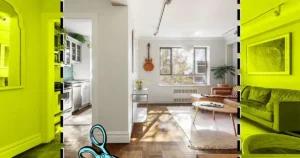
A recurring theme in the current market is the valuation of "prewar character" over functional utility. For instance, a studio listing at 213 Hancock Street, priced at $2,750, leverages its ornate, turn-of-the-century fireplace as a primary selling point. While such features historically enhanced property values, modern renters are increasingly forced to weigh these aesthetic benefits against the loss of usable floor space.
Similarly, listings such as the $2,900 one-bedroom on Macon Street highlight the disconnect between listing presentation and reality. In many cases, professional photography attempts to obscure unrenovated kitchens or "dark" spaces by focusing heavily on sunlit living areas with classic parquet flooring. This strategy—often referred to in the industry as "aspirational staging"—is designed to capitalize on the emotional attachment potential tenants form toward specific historical details, such as sunken living rooms or original crown molding.
Analysis of the $2 Million Threshold
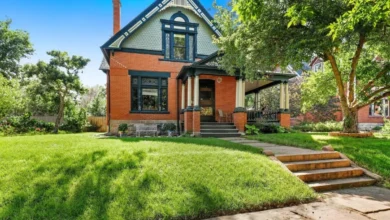
The $2 million house-buying segment in neighborhoods like Crown Heights and Bed-Stuy has become a focal point for prospective buyers who are often forced to choose between turnkey modern renovations and "fixer-upper" historical properties. Market data suggests that buyers in this tier are frequently underestimating the cost of capital improvements. An industry-standard estimate for a full kitchen and bath renovation in a historic brownstone currently sits between $120,000 and $180,000, yet many buyers entering the market with a $2 million budget often lack the secondary capital necessary to execute these renovations.
This leads to a phenomenon where properties remain on the market for extended periods. For example, a three-bedroom duplex on Bainbridge Street, listed at $5,500, has faced resistance from prospective tenants due to the condition of its bathroom facilities. Despite the property’s overall appeal, the lack of modern utility keeps it tethered to the market, serving as a rare opportunity for potential price negotiation.
The Impact of Developer-Led Aesthetics
There is a growing trend of "algorithmic design" in residential renovations, particularly in converted properties. A notable example is the converted church on Hicks Street, where a $46,000 price drop failed to accelerate the sale of a two-bedroom unit. Analysts observe that while the unit offers high-quality structural elements—such as double-pane casement windows—the interior finishes, particularly in bathrooms, often lack the bespoke quality expected by buyers at the $1.75 million price point. These developers frequently employ neutral, mass-market aesthetics that, while functional, fail to resonate with a buyer demographic increasingly interested in historical preservation or high-end architectural specificity.
Fantasy vs. Reality: The High-End Segment
At the upper echelon of the market, the distinction between a primary residence and a "preservation project" becomes blurred. Townhouses on the Upper West Side, such as those on West 71st Street, are currently listed at $4 million or higher. These properties offer significant square footage (often exceeding 3,500 square feet) but require substantial investment in original detail restoration.
Contrast this with units in prestigious buildings like The Apthorp. A two-bedroom unit in this historic landmark may offer significantly less space than a townhouse but provides a "grand prewar" experience characterized by neoclassical architecture, gold-leafed ceilings, and high-level service staff. The financial commitment for such properties extends far beyond the purchase price; common charges and taxes can easily exceed $3,500 per month.
Broader Implications for New York Residents
The current state of the New York City real estate market forces a critical re-evaluation of the "city-dweller’s contract." For the past decade, the expectation of a certain quality of life for a set percentage of income has been systematically disrupted.
- Increased Commuter Pressure: As Manhattan and central Brooklyn become increasingly unaffordable, residents are being pushed into outer-borough transit hubs, placing further strain on the public transportation infrastructure.
- The Rise of the "Living-Room-as-Bedroom": With the premium on two-bedroom units, many renters are opting for larger one-bedroom apartments and converting common areas into sleeping quarters, a trend that is altering the traditional usage of residential floor plans.
- Investment Shifts: The prevalence of "investment-grade" renovations—where developers prioritize quick, cosmetic fixes over structural longevity—is creating a long-term maintenance burden for the next generation of building owners.
As of late 2026, the market remains volatile. While there is evidence of cooling in the extreme high-end, the fundamental supply-demand imbalance continues to drive prices upward. Prospective residents are advised to maintain a pragmatic approach, focusing on the longevity of the property’s "bones" rather than transient aesthetic trends, and to remain cognizant of the hidden costs associated with maintenance and historical restoration in an aging city. The optimism required to navigate this market is, perhaps, its most essential commodity.
Related posts: