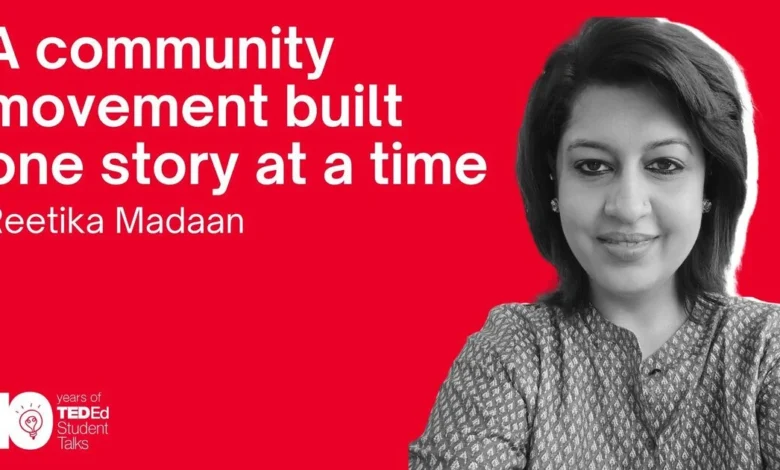
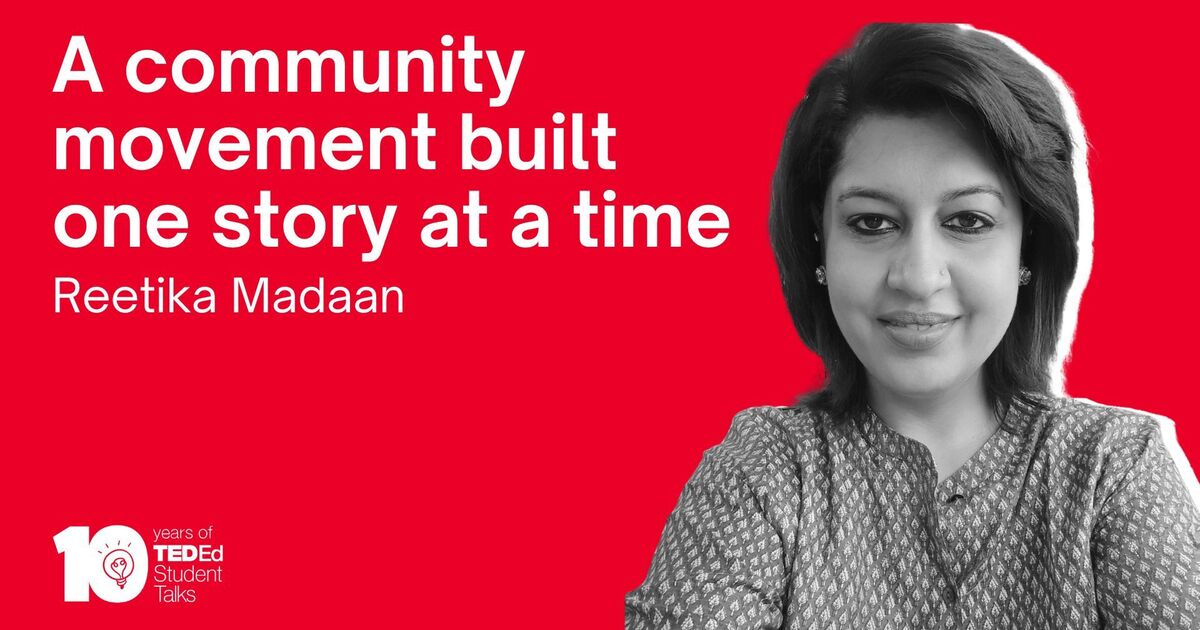
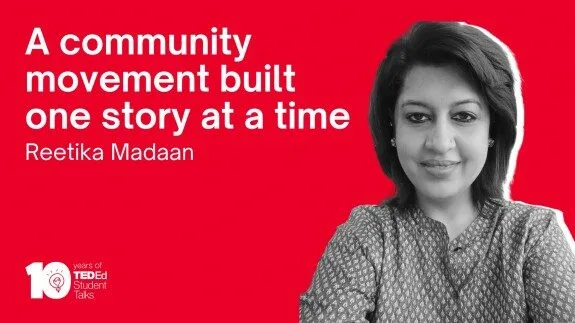
Since its inception in 2014, the TED-Ed Student Talks program has functioned as a global catalyst for youth expression, providing a structured framework for students to identify, develop, and present their ideas. As the program celebrates its tenth anniversary, the organization has launched the "10 for 10 years" series, a commemorative initiative designed to highlight the facilitators who have transformed these resources into local movements. Among these practitioners is Reetika Madaan, an independent educator based in Ludhiana, India, whose decade-long tenure offers a masterclass in grassroots community building and the pedagogical power of student voice.
The Genesis of a Grassroots Movement
In 2016, Madaan identified a critical gap in the educational landscape of Ludhiana. While the city boasted a vibrant, growing population of young people, the local academic environment offered few outlets for intellectual expression outside of traditional curricula and rigid annual school functions. Recognizing that students were eager to articulate ideas that transcended standard testing, Madaan launched the TED-Ed Club Ludhiana.
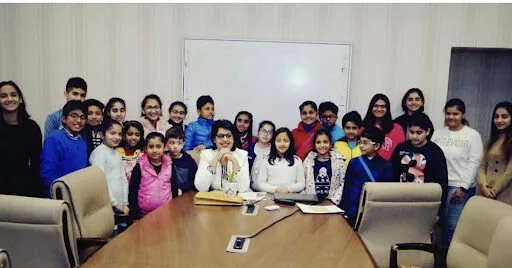
Unlike many school-based clubs, Madaan’s initiative was built from the ground up without institutional funding, administrative backing, or official grants. Her approach was predicated on the belief that a community-based platform could offer a more personalized, flexible, and responsive environment than a traditional classroom setting. By establishing a neutral space outside of any single school’s jurisdiction, Madaan created an inclusive ecosystem that eventually drew students from 15 different schools across the city.
A Chronology of Growth
The evolution of the Ludhiana club follows a distinct trajectory from a niche experiment to a city-wide cultural fixture.
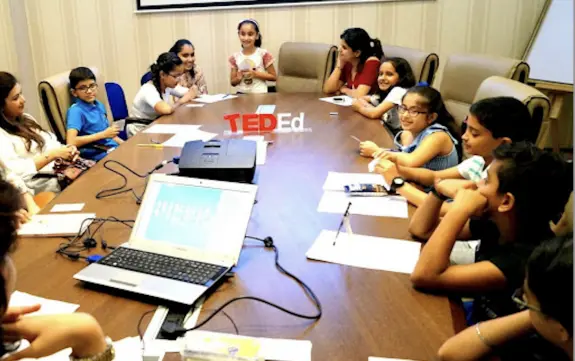
- 2016: Reetika Madaan founds TED-Ed Club Ludhiana, beginning with a cohort of only three students. The early phase focused on building trust with parents, who were initially hesitant to send children to an extracurricular program outside the traditional school system.
- 2017–2018: Through consistent documentation of student progress and tangible improvements in public speaking and critical thinking skills, the club expanded its enrollment to 25, then 30 students. The "proof of concept" began to manifest as parents became the program’s primary advocates, sharing their children’s growth with their peers.
- 2019–2021: The program reached a critical mass, with 40 active participants. During this period, local schools began to recognize the value of the program, transitioning from passive observers to active collaborators.
- 2022–2024: The club’s influence culminated in the curation of TEDxSarabhaNagar. Notably, two of Madaan’s students, Rayaansh Pahwa and Amaya Sahni, secured spots on the prestigious TEDx stage. Pahwa’s critique of the rigidity of modern education and Sahni’s insights into childhood learning solidified the program’s reputation as a legitimate training ground for future leaders.
Pedagogical Shifts and Curriculum Evolution
The efficacy of the TED-Ed Student Talks program has historically relied on its evolving curriculum. According to Madaan, the materials have transitioned from rudimentary, multi-page pamphlets to comprehensive, visually-rich playbooks. These resources provide facilitators with structured methods for inquiry, encouraging students to move beyond surface-level narratives and engage in deep research.
The impact of this curriculum is measurable in the shift of student output. Early iterations of the program focused primarily on public speaking mechanics. Today, the framework emphasizes "layered thinking"—a process where students are encouraged to conduct extensive research, identify underlying assumptions, and take intellectual risks. This shift has resulted in students who are not only more confident on stage but more articulate and analytical in their academic and personal lives.
Analytical Perspectives on Youth Engagement
The success of the Ludhiana model provides valuable insights into the broader implications of extracurricular youth development. Education researchers have long noted that "soft skills"—such as critical communication, emotional intelligence, and self-advocacy—are often marginalized in high-pressure, exam-centric environments. Madaan’s model effectively bridges this gap by positioning the student as the subject matter expert of their own life.
By focusing on the student’s story rather than the performance itself, facilitators like Madaan build a foundation of psychological safety. Data from the TED-Ed network suggests that programs that prioritize student agency over rote memorization see higher levels of long-term retention and engagement. The "belief" Madaan cultivates serves as a psychological anchor; when students feel their perspective is valued by an adult mentor, their willingness to engage with complex, controversial, or deeply personal topics increases significantly.
Overcoming Institutional Barriers
The primary obstacle Madaan faced was the lack of "institutional power." Without a school bell or a mandatory attendance policy, the program’s survival depended entirely on the perceived value delivered to the participants and their families.
"The hardest part was being an outsider," Madaan noted in discussions with TED-Ed’s Programs Manager, Sasha Rudenko. "When you don’t have the backing of an institution, you have to create your own credibility."
Her strategy for overcoming this was a rigorous, evidence-based approach to parent communication. By involving parents in the development process and demonstrating the weekly cognitive and social improvements of their children, Madaan transformed parental skepticism into institutional support. This suggests that for community-led educational programs to thrive, transparency and consistent communication are just as vital as the curriculum itself.
The Role of the Facilitator in the Modern Era
In the context of the global rise of digital influence and social media, young people are increasingly exposed to a wide range of global ideas, yet they often lack the tools to process these inputs or express their own perspectives. Facilitators in the TED-Ed network play a dual role: they are both curators of information and, more importantly, editors of character.
Madaan’s advice to prospective facilitators highlights the shift required for success in this space: "When they see that you care more about their story than their stage time, that is when the real growth begins." This philosophy emphasizes the transition from a "coach" who produces a speaker to a "mentor" who fosters a thinker.
Future Implications and Scaling
The "10 for 10 years" initiative serves as more than a celebration; it acts as a retrospective study on how educational platforms can scale through individual leadership. The Ludhiana model demonstrates that effective pedagogical intervention does not always require massive investment or systemic reform. Rather, it requires the identification of a localized need, a commitment to consistent, long-term mentorship, and a curriculum that evolves alongside the students it serves.
As TED-Ed looks toward the next decade, the focus appears to be shifting toward the sustainability of these facilitators. By documenting the experiences of educators like Reetika Madaan, the organization is creating a blueprint for others to replicate this model in diverse cultural and economic environments. The evidence is clear: when provided with the right resources and a space that validates their voice, students are capable of contributing meaningfully to the global discourse.
Conclusion
The success of the TED-Ed Student Talks program in Ludhiana stands as a testament to the power of a single, dedicated educator. By prioritizing the development of the student’s inner voice over the external pressure of academic performance, Madaan has built a legacy that extends far beyond the stage. Her work suggests that the future of education may rely less on the walls of a classroom and more on the intentional, story-driven connections formed between mentors and the next generation of thinkers. As thousands of student groups continue to leverage these tools worldwide, the "10 for 10" campaign serves as a reminder that the most significant impacts are often built, as Madaan notes, one story at a time.