Lufthansa Airlines to Eliminate 1,000 Full-Time Positions at Frankfurt and Munich Hubs Amid Persistent Financial Struggles

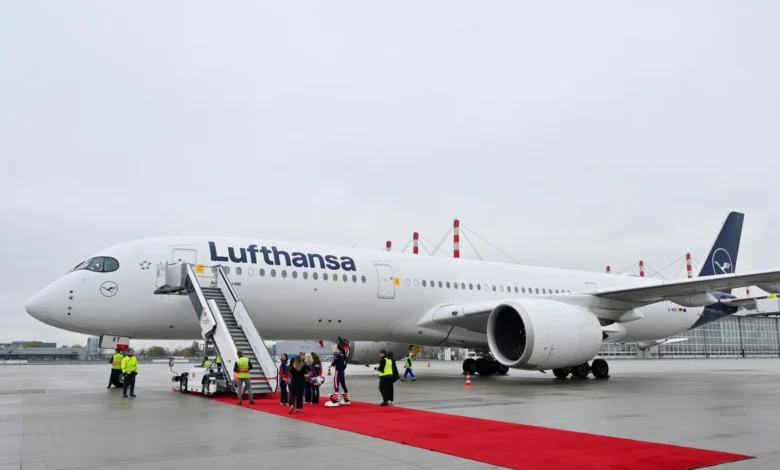
In a decisive move to restructure its operations and reverse a multi-year financial slump, Lufthansa Airlines has announced plans to cut 1,000 full-time jobs across its primary German hubs in Frankfurt and Munich. The sweeping structural changes were detailed in an internal management letter reviewed by several prominent news outlets, laying bare the carrier’s mounting operational challenges.
According to the communication from the airline’s executive board, Lufthansa is battling a combination of surging fuel costs, elevated infrastructural fees, and a bloated operational structure that has left the carrier trailing behind its global competitors. The announcement marks a critical juncture for Germany’s flagship airline as it attempts to claw its way back to sustained profitability amidst an increasingly volatile macroeconomic and geopolitical aviation landscape.
A Three-Year Financial Drought
The core catalyst behind the job cuts is a prolonged period of underperformance. In the internal management letter, the board of directors explicitly stated that this marks "the third year in a row of not being financially successful."
For decades, Lufthansa stood as a bastion of European aviation stability, boasting robust margins and unmatched premium patronage. However, the post-pandemic recovery has proven uneven and exceptionally costly for European legacy carriers. While global passenger demand has largely rebounded to pre-2019 levels, airlines are no longer operating in a favorable cost environment.
The management letter emphasized that "Lufthansa is currently not competitive in terms of its cost structure and efficiency." Regulatory burdens, stringent environmental mandates within the European Union—such as rising carbon offset costs and mandates for sustainable aviation fuels (SAF)—have disproportionately impacted carriers operating out of central European hubs. Coupled with fluctuating jet fuel prices and rising labor expenses following a series of disruptive strikes by pilots and ground crew in recent years, Lufthansa’s profit margins have been squeezed from all sides.
The Anatomy of the Cuts: Frankfurt and Munich Under the Microscope
The planned elimination of 1,000 full-time positions will be concentrated primarily at Frankfurt Airport (FRA) and Munich Airport (MUC), Lufthansa’s two twin pillars of domestic and international connectivity.
While the exact breakdown of the job reductions across specific departments—such as administrative overhead, ground operations, and management—has not yet been fully finalized, labor representatives and internal sources indicate that the cuts will heavily target back-office and administrative roles to streamline corporate decision-making.
Operational efficiency has long been a thorn in Lufthansa’s side. Compared to ultra-low-cost carriers and certain aggressively optimized North American and Middle Eastern competitors, the Lufthansa Group has historically maintained high overhead costs. Management argues that without these stringent workforce reductions, the airline cannot generate the capital necessary to fund critical long-term investments, such as fleet modernization and the rollout of next-generation cabin products like the "Allegris" long-haul experience.
A Chronology of Crisis: How Lufthansa Reached This Point
To understand the gravity of the November 2026 announcement, it is necessary to examine the cascading events that have tested the airline over the past half-decade:

- Spring 2020: The COVID-19 pandemic brings global aviation to a near-complete standstill. Lufthansa is forced to accept a €9 billion government bailout from the German Economic Stabilization Fund (WSF) to avert bankruptcy.
- November 2021: Demonstrating a faster-than-expected recovery in leisure travel, Lufthansa successfully repays the government bailout in full, shedding state oversight ahead of schedule.
- 2022–2023: Pent-up travel demand triggers a global travel boom, but widespread labor shortages, air traffic control bottlenecks, and rising inflation lead to massive operational disruptions across European airports.
- 2024: Lufthansa experiences severe operational friction marked by frequent strikes from unions representing pilots, security personnel, and ground staff. These industrial actions cost the airline hundreds of millions of euros and heavily depress quarterly earnings, setting off alarm bells within the executive suite.
- 2025: Despite high passenger volumes, profit margins continue to erode due to soaring operational expenses and expensive airport charges in Germany, prompting management to initiate preliminary internal reviews of structural inefficiencies.
- November 2026: The airline formalizes its turnaround strategy, issuing a management letter confirming the elimination of 1,000 full-time positions at its Frankfurt and Munich hubs after registering its third consecutive year of unsatisfactory financial returns.
Labor Relations and Stakeholder Reactions
The announcement of 1,000 job cuts has immediately ignited tensions with labor unions, who have long pushed back against unilateral cost-saving measures at the expense of employees.
Germany’s powerful aviation unions, including ver.di and Vereinigung Cockpit (VC), have historically held significant leverage over Lufthansa management. Labor leaders argue that workers should not bear the brunt of strategic missteps or broader macroeconomic pressures. Representatives from employee councils noted that morale is already fragile following years of post-pandemic strain, inflation-driven cost-of-living adjustments, and exhaustive contract negotiations.
While formal strike actions in response to the latest announcement have not yet been called, labor representatives have demanded urgent consultations with the executive board to demand transparency regarding the selection process for redundancies, potential relocation opportunities, and voluntary severance packages. Management, conversely, has maintained that swift and painful restructuring is the only viable alternative to prevent deeper, more structural declines that could threaten the long-term viability of the enterprise.
Industry Implications and the Broader European Aviation Landscape
Lufthansa’s struggles are not happening in a vacuum. Across Europe, legacy network carriers are facing an existential reckoning regarding their operational models.
European airlines are navigating a complex regulatory labyrinth that their competitors in other regions do not face. The implementation of the EU’s "Fit for 55" legislative package, which progressively phases out free carbon allowances for airlines under the Emissions Trading System (ETS) and mandates increasing volumes of costly sustainable aviation fuels, is adding billions of euros in compliance costs to European carriers.
Furthermore, high air traffic control fees, particularly within German airspace, have drawn sharp criticism from airline executives who argue that Germany is pricing itself out of the international aviation market. In response, several carriers—including Lufthansa itself—have occasionally shifted certain point-to-point routes or capacity growth away from German hubs toward lower-cost European markets or partner airlines.
Financial analysts monitoring the sector note that Lufthansa’s move, while painful in the short term, may be a necessary medicinal step to reassure investors. Airline stocks have faced downward pressure as institutional investors grow increasingly weary of airlines that generate robust top-line revenue but fail to translate those numbers into bottom-line net profits.
Path Forward: The Road to Turnaround
As Lufthansa moves forward with its restructuring blueprint, executive leadership faces a delicate balancing act. The primary objective is to restore cost competitiveness without severely degrading the customer experience or triggering protracted labor strikes that could paralyze flight schedules during peak travel windows.
The coming weeks will likely see intense negotiations between Lufthansa management and union leaders. The success or failure of these talks will not only shape the corporate culture of Germany’s largest airline for years to come, but it will also serve as a barometer for how traditional European carriers intend to survive in an era of compressed margins, stringent environmental regulations, and relentless global competition. For now, the 1,000 employees facing displacement stand at the epicenter of an industry-wide transition, underscoring the high stakes of modern commercial aviation.