Beyond the Algorithm: Cultivating Human-Centric Skills in an Era of Artificial Intelligence

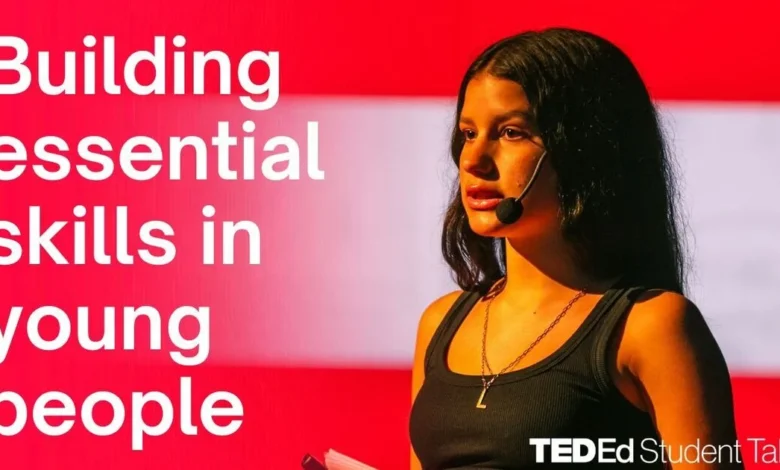
As artificial intelligence continues to reshape the global labor market, the traditional emphasis on rote memorization and technical proficiency is undergoing a radical shift. According to the World Economic Forum’s Future of Jobs Report 2025, the most sought-after competencies for the next generation are no longer purely computational. Instead, analytical thinking, creative problem-solving, empathy, leadership, and social influence are rising to the top of the hierarchy of essential skills. While these "soft" skills are increasingly recognized as the primary drivers of future economic resilience, they remain notoriously difficult to foster within the rigid constraints of traditional, test-focused educational systems.
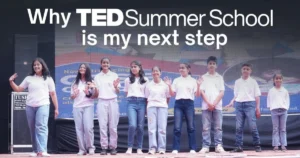
The challenge facing modern pedagogy is significant: how does one prepare students for a future where technical tasks are increasingly automated, while the uniquely human capacity for nuanced communication and emotional intelligence remains irreplaceable? One approach gaining traction is the TED-Ed Student Talks program, an initiative designed to move beyond the lecture-hall model by providing a structured, scaffolded environment for students aged 6 to 18 to cultivate their voices and articulate their ideas.
The Evolution of Student-Led Advocacy
The origins of the program can be traced back to a growing recognition that student agency is frequently stifled by standardized curricula. Historically, educational systems have prioritized the output of the student—the grade or the test score—over the development of the student’s ability to conceptualize and convey complex narratives. TED-Ed Student Talks emerged as a response to this gap, drawing on the organizational philosophy of TED to create a platform where students are not merely passive recipients of information but active creators of discourse.
The timeline of the program’s expansion reflects a broader educational movement toward project-based learning. Since its inception, the initiative has transitioned from a small-scale pilot to a global framework. It functions through a series of guided activities that lead students through the "idea-to-stage" pipeline: identifying a personal passion, refining that idea through iterative feedback, and ultimately presenting to a live audience. This chronological process—discovery, refinement, and delivery—mirrors the professional development pathways found in top-tier corporate and academic environments.
Data-Driven Insights into Skill Acquisition
The necessity for these programs is underscored by shifting labor market requirements. LinkedIn’s recent analysis of in-demand skills highlights a clear trend: the "half-life" of a technical skill is shortening, while the durability of interpersonal skills remains high. Empathy, often dismissed in technical education as a soft or unquantifiable trait, is now identified as a critical component in collaborative, multidisciplinary workforces.
Data from the program itself indicates that participants experience a marked improvement in self-efficacy. When students such as Shrutarjo Ray or Wong Kean Jee engage in the process of translating private, often abstract concepts into public presentations, they are effectively practicing cognitive reframing. Ray’s observation that "ideas get life when they are shared" is not merely anecdotal; it aligns with psychological studies on social learning, which suggest that public expression reinforces the speaker’s mastery of the subject matter while simultaneously building community bonds among listeners.
Case Studies in Human Connection
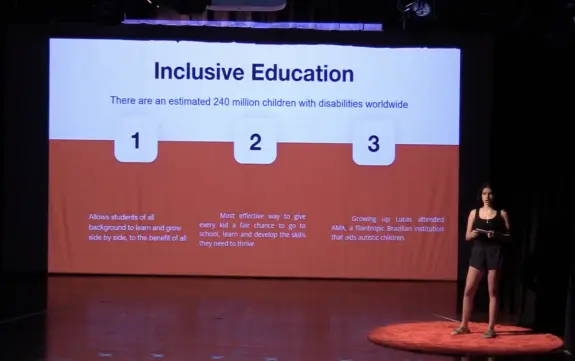
The program’s impact is most visible when students address complex, often sensitive topics. Lia Costa’s work on Autism Spectrum Disorder serves as a case study in how public speaking can function as an instrument for social advocacy. By presenting her cousin’s experiences and artistic contributions, Costa moved beyond academic definitions of disability to foster human empathy. This process illustrates the pedagogical theory of "perspective-taking," where the speaker must inhabit the viewpoint of another to convey their story effectively.
Similarly, Lareen Abdelwahed’s struggle to translate "tangled emotions" into a coherent presentation highlights the therapeutic and developmental utility of the program. For many young people, the internalizing of complex emotions leads to cognitive load; the act of structured articulation allows them to externalize these thoughts, turning private confusion into public clarity. This skill—the ability to synthesize raw emotion into intelligible communication—is a hallmark of effective leadership and emotional maturity.
The Intersection of Science and Communication
One of the most ambitious applications of the program involves the translation of scientific research for general audiences. Owen Hawthorne’s engagement with CRISPR and genetic editing demonstrates that students are capable of processing highly technical information and identifying its human-centric impact. By focusing his talk on "hope" rather than just the mechanics of the technology, Hawthorne demonstrated a sophisticated understanding of audience engagement.
This is a critical pivot. In an age of information overload, the ability to act as a bridge between scientific discovery and public understanding is perhaps the most valuable communication skill. Kira Aryslanova’s evolution from focusing solely on data to integrating narrative elements confirms this trend. Her recognition that "data, storytelling, and questions" are a triad of influence suggests that participants are learning to utilize rhetorical strategies that go beyond academic reporting.
Implications for Future Civic Engagement
The broader implications for civic engagement are profound. Research consistently shows that when youth feel their voices carry weight, their propensity for civic participation increases. By providing a platform where students are treated as intellectual equals rather than subordinates, the TED-Ed Student Talks program fosters a sense of agency.
Arush P’s shift from seeing himself as a student to viewing himself as an "advocate for the planet" signifies a change in identity. This transformation—from passive learner to active participant in global discourse—is the ultimate goal of contemporary civic education. When young people realize that their voice has the power to shift perspectives, they become more likely to engage with environmental, social, and political issues throughout their adult lives.
An Objective Assessment of Programmatic Value
Critics of such programs sometimes argue that the focus on public speaking may privilege extroversion or specific personality types. However, the program’s emphasis on "honest" communication, as highlighted by Malak Youssef, serves as a counter-argument to this concern. Youssef’s assertion that "your voice doesn’t have to be loud to be powerful, it just has to be honest" aligns with modern leadership research, which suggests that authenticity is a more effective long-term trait than performative confidence.
From a structural standpoint, the program offers a scalable solution for schools and youth organizations. Because the materials are free and adaptable, they minimize the barrier to entry, allowing institutions with varying levels of resources to participate. This democratization of the "platform" is essential for ensuring that the benefits of communication training are not reserved for an elite subset of students, but are accessible across diverse socioeconomic and geographic backgrounds.
Conclusion: Preparing for an Automated Future
As the 2025 landscape approaches, the integration of these programs into the standard educational diet is becoming less of an extracurricular luxury and more of an essential requirement. The workforce of the future will not be judged by the ability to calculate—a task that algorithms will always perform faster—but by the ability to connect, empathize, and communicate ideas that resonate on a human level.
The evidence presented by student speakers suggests that the process of building these skills is inherently iterative and deeply personal. Whether they are discussing language monopolies, the ethics of genetic editing, or the importance of compassion, these students are gaining the necessary tools to navigate an uncertain, AI-driven future. By focusing on the attributes that AI cannot replicate, programs like TED-Ed Student Talks are effectively future-proofing the next generation, ensuring that as machines become more capable, the human contribution remains the most essential element of the global economy. As educators and policymakers continue to grapple with the pace of technological change, the focus on human-centric skills will likely remain the most reliable strategy for sustaining progress and fostering a resilient, communicative society.