Christopher Nolan Takes Firm Stance as DGA President to Protect Intellectual Property Against AI Encroachment

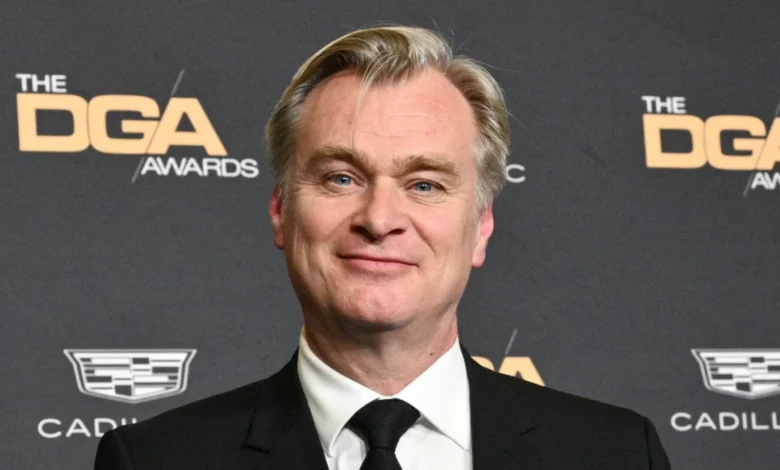
Halfway through his inaugural term as President of the Directors Guild of America (DGA), Christopher Nolan has emerged as a central figure in the escalating conflict between creative artists and the rapid, often unchecked, expansion of generative artificial intelligence. The two-time Academy Award-winning filmmaker, known for his rigorous approach to cinematic craftsmanship and technical excellence, is now utilizing his leadership position to hold major studios accountable for the protection of copyrighted works against unauthorized AI training and reproduction.
Nolan’s advocacy centers on a fundamental shift in how the entertainment industry manages its digital assets. In a recent appearance on the Hollywood Insiders podcast, the director articulated a strategy that shifts the burden of enforcement from the individual creator to the corporate entities that hold the legal rights to the films. This stance represents a pivotal moment in labor relations within Hollywood, marking a move toward holding studios directly responsible for the sanctity of their intellectual property in an era where AI models are increasingly fed on the vast libraries of human-created content.
The Corporate Accountability Mandate
At the heart of Nolan’s argument is the rejection of the "Frankenstein’s monster" narrative often employed by technology companies and some studio executives. By labeling AI as a singular, uncontrollable force of nature, corporations seek to insulate themselves from the legal and ethical consequences of their own business decisions. Nolan argues that this framing is a calculated attempt to avoid accountability for the ingestion of protected materials into Large Language Models (LLMs) and generative video tools.
"AI is too big a catchall term," Nolan stated during his interview. "It’s describing too many things and it’s being used by companies to absolve themselves of responsibility. They sort of want to portray it as this Frankenstein’s monster that can get out of control and can change the world without them having any accountability for it. We have to strongly resist that."
Nolan’s strategy for the DGA involves a multi-pronged approach. Because directors, in the vast majority of cases, are not the copyright holders of the films they create, the DGA cannot legally initiate copyright infringement lawsuits on behalf of its members. Instead, the Guild is focusing on pressuring the studios—the entities that possess the standing to sue—to actively defend their catalogs. This pressure is beginning to manifest in tangible ways, most notably through the inclusion of explicit anti-AI training language in the boilerplate legal notices of major motion pictures.
The Odyssey and the Precedent of Defensive Labeling
A significant development in this campaign is the inclusion of a specific, legally-binding warning in the credits of Nolan’s own latest project, The Odyssey. The film now carries a formal notice that explicitly prohibits the ingestion of the work as training data for artificial intelligence systems. While legal experts continue to debate the efficacy of such notices, Nolan views this as a vital first step in establishing a clear, enforceable boundary.
This development follows a long period of uncertainty regarding the status of creative works in the age of generative AI. By embedding these warnings into the physical and digital footprint of the film, the production team is setting a precedent that other filmmakers and studios are expected to follow. It signals to the technology sector that the industry is no longer passive in the face of unauthorized data scraping.
A Chronology of the AI Conflict in Hollywood
The tension between creative guilds and the encroachment of AI is not a new phenomenon, but it reached a boiling point in 2023.
- May 2023: The Writers Guild of America (WGA) initiated a strike, with the regulation of AI in the writing process serving as a primary point of contention.
- July 2023: SAG-AFTRA joined the WGA on the picket lines, citing concerns over the "digital replication" of actors’ likenesses and voices, which became a defining issue of the strike.
- September 2025: Christopher Nolan was elected DGA President, following a tenure on the Guild’s Artificial Intelligence Committee, signaling the directors’ intent to prioritize technological governance.
- February 2026: In a follow-up interview regarding DGA negotiations, Nolan emphasized that while existing protections were a solid foundation, they were insufficient to address the evolving nature of the threat.
- Present Day: The DGA, under Nolan’s leadership, is focusing on the intersection of legislative lobbying and corporate negotiation to ensure that residuals and royalties are not diluted by AI-generated content.
Legal Frameworks and the Fair Use Defense
The primary legal battleground remains the interpretation of "fair use" provisions within copyright law. Technology companies have frequently argued that training AI models on existing creative works constitutes fair use, claiming it is "transformative." Nolan and the DGA are positioning themselves against this interpretation, asserting that the commercial exploitation of copyrighted films to create competitive, automated content is a direct violation of the intended purpose of copyright law.
"There’s already legislation in place that protects people, protects creators," Nolan remarked. "And the fact that these companies hide behind fair-use provisions, for example, I think longer term that won’t hold up in court."
Nolan points to recent, significant court judgments as evidence that the judiciary is becoming increasingly skeptical of the broad, sweeping fair use arguments put forth by AI developers. As these legal battles move through the court system, the DGA is positioning its members to support a legislative framework that provides clearer, more robust protections for intellectual property.
Economic Implications for Directors
For the DGA, this is not merely a philosophical or artistic debate; it is a matter of economic survival. Nolan emphasizes that the livelihoods of directors, including their residuals and secondary monetization streams, are tethered to the value of the films they produce. If studios allow AI to ingest their catalogs and generate derivative content that competes with the original works, the market value of those films could collapse.
"Because we generally aren’t the copyright holders of our work, but our income, our residuals, depends on the appropriate monetization of those copyrights," Nolan explained. "So we’re constantly in dialogue with the companies about, are you maximizing the value of the work that we’ve created? Because we do benefit from that enormously."
This dialogue highlights the symbiotic relationship between studios and directors. While the studios own the assets, the directors provide the vision that generates the initial value. If that value is eroded by a flood of AI-generated content, both parties lose, but the directors—who lack the legal ownership of the property—are uniquely vulnerable to the long-term impact on their pension and health funds, which are largely funded by residuals.
The Broader Impact on the Entertainment Industry
The implications of Nolan’s stance extend far beyond the DGA. By bringing the conversation to the forefront of industry discourse, he is influencing the behavior of production companies, distributors, and streaming platforms. Studios that once viewed AI as an inevitable cost-saving mechanism are now being forced to weigh those potential benefits against the risk of alienating their primary creative partners and facing protracted legal challenges.
Furthermore, the DGA’s push for "a voice in how this tool is used" suggests that the Guild is not strictly anti-technology, but rather pro-regulation. The objective is to establish a collaborative model where AI serves as a tool to augment the creative process, rather than a replacement for human intellect and artistic vision.
As Nolan continues his term as DGA President, his influence is expected to solidify a industry-wide standard for AI usage. Whether through the inclusion of restrictive clauses in contracts, the lobbying for specific AI legislation in Washington, or the continued pressure on studios to defend their copyrights, the director’s strategy is clear: the future of filmmaking must be built on the foundation of human agency and legal accountability. The coming months will likely see further developments as the DGA continues to translate these principles into actionable policy, marking a definitive chapter in the ongoing history of Hollywood’s digital transformation.