Japan Achieves Milestone with Successful First Flight Test of RV-X Reusable Rocket Prototype

Japan has achieved a significant milestone in its pursuit of advanced spaceflight capabilities with the successful first-ever flight test of its experimental reusable rocket prototype, the RV-X. This pivotal event, conducted by the Japan Aerospace Exploration Agency (JAXA) in collaboration with Mitsubishi Heavy Industries, marks a crucial step towards Japan’s ambition of joining the ranks of nations developing and operating reusable launch systems. The successful test flight, though brief, demonstrates JAXA’s commitment to innovation and cost-effectiveness in space exploration.
A "Hop" into the Future of Reusability
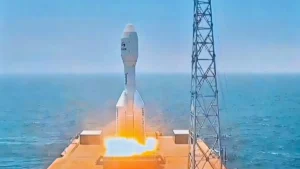
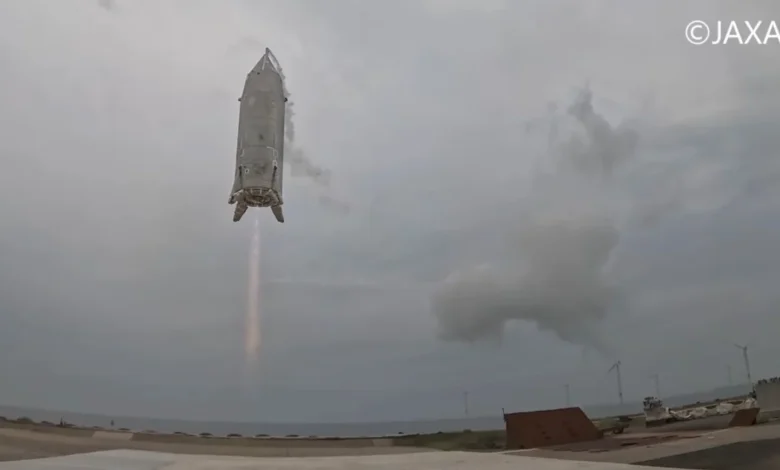
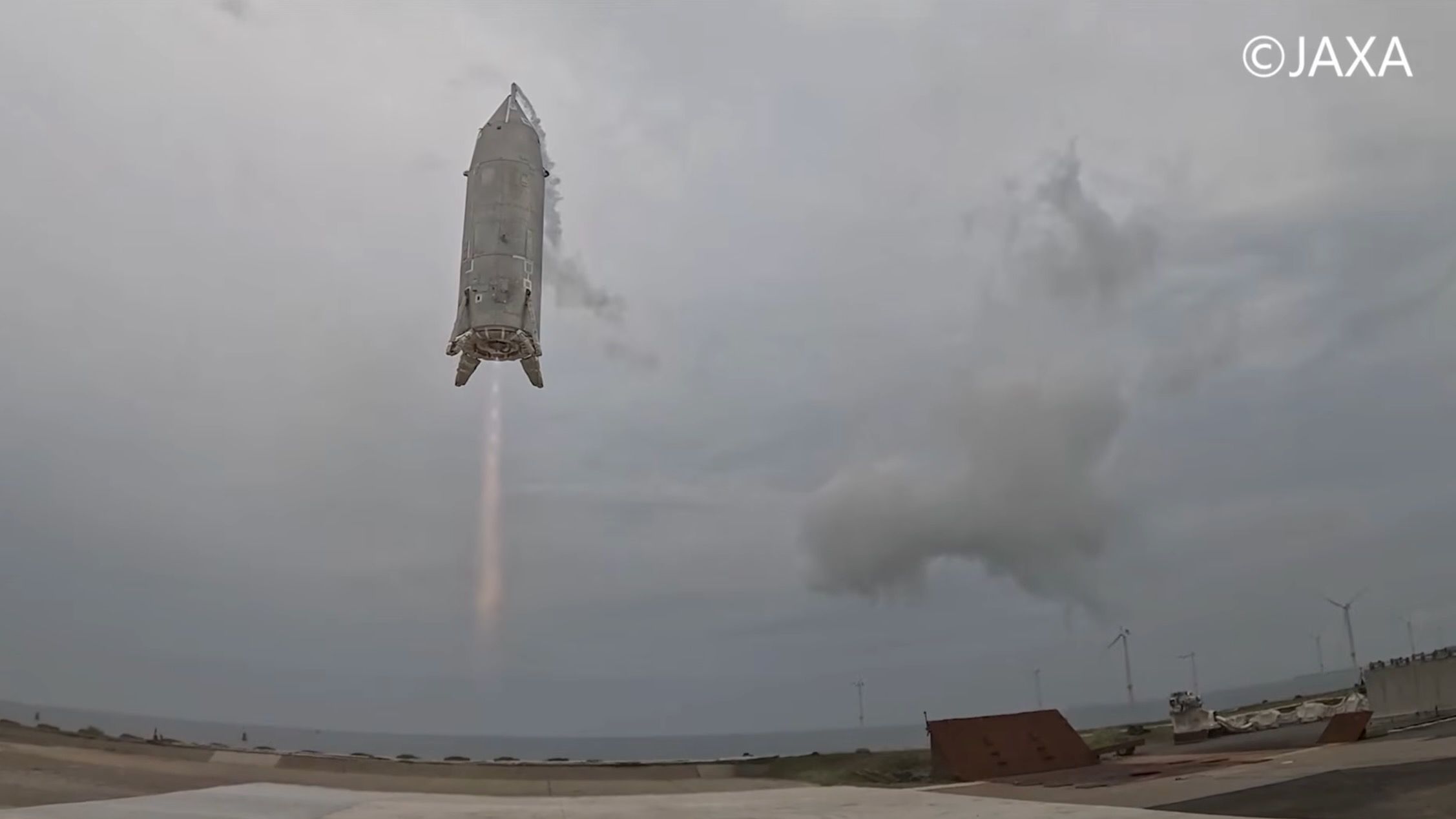
The inaugural test flight of the RV-X took place on July 11th at JAXA’s Noshiro test facility, a dedicated site for aerospace research and development. While described by observers as more of a "hop" due to its duration and limited trajectory, the significance of this controlled ascent and descent cannot be overstated. The 24-foot-tall (7.3 meters) prototype, powered by a single engine, ascended just over 33 feet (10 meters) into the air. It then executed a controlled horizontal maneuver, traveling approximately 50 feet (15 meters) across the concrete launch pad before executing a soft landing on the opposite side of its liftoff point.
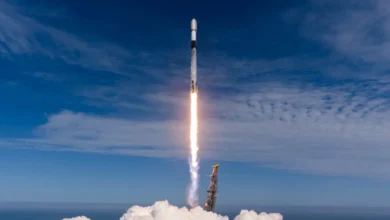
This meticulously planned maneuver lasted for approximately 40 seconds, showcasing the vehicle’s nascent capabilities in vertical takeoff and landing (VTOL) technology. The successful execution of this initial test flight brings JAXA and its partners closer to developing a technology that has been a hallmark of the most advanced space programs globally. Only a select few entities, including SpaceX with its Falcon 9, Falcon Heavy, and Starship, Blue Origin with its New Glenn, and most recently China with its Long March 10B, have demonstrated the capacity for reusable orbital rockets.
The Genesis of RV-X and the CALLISTO Initiative
The RV-X is not an isolated endeavor but serves as a critical precursor to a larger, more ambitious single-stage reusable flight experiment project known as CALLISTO. This collaborative initiative involves JAXA, France’s Centre National d’Études Spatiales (CNES), and the German Aerospace Center (DLR). The CALLISTO project aims to design and construct a single-stage rocket engineered for vertical launch, autonomous landing, refurbishment, and subsequent reuse. The RV-X, therefore, acts as a vital technological pathfinder, enabling JAXA to refine its understanding and operational procedures for reusable launch vehicles, a domain that promises to significantly reduce the cost of space access.
This focus on reusability is a strategic imperative for Japan’s space program. While the nation’s most advanced operational rocket, the H3, introduced in 2023, offers improved efficiency and cost-effectiveness over its predecessor, the H-2A, it was not designed for reusability. The H3 has experienced some launch anomalies, with two of its eight missions not being fully successful. Furthermore, its cost-effectiveness, while improved, still falls short compared to the rapidly advancing reusable rocket stages being developed by international competitors. Consequently, JAXA is actively investing in future technologies like the RV-X to ensure Japan remains competitive in the evolving landscape of space launch services.
A Historical Context: Learning from Global Pioneers
The RV-X’s initial flight bears a striking resemblance to the early developmental stages of SpaceX’s Starship program. The "Starhopper," an early Starship prototype, was famously compared to a water tower during its initial "hopper" tests. In 2019, the first untethered hop of the stout, three-legged, steel Starhopper at SpaceX’s Starbase facility in South Texas saw it ascend approximately 65 feet (20 meters) before returning to its landing pad.
This foundational success with Starhopper allowed SpaceX to progressively increase the altitude and duration of its test flights, meticulously refining the Starship’s design and operational parameters. JAXA appears to be adopting a similar incremental approach with the RV-X. Having successfully completed its initial 33-foot (10-meter) hop, the agency is now setting its sights higher. The next planned launch for RV-X is expected to reach an altitude of up to 330 feet (100 meters), incorporating an additional lateral maneuver and hover before landing. This methodical progression is essential for gathering critical data and building confidence in the vehicle’s complex control systems.
Strategic Importance and Operational Feasibility
The development of reusable rockets is not merely about technological prowess; it is deeply intertwined with operational feasibility and economic viability. JAXA explicitly highlights this on its website, stating, "Reusable rockets require consideration of operational feasibility." The agency emphasizes that through the repeated verification of maintenance, operation, vehicle movement, and launch pad setup using actual experimental vehicles in preparation for flight tests, they are establishing operational procedures that will be instrumental for the repeated operation of future rockets.
This hands-on, iterative approach is crucial. It allows engineers to identify and address potential challenges related to the rigorous demands of multiple launch and landing cycles, including structural integrity, engine performance degradation, and the logistics of rapid refurbishment. The RV-X program is, therefore, a practical testing ground for the entire ecosystem required to support a reusable launch capability.
Supporting Data and Future Projections
The RV-X prototype is a testament to miniaturized, yet potent, aerospace engineering. Its dimensions, while modest, are sufficient for the initial phases of testing complex flight dynamics. The single engine powering the vehicle is designed to provide the necessary thrust for vertical ascent and controlled descent. The horizontal maneuver capability is particularly important, as it tests the vehicle’s ability to control its attitude and trajectory during lateral movement, a critical aspect for future landing sequences that may involve precise positioning on designated landing zones.
The projected increase in altitude for the next RV-X flight to 330 feet (100 meters) represents a tenfold increase from the initial test. This escalation will provide valuable data on how the rocket’s control systems respond to greater aerodynamic forces and longer durations of engine burn. The inclusion of a lateral crossover and hover further tests the vehicle’s agility and its capacity for complex flight path management.
Broader Implications for Japan’s Space Sector
The success of the RV-X flight test has several significant implications for Japan’s space sector and its global standing in space exploration:
- Cost Reduction: Reusable rockets are the key to dramatically lowering the cost of launching satellites, conducting scientific missions, and potentially facilitating future space tourism and resource utilization. By developing its own reusable technology, Japan aims to make its space activities more economically sustainable.
- Technological Advancement: The RV-X program pushes the boundaries of Japanese aerospace engineering, fostering expertise in areas such as advanced propulsion, guidance, navigation, and control (GNC) systems, and autonomous landing technologies.
- International Collaboration: The CALLISTO project, involving JAXA, CNES, and DLR, underscores the importance of international partnerships in tackling complex space challenges. This collaboration allows for the pooling of resources, expertise, and risk, accelerating progress for all involved.
- Future Launch Capabilities: The RV-X and the subsequent CALLISTO project are foundational steps towards a future where Japan can independently offer competitive reusable launch services, potentially attracting commercial and governmental customers. This could also lead to new domestic launch opportunities and the development of related industries.
- Scientific and Exploration Missions: A cost-effective and reliable launch system is crucial for enabling more frequent and ambitious scientific missions, including deep space exploration, Earth observation, and the deployment of advanced communication and navigation satellites.
Official Responses and Future Outlook
While specific public statements from JAXA officials immediately following the July 11th test were not detailed in the initial report, the agency’s website articulates the strategic importance of this research. The emphasis on establishing operational procedures for repeated rocket operations suggests a confident outlook. The successful hop is a clear validation of the engineering and planning invested in the RV-X.
The next steps for the RV-X program will be closely watched by the global aerospace community. The progression to higher altitudes and more complex maneuvers will provide further insights into the vehicle’s performance envelope and its potential for future development. This ongoing testing is vital for building confidence and refining the technology towards operational deployment.
In conclusion, Japan’s successful first flight test of the RV-X reusable rocket prototype is a pivotal moment, signaling a determined push towards a new era of cost-effective and sustainable space access. This achievement, built upon rigorous research and development, positions Japan to play an increasingly influential role in the global space economy and exploration endeavors. The journey towards full reusability is long and complex, but the RV-X’s initial hop represents a confident stride in that direction.