For many global travelers, concluding a journey with an elevated, panoramic vista of the urban landscape has become a customary travel ritual. Whether gazing out from the rooftop of Barcelona’s Casa Milà or scaling Copenhagen’s historic Round Tower, visitors frequently use these vantage points to orient themselves, map out explored zones, and reflect on the topography of a once-foreign destination. Yet, for many residents of metropolitan hubs, local landmarks often suffer from a phenomenon of proximity, remaining unvisited for years while daily routines take precedence. Despite residing in the New York City area for half a decade, countless locals bypass its most famous architectural marvels, viewing them purely as distant fixtures of the skyline rather than accessible destinations.
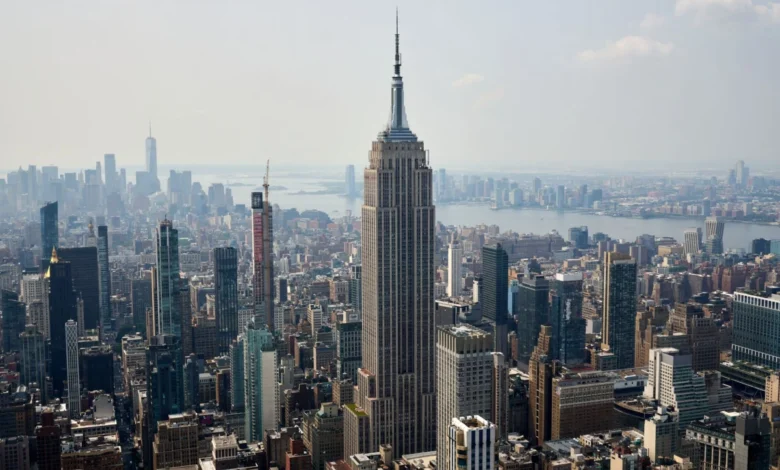
Rising from 350 Fifth Avenue, the Empire State Building remains an enduring cinematic and cultural icon, immortalized in classic Hollywood productions such as Sleepless in Seattle and King Kong. While architectural purists often argue that the absolute best external view of the skyscraper is achieved from alternative vantage points—such as Rockefeller Center’s Top of the Rock—the primary appeal of ascending the Empire State Building lies entirely in the expansive bird’s-eye perspective it affords of the surrounding metropolis. Beyond the visual spectacle, the building houses carefully curated historical and interactive exhibits on its second and eightieth floors, detailing the unprecedented engineering feat of its 1930s construction. For travelers and residents preparing to experience this Art Deco masterpiece firsthand, navigating ticketing options, optimal visiting windows, and logistical considerations ensures an efficient and rewarding excursion.
Historical Chronology and Architectural Significance
Designed by the architectural firm Shreve, Lamb & Harmon, the Empire State Building stands as a monumental 102-story Art Deco skyscraper situated in the heart of Midtown Manhattan. Its construction remains one of the most remarkable logistical triumphs in modern architectural history. Ground was broken on March 17, 1930, and the structure was officially opened on May 1, 1931, completing the massive undertaking in a staggering 13 months and four days—averaging an unprecedented pace of roughly 4.5 stories per week.
Rising to a structural height of 1,250 feet, and reaching 1,454 feet inclusive of its iconic antenna spire, the skyscraper claimed the title of the world’s tallest building upon completion. It held this distinction for nearly four decades until the completion of the World Trade Center’s North Tower in 1970. Following subsequent urban developments, it currently ranks as the eighth-tallest building in New York City. The property functions as a bustling commercial hub, accommodating more than 150 corporate tenants, including prominent enterprises such as LinkedIn, Workday, and Expedia, while welcoming upwards of 2.5 million visitors annually to its observation decks.
The building’s cultural footprint is equally substantial, with appearances in more than 250 films and television programs. In 1976, the skyscraper inaugurated its famous tower lighting tradition, illuminating its spire in red, white, and blue to celebrate the United States Bicentennial. Since then, the programmable LED floodlights have become a dynamic canvas for commemorating cultural events, holidays, and seasonal milestones. To modernize visitor experiences and infrastructure, property ownership completed a four-year, $165 million renovation project in 2019. This extensive overhaul revitalized the second- and eightieth-floor museum galleries and completely reimagined the 102nd-floor glass-enclosed observatory.
Ticketing Protocols and Admission Strategies
Located at 20 West 34th Street for dedicated visitor access, the Empire State Building operates 365 days a year, accommodating tourists through rain, shine, and holidays. In response to post-pandemic tourism management, the institution relies primarily on a timed-ticketing system designed to mitigate overcrowding at kiosks and streamline elevator queues.
According to Dan Rogoski, senior vice president and observatory general manager, advance ticket purchases through official channels such as esbnyc.com are strongly advised to secure preferred time slots, particularly during high-demand periods like sunset and major holidays. However, flexible travelers can frequently secure same-day admissions on-site via digital kiosks located near the 12 West 34th Street entrance.
Visitors generally choose between standard admission to the 86th-floor open-air deck, priced around $46, or a combined ticket that includes access to the climate-controlled 102nd-floor observatory, priced around $81. Both tiers include entry to the ground-level and intermediate historical exhibitions, alongside flexibility to reschedule reservations within the selected calendar day. While premium add-ons such as "Express" passes and "Flex" tickets are marketed to fast-track entry, standard processing times during off-peak hours render these additional expenditures largely unnecessary for casual visitors.
For travelers planning an extensive itinerary across multiple New York City landmarks, multi-attraction bundles such as the New York CityPass or the New York Pass by GoCity offer discounted cumulative rates over designated operational days.

Guided Tours and Premium Experiences
For visitors seeking an elevated or exclusive encounter, the building offers structured VIP programs. The Premium Experience, starting at approximately $175, provides a guided small-group tour capped at seven participants, complete with expedited priority entry. Alternatively, the All Access Tour, priced near $500, mimics the arrival experience of visiting celebrities and dignitaries. Participants enter via a private VIP entrance, access a dedicated celebrity green room equipped with complimentary refreshments, and receive a fully escorted private tour of the facilities.
Step-by-Step Visitor Experience
Upon arrival at the 34th Street entrance, guests pass through comprehensive security checkpoints before proceeding to the second floor. Here, interactive museum exhibits chronicle the arduous labor conditions, financial climate, and engineering ingenuity of the 1930s construction project. Visitors are subsequently escorted by staff to elevators equipped with historic projection lighting, ascending directly to the 80th floor.
The 80th floor serves as an indoor preview space, featuring permanent installations such as the "NYC: Above and Beyond" mural—a detailed artistic rendering of the Manhattan streetscape constructed entirely from memory by artist Stephen Wiltshire following a 45-minute helicopter reconnaissance flight.
From the 80th floor, guests transition to the legendary 86th-floor open-air observatory. This primary deck delivers an unobstructed 360-degree panorama of the metropolitan area, enclosed by iconic historic art-deco safety grills and supplemented by overhead radiant heaters during colder months. On exceptionally clear days, visibility extends across state lines into New York, New Jersey, Pennsylvania, Connecticut, Massachusetts, and Delaware.
Guests holding 102nd-floor access tickets ascend via a specialized glass elevator into a completely enclosed, floor-to-ceiling glass observatory offering magnified visibility unaffected by external weather elements. While no strict time limits are enforced once visitors reach the decks, allocating between one and two hours ensures an unhurried experience. Exits are routed through the official retail gift shop, leading out into the meticulously restored, landmark-designated Art Deco lobby on Fifth Avenue. Dining options within the complex include the sit-down State Grill and Bar, a Starbucks Reserve, and a Tacombi outpost.
Optimal Timing and Seasonal Considerations
Urban tourism experts consistently note that major metropolitan attractions are best experienced during shoulder seasons. Visiting the Empire State Building during spring or autumn yields milder weather conditions and offers distinct visual spectacles, such as cherry blossoms blooming in Central Park or vibrant fall foliage blanketing the urban canopy. Conversely, the winter holiday season draws peak crowds drawn by festive window displays and seasonal lighting displays, creating a uniquely vibrant atmosphere despite lower temperatures.
Regarding daily scheduling, early mornings and sunset windows represent peak congestion periods. For travelers seeking minimal wait times and sparse crowds, the late-afternoon window between 1:00 p.m. and 4:00 p.m. offers optimal conditions. Early risers can also opt for specialized offerings such as the Sunrise Experience, which grants pre-dawn access for uninterrupted views of the sun rising over the nearby Chrysler Building. Additionally, AM/PM ticket tiers accommodate tourists desiring both daytime panoramic visibility and nocturnal skyline illuminations within a single day’s admission.
Implications and Broader Impact on Urban Tourism
The operational strategies deployed by the Empire State Building reflect a broader evolution in post-pandemic urban tourism management. By implementing mandatory timed ticketing, continuous digital upgrades, and multi-tiered pricing structures, major architectural attractions have successfully balanced high-volume visitor demands with crowd control and infrastructure preservation. These measures not only enhance the individual visitor experience by reducing bottlenecks but also ensure the sustainable long-term maintenance of historic structures that define global urban identity.