How Unity Concord International School Built a Sustainable Pipeline for Youth Public Speaking and Civic Engagement

Every educator recognizes the perennial challenge of transforming the latent, brilliant ideas of teenagers into polished, public-facing discourse. Moving a student from a private thought to a podium requires more than a simple invitation; it demands an intentional ecosystem of pedagogical support, iterative practice, and inspiration. At Unity Concord International School (UCIS) in Chiang Mai, Thailand, this challenge has been met with a structural innovation that bridges the gap between classroom exploration and the global stage. By integrating a year-round TED-Ed Student Talks program with the annual TEDxUCIS Youth event, the school has created a self-sustaining pipeline that is actively reshaping its institutional culture and empowering its student body.
The program, led by a collaborative team including International Co-curricular Coordinator Fernando Oringo, TED-Ed Student Talks Coordinator Abby Schrantz, and TEDxUCIS Youth license holder Madison Conger, serves as a model for how educational institutions can formalize the development of student voice. By treating public speaking not as an isolated extracurricular activity but as a core developmental competency, UCIS has established a framework that offers students a clear trajectory from novice communicator to community influencer.
The Foundation: Establishing a Culture of Ideas
The pedagogical journey at UCIS begins in the TED-Ed Student Talks group, which provides a low-stakes environment for 5th and 6th graders. The primary objective is to demystify the process of public speaking before students reach the heightened self-consciousness often associated with adolescence.
According to Abby Schrantz, the efficacy of the program relies heavily on a grassroots, peer-to-peer recruitment model rather than traditional top-down administrative mandates. Schrantz notes that the program’s growth—now operating at maximum capacity—is largely driven by the testimonials of returning students. By visiting homerooms and allowing students to share their personal experiences, the school fosters a culture where public speaking is viewed as an accessible skill rather than an elite endeavor.
To maintain student engagement, the curriculum is intentionally fluid. Schrantz frequently moves beyond the standard facilitator guidebook to incorporate interactive peer-review sessions. These sessions utilize past talks—both from the local UCIS archives and global TED platforms—as case studies for structural and rhetorical analysis. By evaluating the cadence, visual aids, and emotional resonance of previous speakers, students develop a critical eye for narrative, which they then apply to their own evolving projects.
The Catalyst: Integrating the Main Stage
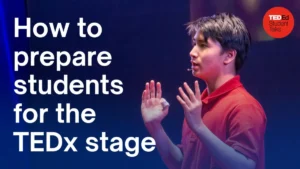
The transition from the classroom to the professional stage is a defining moment for the UCIS student body. By aligning the TED-Ed Student Talks group with the TEDxUCIS Youth event, the organizers ensure that younger students are not merely spectators but active members of the professional discourse.
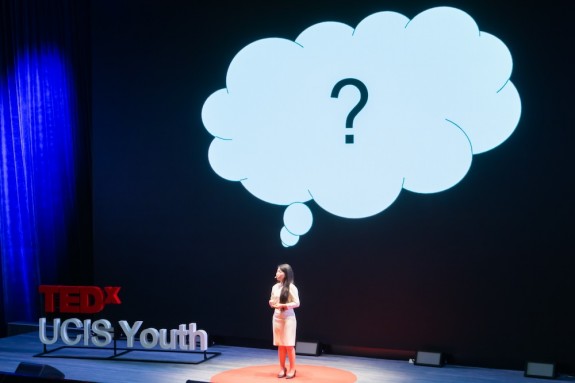
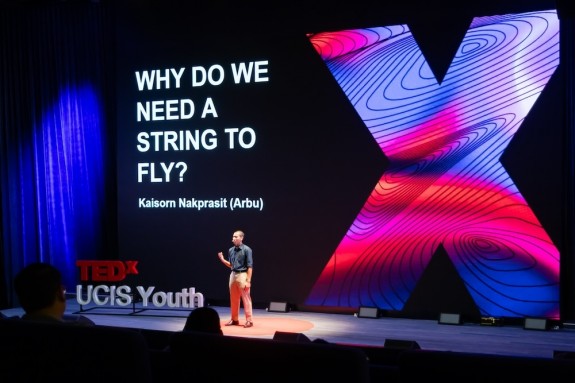
The TEDxUCIS Youth event is curated to provide a holistic experience. Beyond the speeches themselves, the organizing team facilitates an immersive environment—incorporating art installations and sensory-focused breakout rooms—that underscores the event’s identity as a celebration of intellectual inquiry. For younger students in attendance, witnessing their older peers command a stage serves as a powerful validation of their own potential.
"They come away from the event with a concrete understanding of what is possible," explains Schrantz. Post-event feedback sessions often reveal that the younger students are highly observant, focusing on granular details such as the integration of visual media and the intentional use of pauses to heighten emotional impact. This shift in perspective transforms their own preparation, as they move from simple memorization toward sophisticated performance strategy.
The Strategic Pipeline: Why Continuity Matters
For educational institutions considering the implementation of TED-Ed programs, the logistical burden can initially seem prohibitive. However, the experience at UCIS suggests that a long-term, integrated pipeline actually simplifies the organizational process for large-scale events.
Madison Conger, the TEDxUCIS Youth license holder, emphasizes that the presence of an established student group serves as a de facto training ground. "We are not starting from square one every year," Conger notes. "The students who move from the younger cohorts into middle and high school are already fluent in the language of the program. They understand the milestones, the importance of iterative editing, and the standard of presentation required for the TEDx stage."
This institutional memory acts as a force multiplier. Because students have already spent years generating ideas and presenting in front of peers, they possess a level of confidence and poise that would be difficult to cultivate in a single-semester course. The roadmap is clear: students are guided through a developmental arc that prioritizes the refinement of their intellectual property, ensuring that by the time they are eligible for the TEDx main stage, their ideas are not only well-conceived but thoroughly tested.
Impact and Implications: From Speech to Institutional Change
The true measure of the UCIS program lies in its tangible impact on the school’s social and institutional climate. The program has evolved from a series of talks into a platform for genuine civic engagement and community problem-solving.
The topics chosen by students often mirror the challenges of their immediate environment, such as the pressures of academic performance, the complexity of social expectations, and the navigation of identity in an international setting. These talks serve a dual purpose: they provide catharsis for the speaker and serve as a vital reminder to the student body that their personal struggles are shared experiences.
The implications of these talks often extend beyond the auditorium. In one notable instance, a student presentation regarding the challenges of navigating an international school environment as a "cross-cultural kid" acted as a catalyst for institutional reform. The discourse initiated by the speech led to the creation of a dedicated support network for both students and parents, demonstrating that the program effectively functions as a mechanism for democratic feedback within the school.
Data and Methodology: A Framework for Replication
While public speaking is often categorized as a "soft skill," the methodology employed by UCIS is remarkably rigorous. The program functions on a longitudinal timeline:
- Exploration (Ages 10-12): Focus on identifying interests and basic storytelling structures.
- Refinement (Ages 13-15): Emphasis on rhetoric, visual literacy, and peer-to-peer critique.
- Application (Ages 16-18): Focus on high-level performance, professional branding, and the articulation of complex, actionable ideas.
By standardizing this approach across grade levels, schools can ensure that students are not merely learning to speak, but learning to think critically about the information they consume and create.
The success of the UCIS model suggests that the future of student empowerment in international education lies in the integration of global platforms with localized, consistent programming. As Fernando Oringo, the International Co-curricular Coordinator, notes, the "TED" brand serves as a powerful attractor, but it is the day-to-day work of the student groups that provides the substance.
Conclusion
The model developed by Unity Concord International School offers a clear, scalable roadmap for educators globally. By viewing public speaking as a sustained, multi-year developmental process rather than a sporadic event, schools can foster a generation of students who are not only capable of articulating their ideas but are also committed to using their voices to influence the communities they inhabit.
As the program continues to grow, the primary takeaway for the educational sector remains the necessity of a supportive, structured environment. When students are given the tools to refine their ideas and the stage to present them, they do more than just improve their communication skills—they become active participants in the evolution of their school culture. For administrators looking to replicate this success, the advice is consistent: prioritize the process over the performance, and ensure that the program is integrated into the very fabric of the school’s daily life. Through this approach, the "spark" of a student idea can indeed become the catalyst for meaningful, institutional-wide change.