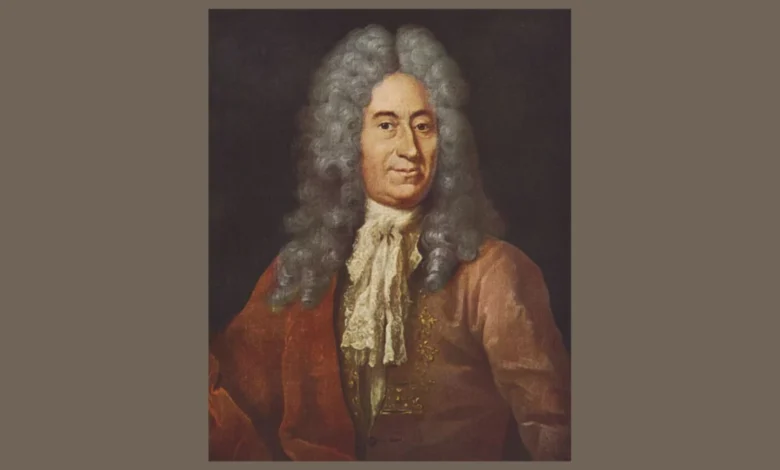
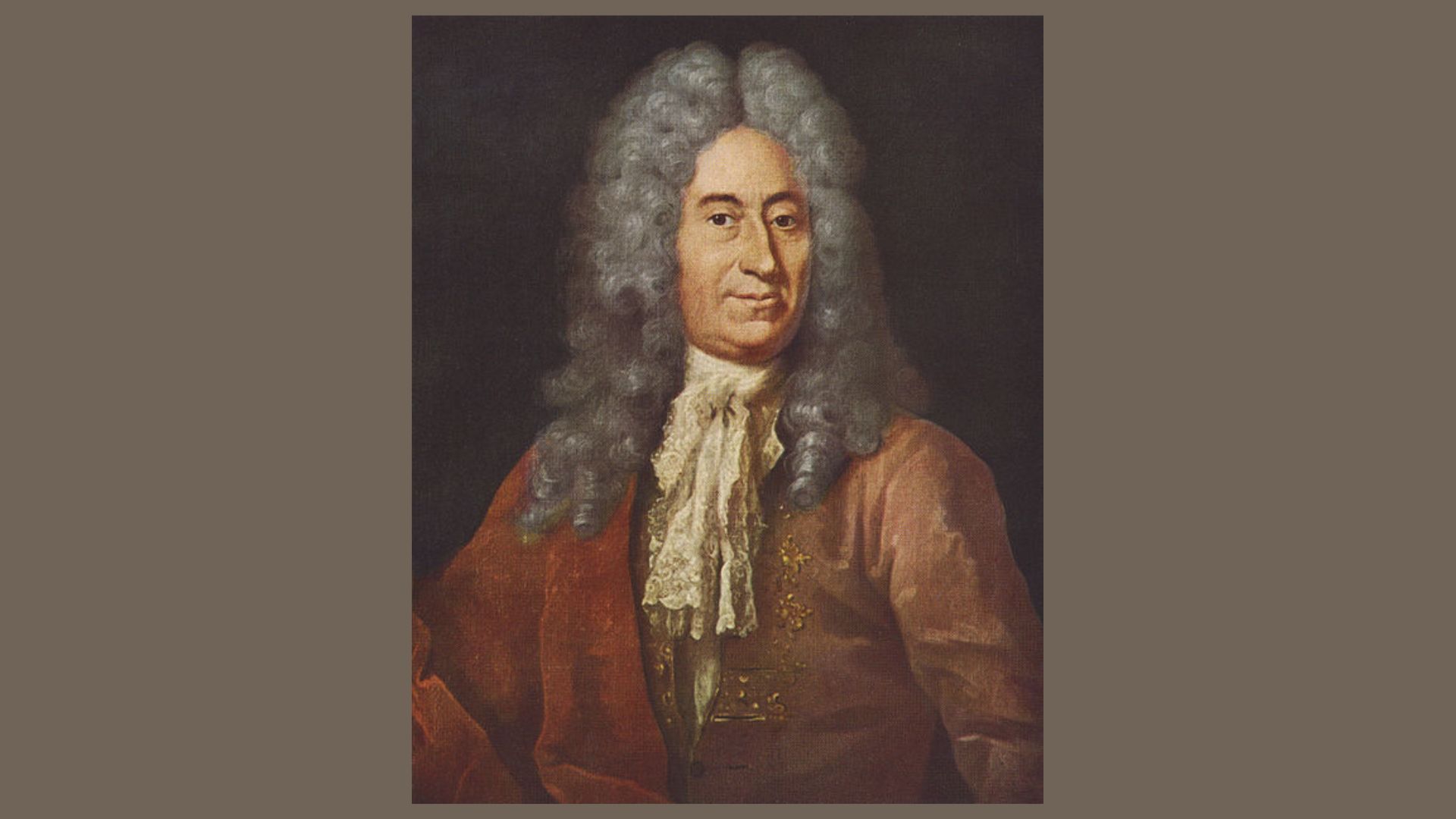
On November 21, 1676, the Danish astronomer Ole Rømer stood before the Royal Academy of Sciences in Paris to present a discovery that would fundamentally alter the trajectory of human understanding: light does not travel instantaneously, but at a finite, measurable velocity. This revelation shattered the long-standing Aristotelian consensus that had persisted for centuries, suggesting that the universe operated with an infinite speed of transmission. By observing the celestial mechanics of Jupiter’s moons, Rømer provided the first empirical evidence that light requires time to traverse the vast expanses of the cosmos, laying the cornerstone for the eventual development of special relativity and modern astrophysics.
The Context of 17th-Century Astronomy
In the late 17th century, the scientific community was deeply invested in the pursuit of accurate navigation and timekeeping. Determining longitude at sea was a primary concern for maritime powers, and astronomers believed that the moons of Jupiter—discovered by Galileo Galilei in 1610—could serve as a "universal clock." Because Io, Europa, Ganymede, and Callisto orbit Jupiter with apparent regularity, it was hypothesized that their eclipses could be used as a standardized temporal reference point, provided one could calculate their positions accurately regardless of their location on Earth.
Ole Rømer, working under the direction of Giovanni Domenico Cassini at the Paris Observatory, was tasked with refining the tables for these eclipses. As he meticulously tracked Io, the innermost Galilean moon, he encountered a persistent and inexplicable discrepancy in the data.
Chronology of the Discovery
The process of discovery was not a singular "eureka" moment, but the result of years of rigorous, data-driven observation.
- 1671–1675: Rømer conducts systematic observations of Io’s eclipses as it enters the shadow cast by Jupiter. He records the timing of these events with unprecedented precision, noting that the moon completes an orbit roughly every 42.5 hours.
- Early 1676: Rømer notices that the intervals between Io’s eclipses are not constant. When Earth is positioned closer to Jupiter in its orbit around the Sun, the eclipses appear to occur earlier than expected. Conversely, when Earth’s orbital path takes it to the far side of the Sun—increasing the distance between the two planets—the eclipses consistently lag behind the predicted schedule.
- November 9, 1676: Rømer predicts an eclipse of Io for the Royal Academy of Sciences. He warns that the event will occur ten minutes later than the calculations based on standard, instantaneous light speed would suggest.
- November 21, 1676: The prediction is validated. Rømer formally proposes to the Academy that the delay is not a mechanical failure of the "cosmic clock," but a result of the extra time light requires to travel across the increased distance of Earth’s orbital diameter.
Analyzing the Data and the Finite Speed of Light
Rømer’s genius lay in his ability to isolate the variable of distance. He deduced that the 22-minute difference (11 minutes of early arrival and 11 minutes of late arrival) corresponded to the time it took for light to traverse the diameter of Earth’s orbit. While Rømer did not produce the modern value of 299,792 kilometers per second—his calculation was hampered by the imprecise measurement of the Earth’s orbital diameter at the time—he successfully demonstrated that the speed was finite.
Mathematically, if the diameter of the Earth’s orbit was roughly 280 million kilometers, and light took 22 minutes to cross it, the calculated speed would be approximately 212,000 kilometers per second. While this was roughly 30% lower than the actual speed of light, the significance of his work was not the precise number, but the proof of concept. The scientific community, though initially skeptical—including his mentor Cassini, who doubted the finite nature of light—eventually accepted the conclusion as the observations continued to hold true.
Official Responses and Scientific Reception
The reaction of the contemporary scientific elite was mixed. In the 17th century, the philosophical weight of the "instantaneous" theory was heavy. Figures such as René Descartes had championed the idea of an instantaneous, infinite speed of light, arguing that if light were not infinite, the physical world would be disconnected.
However, the empirical nature of Rømer’s presentation proved difficult to refute. Christiaan Huygens, the Dutch polymath, was among the first to recognize the profound implications of Rømer’s work. Huygens utilized Rømer’s data to refine his own calculations, further legitimizing the findings. By 1729, when James Bradley independently confirmed the speed of light through the phenomenon of stellar aberration—the apparent shift in the position of stars caused by the Earth’s motion—Rømer’s discovery became an established pillar of physics.
The Broader Impact on Modern Physics
The realization that light has a speed limit acted as the primary catalyst for the development of modern physics. If light has a finite speed, it implies that when we look at the stars, we are looking back in time. This realization transformed astronomy from a study of static positions into a study of cosmic history.

Furthermore, the "speed of light" (denoted as c) became the ultimate anchor for the laws of nature. In the 20th century, Albert Einstein utilized the constancy of c as the fundamental postulate for his theory of special relativity. Einstein demonstrated that space and time are not absolute, but relative, and that their transformation depends entirely on the speed of light.
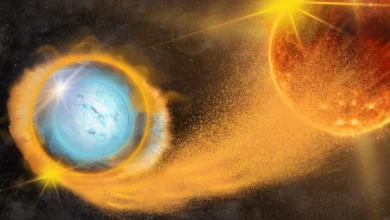
As noted in contemporary astrophysical research, the speed of light is the universe’s "speed limit." It imposes a causal boundary; no information, matter, or energy can travel faster than c. This limit is central to our understanding of why massive objects require infinite energy to reach light speed, and it dictates the structure of the observable universe. Without the boundary established by c, the causal consistency of the universe would collapse, rendering the laws of thermodynamics and gravity incoherent.
Implications for Contemporary Space Exploration
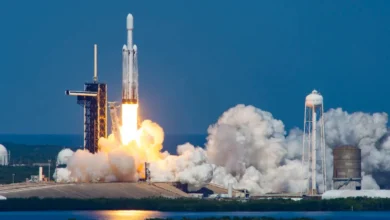
Today, the finite speed of light is a practical constraint in space exploration. For engineers at agencies such as NASA, the delay in communication between Earth and robotic probes—such as the Mars rovers or the Voyager spacecraft—is a direct, everyday application of Rømer’s discovery.
When a signal is sent to a probe at the edge of the solar system, it may take hours for the command to arrive and for the data to return. This "light-lag" dictates how we design autonomous systems, as real-time control is physically impossible across interplanetary distances. Every aspect of modern telecommunications, GPS synchronization, and deep-space observation relies on the precise calibration of the speed of light.
Conclusion
Ole Rømer’s 1676 presentation to the Royal Academy of Sciences remains one of the most important moments in the history of science. It shifted the human perspective from a localized, instantaneous view of the world to an expansive, time-dependent model of the universe. By simply observing the timing of a moon orbiting a distant planet, Rømer proved that the cosmos is governed by precise, universal constraints. His work serves as a reminder that even the most deeply held scientific beliefs are subject to revision when confronted with the rigors of empirical data, and that the measurement of the smallest discrepancy can lead to the discovery of the most profound universal truths.