Interstellar Comet 3I/ATLAS Reveals Nitrogen-Rich Secrets from the Deep Freeze of a Distant Star System

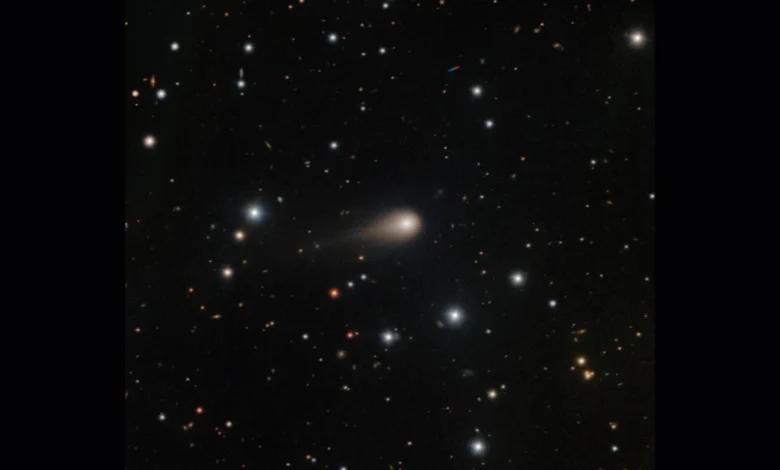
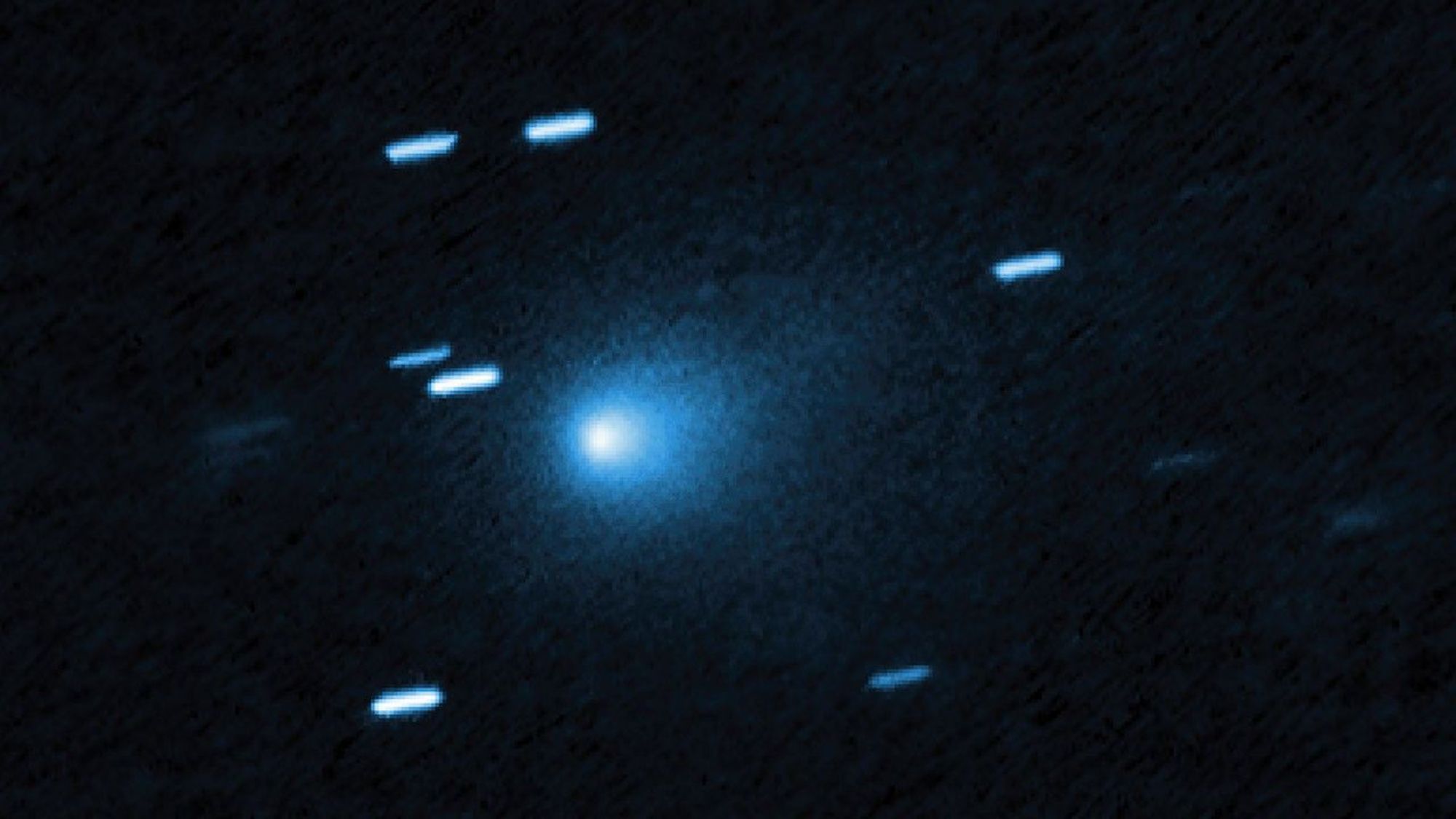
It has been just over one year since the scientific community first identified 3I/ATLAS, an interstellar visitor carving a trajectory through our solar system from the vast reaches of deep space. As the third such object ever confirmed to originate from beyond our Sun’s gravitational tether, it has become the subject of intense study. New findings published in the Monthly Notices of the Royal Astronomical Society have provided a significant breakthrough in our understanding of this celestial wanderer: spectroscopy of the comet’s tail has revealed an unusually high concentration of nitrogen, a discovery that suggests the object coalesced in the frigid, primordial shadows of a distant planetary system.
A New Window into Interstellar Chemistry
The research, led by Lea Ferellec, a research fellow at Northumbria University, utilized the advanced capabilities of the William Herschel Telescope (WHT) situated in the Canary Islands. Central to this investigation was the telescope’s WEAVE instrument—a state-of-the-art fiber-optic spectrograph that allows astronomers to decompose light into its constituent chemical fingerprints.
While previous interstellar visitors, such as ‘Oumuamua in 2017 and 2I/Borisov in 2019, provided limited data due to their speed or rapid disintegration, 3I/ATLAS has offered a more sustained opportunity for observation. By analyzing the comet’s tail rather than just the coma—the fuzzy, gaseous atmosphere surrounding the nucleus—researchers were able to identify ionized particles that would have otherwise remained obscured. The resulting data allowed the team to quantify the presence of nitrogen, carbon dioxide, and carbon monoxide, providing a chemical profile that acts as a "fossil record" of the comet’s birth.
The Significance of the Nitrogen Ratio
In the field of planetary science, the chemical composition of a comet is a reliable indicator of its place of origin. Comets are essentially "dirty snowballs" composed of frozen gases, dust, and rock left over from the formation of a star system. The ratio of volatile elements, particularly the balance between nitrogen and carbon monoxide, is highly sensitive to temperature.
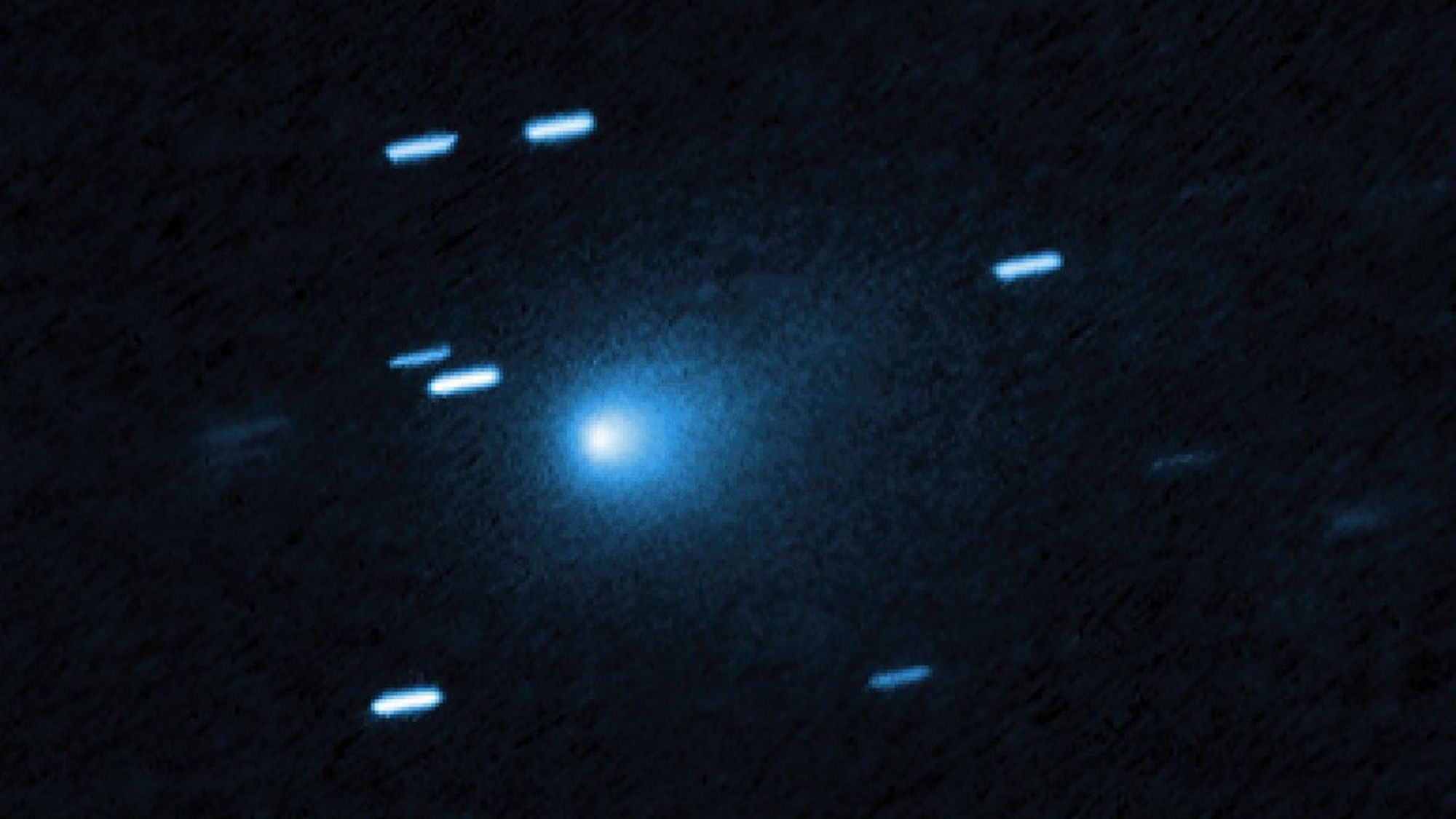
Ferellec and her team determined that 3I/ATLAS possesses a significantly higher nitrogen-to-carbon-monoxide ratio than the average comet native to our solar system. According to their modeling, this suggests that the comet formed in an environment where temperatures plummeted below -240°C. Such extreme cold is typically found in the furthest, darkest reaches of a protoplanetary disk, far from the warming influence of a host star. This finding implies that 3I/ATLAS likely originated in the outer rim of its home system, an "Oort cloud" equivalent where the building blocks of planets are preserved in a deep, permanent freeze.
Comparative Chronology of Interstellar Visitors
The study of 3I/ATLAS follows a progression of technological capability. When 2I/Borisov was detected in 2019, it was the first time astronomers had the opportunity to study an active interstellar comet in detail. While researchers were able to confirm its interstellar origin, the instrumentation available at the time struggled to resolve the specific ion signatures within its tail. The ion tail is created when solar wind—a stream of charged particles emanating from the Sun—strikes the gas and dust shed by the comet, ionizing the molecules and creating a glowing, elongated structure.
The launch of the WEAVE instrument in 2023 marked a paradigm shift in this field. Its high sensitivity enabled the team to successfully map these elusive ions. Comparing the data from 3I/ATLAS to the baseline established by 2I/Borisov and local solar system comets has allowed astronomers to place our local environment within a broader galactic context. It suggests that while our solar system may be unique in its arrangement of planets, the fundamental chemistry of ice and gas formation is a universal process governed by the physics of temperature and distance.
Implications for Planetary Formation
The discovery that 3I/ATLAS is rich in nitrogen has broader implications for the study of exoplanetary systems. If the comet formed in a region so distant from its host star that the light could barely reach it, it serves as a courier of pristine material from that system’s infancy.
"Every one of these objects we study helps us understand a little more about how planets form around other stars," Ferellec stated. By analyzing the "leftovers" of planet formation from other systems, scientists can test theories of how planetary disks evolve. The presence of nitrogen is particularly critical, as it is a key component in the chemistry that potentially supports life. Understanding how nitrogen is distributed in the outer reaches of other systems helps astrobiologists model the conditions under which planets might acquire the necessary ingredients for habitability.
The Role of Advanced Spectroscopy
The success of this mission highlights the evolution of astronomical instrumentation. Spectroscopy—the technique of splitting light into a spectrum to determine chemical composition—has been the backbone of astronomy for over a century. However, the application of this method to the transient, faint, and moving targets of interstellar space requires immense precision.
The WEAVE instrument functions by gathering light from hundreds of objects simultaneously, using thousands of individual optical fibers to feed light into spectrographs. By targeting 3I/ATLAS while it was roughly 277 million miles from Earth, the team was able to isolate the light reflected and emitted by the comet from the overwhelming brightness of the background stars. This precision is what allowed them to isolate the specific "fingerprints" of nitrogen ions, a feat that would have been impossible with the telescopes of the previous decade.
Looking Ahead: A New Era of Discovery
As 3I/ATLAS continues its journey through our solar system, further observations are planned by observatories worldwide. The scientific community is currently evaluating the trajectory of the comet to determine if it will be permanently ejected from our system or if it might be captured into a long-period orbit. Regardless of its ultimate fate, the data already collected serves as a landmark achievement in the young field of interstellar astronomy.
The collaboration between the Northumbria University research group and the international team managing the William Herschel Telescope exemplifies the necessity of global scientific cooperation. As space agencies look toward future missions—including potential "interstellar intercept" missions that would attempt to send a spacecraft to rendezvous with such an object—ground-based spectroscopy remains the primary tool for preliminary assessment.
In the coming months, astronomers expect to refine their chemical models further, incorporating the data from 3I/ATLAS into a growing database of interstellar material. This library of information will eventually allow us to map the chemical diversity of our galaxy. By studying these visitors, we are not just learning about the comets themselves; we are mapping the history of the universe one icy, nitrogen-rich fragment at a time. The mission of 3I/ATLAS is far from over, but the initial findings have already fundamentally altered our perspective on the uniformity and diversity of planetary systems throughout the cosmos.