Cosmic Bullets Fired at 20 Million Miles Per Hour from Milky Way’s Only Helium Nova Revealed by Hubble

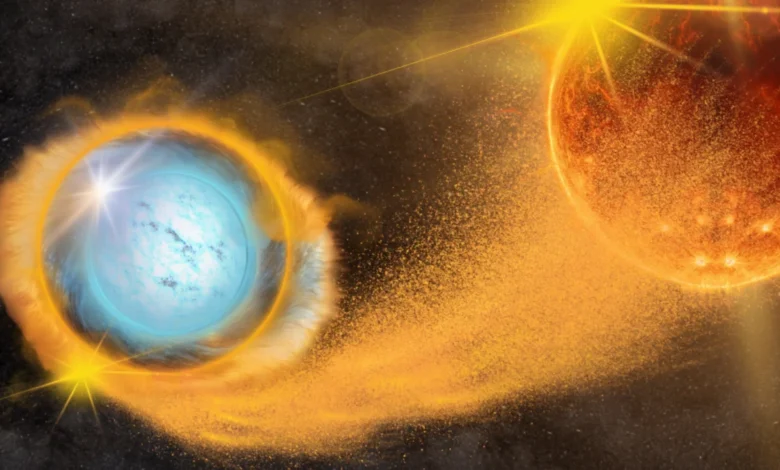
Astronomers, leveraging the unparalleled capabilities of NASA’s Hubble Space Telescope, have unveiled a spectacular and previously enigmatic cosmic event within our own Milky Way galaxy: a stellar explosion, known as V445 Puppis, is violently expelling matter at an astonishing velocity of 20 million miles per hour. This celestial outburst, first observed in the year 2000, stands as the sole confirmed "helium nova" within our galactic neighborhood. Despite two decades of dedicated observation, the intricate phenomena surrounding V445 Puppis remained largely obscured by a dense, dusty shroud, presenting a formidable challenge to scientific understanding.
The recent clearing of this obscuring debris has provided researchers with a critical window into the heart of V445 Puppis. Utilizing a powerful suite of astronomical instruments, including the venerable Hubble Space Telescope, NASA’s Transiting Exoplanet Survey Satellite (TESS), and the ground-based Very Large Telescope (VLT), scientists have not only identified these expelled "bullets" – dense clumps of oxygen-rich gas – but have also begun to unravel the true nature of this extraordinary binary star system. The observations reveal a binary configuration consisting of a dead star, a white dwarf, voraciously accreting material from its companion. This companion star itself is a rare celestial object: a "helium star," which has already shed its outer hydrogen envelope, exposing its helium-rich interior. This unique confluence of a rare binary system and a rare type of stellar explosion offers an unprecedented opportunity for scientists to study these extreme cosmic events in detail.
A Rare Celestial Phenomenon: The Helium Nova
Helium novas, such as the one observed in V445 Puppis, represent a distinct and less common class of stellar explosions compared to their more familiar hydrogen-rich counterparts. The fundamental difference lies in the composition of the accreted material that fuels the explosion. In a helium nova, a white dwarf star, the dense remnant of a star like our Sun after it has exhausted its nuclear fuel, gravitationally pulls material from a companion star. This companion star is not just any star; it is a "helium star," a star that has already undergone significant evolution, shedding its outer hydrogen layers and revealing its inner helium core. In contrast, "ordinary" or classical novas are triggered by the accumulation of hydrogen-rich material onto the surface of a white dwarf.
The process leading to a nova explosion begins with the white dwarf’s relentless gravitational pull. As it siphons off helium-rich matter from its companion, this material accumulates on the white dwarf’s surface. Under immense gravitational pressure and increasing temperature, this accreted layer eventually reaches a critical point. This triggers a runaway thermonuclear reaction, resulting in a powerful explosion that ejects a significant portion of the white dwarf’s outer layers into space.
Chronology of an Enigmatic Outburst
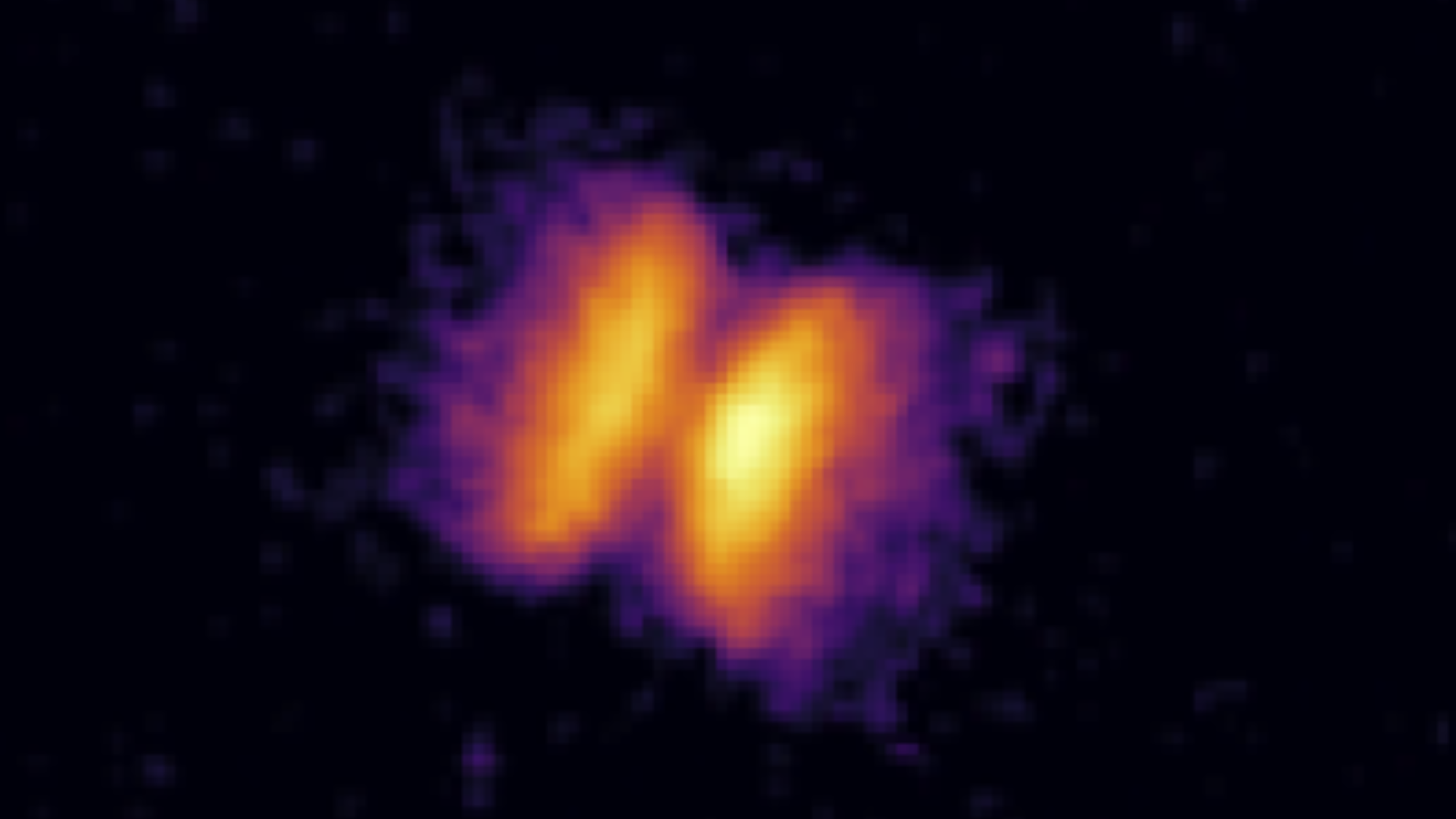
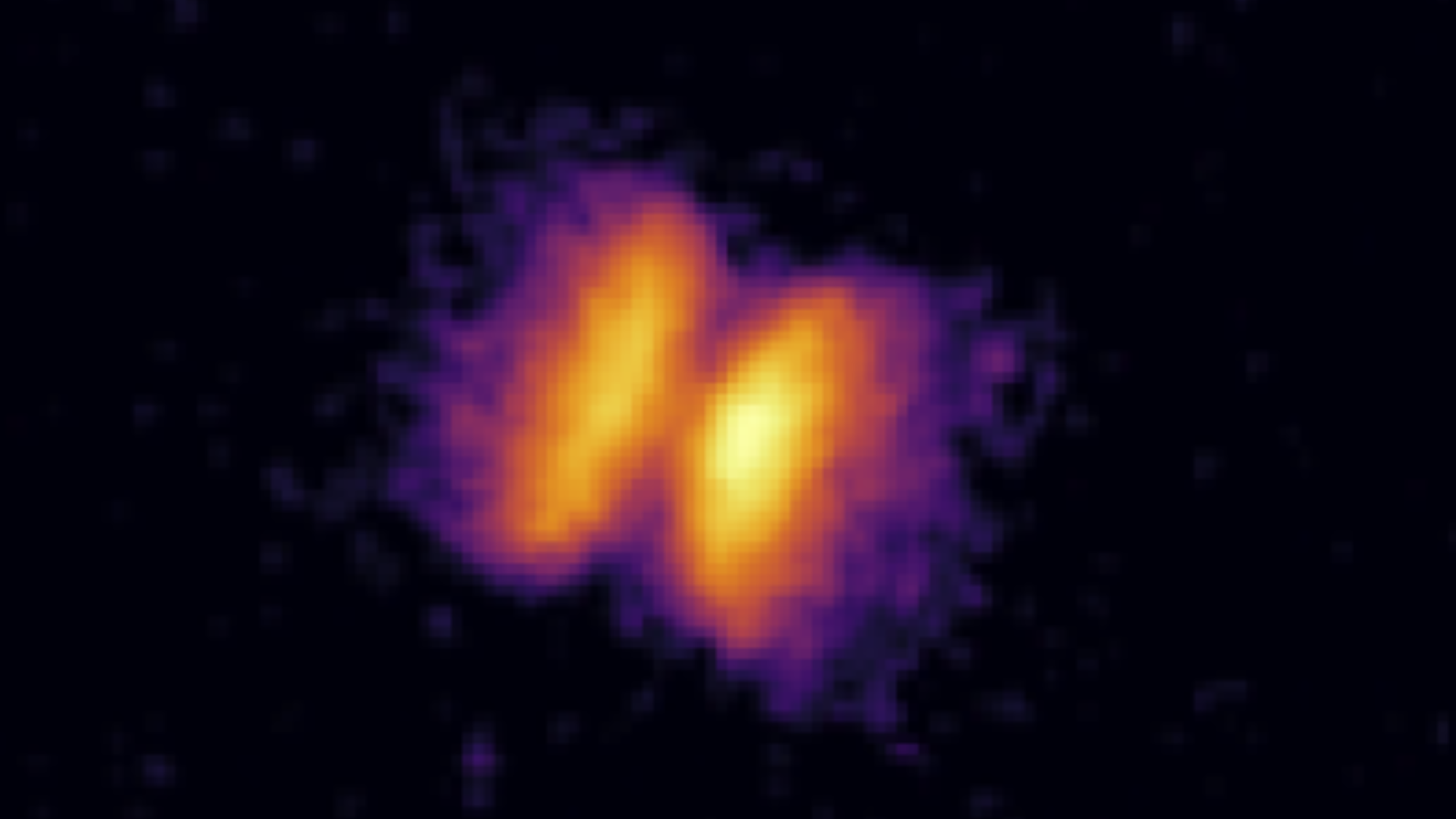
The dramatic eruption of V445 Puppis occurred in late 2000. Following the explosion, vast twin plumes of ejected material, resembling ethereal butterfly wings, were propelled outwards. These bipolar outflows, extending over a staggering trillion miles, were initially detected in infrared wavelengths. Crucially, the nova also generated a thick, opaque disc of dust surrounding the binary system. This dusty veil persisted for over two decades, effectively shrouding the central binary and hindering astronomers’ efforts to study the expanding debris and understand the underlying stellar components responsible for the blast.
The recent observations, made possible by the clearing of this dust cloud, have allowed researchers to finally peer into the heart of the V445 Puppis system. The data gathered by Hubble, TESS, and the VLT, in conjunction with other instruments, has been pivotal in this breakthrough. The clearing of the debris was a gradual process, with different wavelengths of light penetrating the dust at different times. The longer wavelengths, like infrared, were able to pass through the dust sooner, allowing for initial observations of the bipolar outflows. However, visible light, crucial for discerning the nature of the stars themselves, was blocked for many years.
Unraveling the Mystery: The Stellar Culprits and Cosmic Bullets
The revelations from the cleared debris have been profound. The system has been confirmed to comprise a white dwarf actively feeding on a helium star. Helium stars are exceptionally rare, with only a few thousand identified among the hundreds of billions of stars populating the Milky Way. This rarity underscores the scientific significance of V445 Puppis.
"The origin of these ‘bullets’ is a mystery. We suspect that these originated post-outburst, but ‘bullets’ of this kind have not been observed in any other nova," stated John Mills, a researcher at the University of Warwick in the UK and a key member of the research team. This observation is particularly intriguing, as it suggests unique or extreme conditions at play within the V445 Puppis system. The composition of these bullets, identified as potentially oxygen-rich gas, further adds to the enigma, as oxygen is a product of later stellar evolution stages.
The research team’s confirmation that V445 Puppis is indeed a helium nova, resulting from a helium star accreting onto a white dwarf, resolves a long-standing puzzle that has persisted for approximately 25 years. This understanding is crucial for refining models of stellar evolution and understanding the diverse pathways to explosive stellar death.
Potential for Recurrence: A Glimpse into Future Explosions
Adding another layer of fascination to the V445 Puppis system, the research suggests that the white dwarf has resumed its feeding process. The stellar remnant has seemingly recovered from its "stellar indigestion" and is once again drawing material from its helium companion. This ongoing accretion is precisely the process that triggered the initial helium nova. Consequently, there is a distinct possibility that V445 Puppis could erupt again, potentially leading to another episode of this rare cosmic explosion.
This potential for recurrence has significant implications for our understanding of a different, albeit related, class of cosmic explosions: Type Ia supernovae. Type Ia supernovae are powerful events that occur when a white dwarf star accumulates so much mass from its companion that it reaches a critical limit, known as the Chandrasekhar limit, leading to a catastrophic, complete destruction of the white dwarf. These supernovae are incredibly important to astronomers because they possess a remarkably consistent intrinsic brightness, making them invaluable as "standard candles."
Broader Implications: Standard Candles and the Expanding Universe
The consistent luminosity of Type Ia supernovae allows astronomers to measure vast cosmic distances and, crucially, to determine the rate at which the universe is expanding. By observing how the light from these distant supernovae has been stretched by the expansion of spacetime (redshifted), scientists can infer how far away they are and how quickly they are receding. This information has been fundamental in the discovery of dark energy, a mysterious force believed to be accelerating the expansion of the universe.
For years, scientists have hypothesized that repeated helium nova eruptions could eventually lead to a Type Ia supernova. The repeated accretion and ejection of material in helium novas could, over time, build up the mass of the white dwarf to the point where it triggers a terminal Type Ia explosion. The observation of V445 Puppis actively accreting again, and the potential for another helium nova, provides a unique opportunity to study the intermediate stages that might precede such a cataclysmic event.
"I look forward to seeing how this result may help us uncover what powers other similar hydrogen-poor astronomical explosions, such as the famous Type Ia supernovas," Mills expressed. Studying the physics of V445 Puppis could provide critical data to refine models of Type Ia supernovae, improving our understanding of their progenitor systems and the precise mechanisms that initiate these explosive events. This, in turn, would enhance the accuracy of cosmological measurements derived from them, contributing to a more precise understanding of the universe’s history and its ultimate fate.
The research team presented their groundbreaking findings at the Royal Astronomical Society’s National Astronomy Meeting in Birmingham, UK, this week, marking a significant step forward in our comprehension of stellar evolution and the violent, yet beautiful, tapestry of the cosmos. The ongoing study of V445 Puppis promises further insights into the extreme physics of binary star systems and the explosive life cycles of stars.