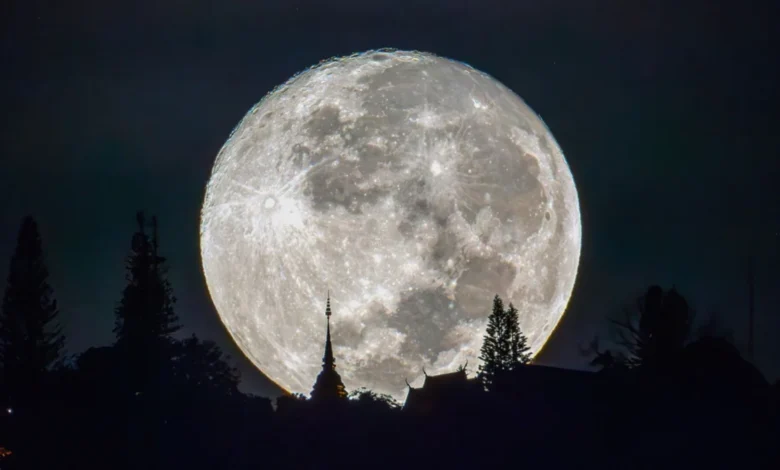
The December 2026 Cold Supermoon is set to grace the night sky with exceptional brilliance, reaching its peak illumination on December 23 at 8:28 p.m. EST (0128 GMT on December 24). This final full moon of the year, occurring while the lunar body is near its perigee—the closest point to Earth in its elliptical orbit—will appear approximately 30% brighter and 14% larger than a typical full moon at its farthest orbital point. According to orbital calculations provided by astronomer Fred Espenak, the lunar disk will be positioned just 221,667 miles (356,740 kilometers) from Earth, marking it as the most significant supermoon event of 2026.
The Mechanics of a Supermoon
A supermoon is not merely a visual spectacle; it is a byproduct of the Moon’s complex orbital path. Because the Moon follows an elliptical orbit rather than a perfect circle, its distance from Earth varies throughout the month. When a full moon coincides with the Moon’s perigee, the result is a supermoon. The 2026 Cold Moon is particularly noteworthy because the alignment of the lunar phase and the orbital proximity is near-perfect, maximizing the potential for observational impact.
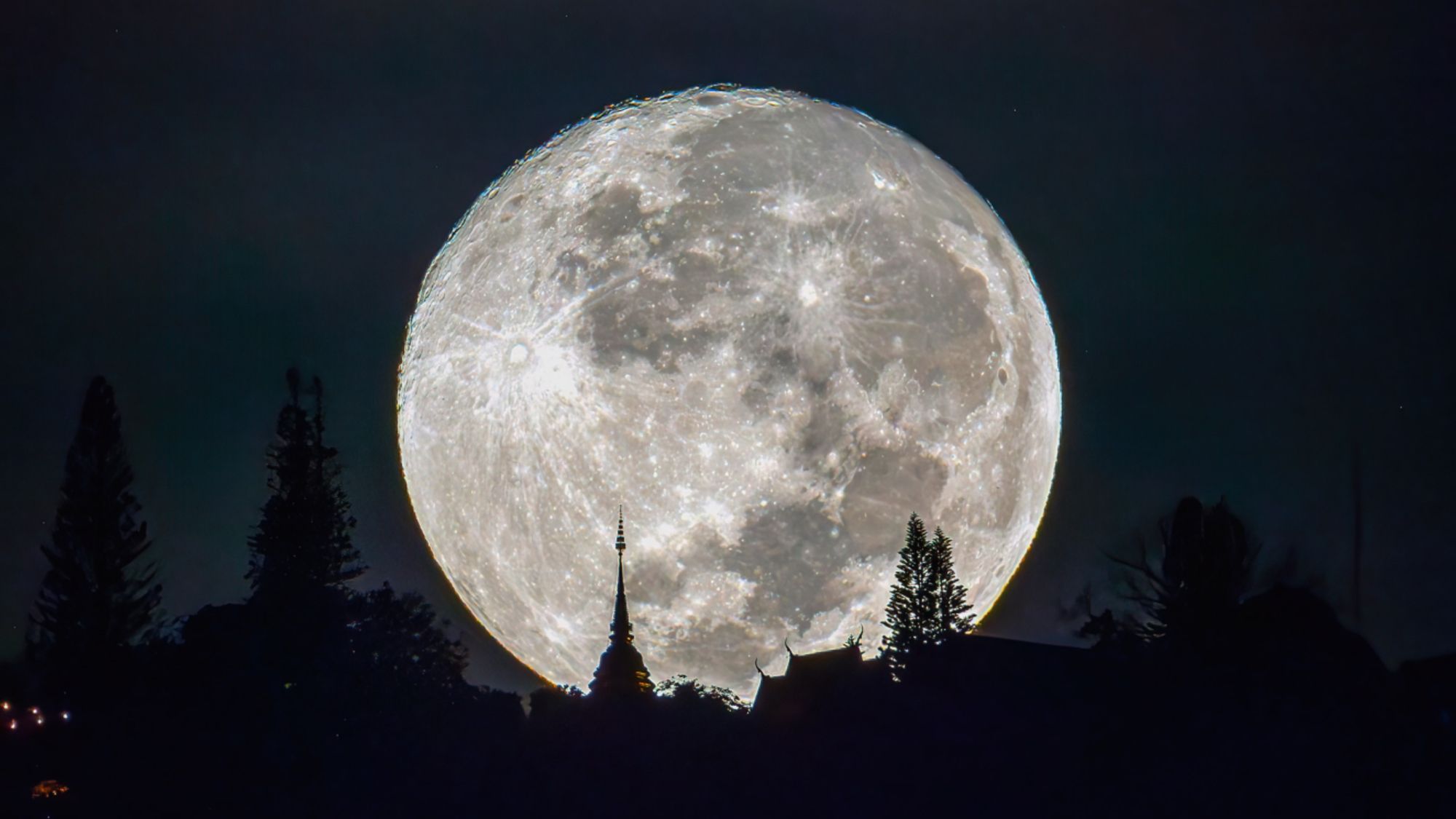
While observers often comment on the sheer size of a supermoon, experts note that the "Moon illusion" also plays a significant role in how the human brain perceives the event. When the Moon is positioned near the horizon, the presence of foreground objects—such as buildings, trees, or distant mountain ranges—provides a scale that tricks the brain into perceiving the lunar disk as significantly larger than it appears when it is high overhead. This psychological effect, combined with the genuine increase in angular diameter due to the perigee, ensures that the December 23 rising will be a highlight for amateur and professional astronomers alike.
Cultural and Historical Context
The moniker "Cold Moon" is deeply rooted in the traditions of the Northern Hemisphere, where the December lunar cycle typically aligns with the onset of the most frigid winter temperatures. Beyond this common nomenclature, the Moon holds various titles across different cultures. The Mohican people, for instance, refer to it as the "Long Night Moon," acknowledging the astronomical proximity to the winter solstice—the year’s shortest day and longest night.
Historically, in Old English tradition, the event was often referred to as the "Moon Before Yule," reflecting the pre-Christian roots of winter celebrations in Europe. The Celts, conversely, knew it as the "Oak Moon," a name that likely reflects their deep reverence for nature and the cyclical turn of the seasons. In the modern era, the timing of the full moon often aligns with global festivities; in 2026, it arrives just as many cultures prepare for Christmas and coincides with the Hindu festival of Datta Jayanti, which honors the birth of Lord Dattatreya. These overlapping cultural touchpoints underscore the historical importance of the lunar calendar in shaping human ritual and time-keeping.
Observing the Celestial Event
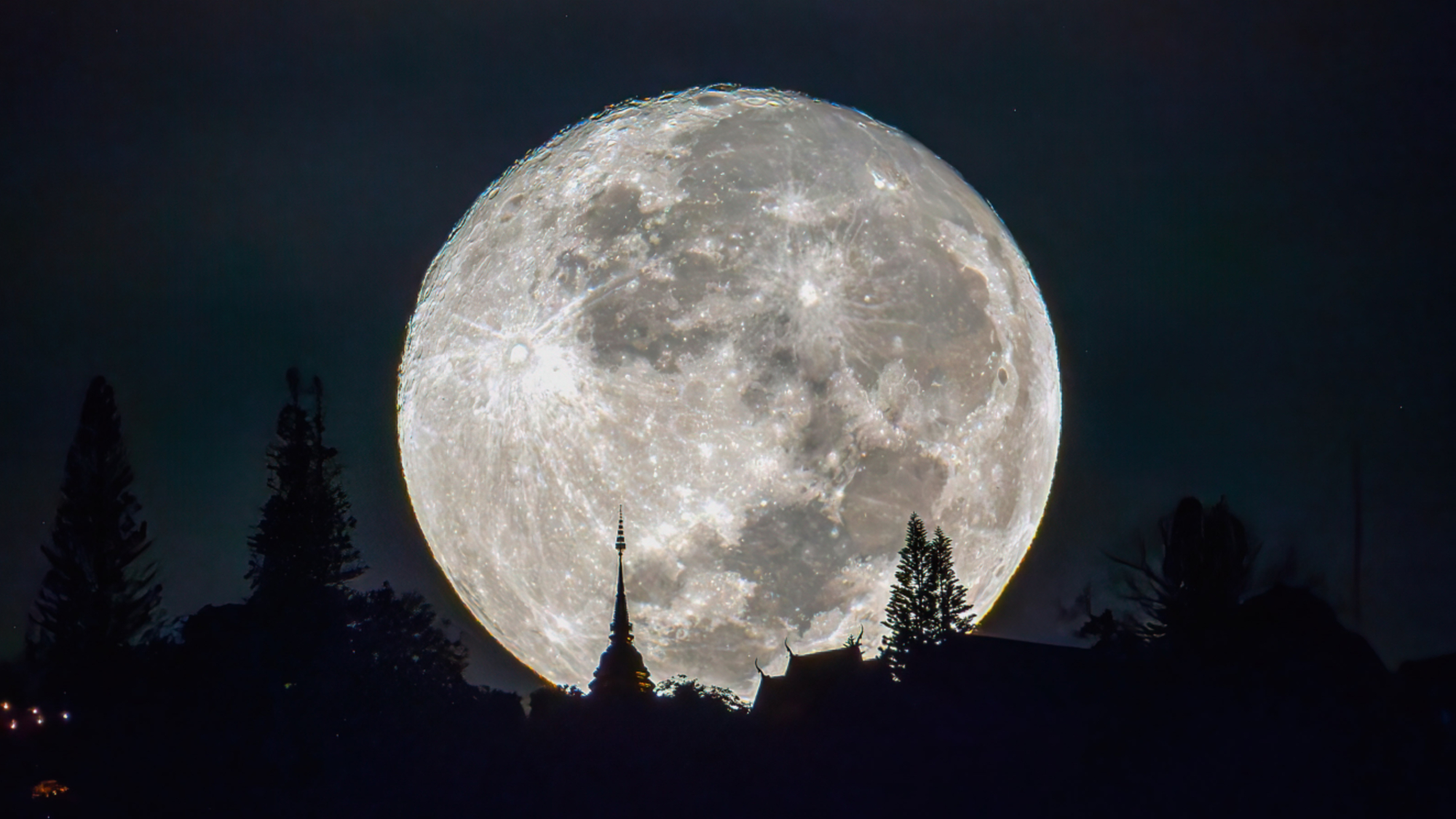
For those planning to witness the spectacle, the best time to view the moon is during moonrise. As the Moon ascends over the eastern horizon, it must travel through a thicker layer of Earth’s atmosphere. This atmospheric density filters out the shorter, blue wavelengths of light, allowing only the longer, redder, and golden wavelengths to reach the observer’s eye. This creates the iconic "harvest" or "golden" hue often associated with low-hanging full moons.
Observers are encouraged to utilize online tools, such as the Time and Date moonrise and moonset tracker, to determine the exact moment the moon clears their local horizon. Because the timing of moonrise shifts depending on longitude and latitude, a universal time for the peak is less useful than a localized calculation.
Navigating the Night Sky: Beyond the Moon
While the brilliance of a supermoon can be overwhelming, it also offers a unique opportunity to view the surrounding constellations. The December 2026 full moon will be positioned within the "Winter Hexagon," an asterism formed by some of the brightest stars in the night sky. This configuration includes:
- Sirius: The brightest star in the night sky, located in the constellation Canis Major.
- Rigel: A blue supergiant in the constellation Orion.
- Aldebaran: The "eye" of Taurus the Bull, known for its distinct orange glow.
- Capella: The primary star in the constellation Auriga.
- Pollux: A major star in the constellation Gemini.
- Procyon: A bright star in Canis Minor.
In addition to the stars, planetary visibility will be favorable. Jupiter and Mars are expected to appear low in the eastern sky in the hours leading up to midnight. Meanwhile, Saturn will be visible toward the western horizon. For those rising early, Venus will act as a "Morning Star" in the southeast, accompanied by the red giant star Arcturus in the predawn sky.
Professional Guidance for Astrophotography
Capturing the detail of a supermoon requires preparation. Because the moon will be fully illuminated, it is often necessary to use a shorter exposure time than one might use for other celestial objects to prevent the image from becoming overexposed or "blown out." Experts recommend using a manual camera setting, a tripod to ensure stability, and a telephoto lens with a focal length of at least 200mm to 300mm to achieve meaningful detail on the lunar surface.
For those interested in documenting the event, the key is to experiment with different foreground compositions. A lunar photo that includes a recognizable landmark provides a sense of scale that a solitary, floating moon cannot offer.
Summary of Upcoming Full Moons
As the year 2026 concludes, the cycle continues into the new year. Astronomers and skywatchers can look forward to the following events in the first quarter of 2027:
| Month | Full Moon Name | Date and Time (EST) |
|---|---|---|
| January | Wolf Moon | 7:17 a.m. on Jan. 22, 2027 |
| February | Snow Moon | 6:23 p.m. on Feb. 20, 2027 |
| March | Worm Moon | 6:43 a.m. on March 22, 2027 |
These dates mark the precise moment of full illumination, though the Moon will appear full to the casual observer for approximately 24 hours on either side of these peaks.
Implications and Public Engagement
The 2026 Cold Supermoon serves as a reminder of the consistent, predictable nature of celestial mechanics. While the public fascination with "supermoons" has grown in recent years, the phenomenon also serves as an educational gateway, encouraging more people to engage with astronomy. Public observatories and amateur astronomy clubs often host viewing events during these times, providing telescopes and expert commentary that help the public understand the physics of our solar system.
Moreover, the event highlights the ongoing importance of tracking lunar cycles for navigation and scientific research. While modern GPS has replaced traditional lunar navigation for most, the study of lunar perigee and its effect on ocean tides remains a critical area of study for oceanographers and climate scientists. The increased gravitational pull associated with a perigee full moon can lead to higher-than-average "perigean spring tides," which are a factor in coastal management and flood risk mitigation.
As the moon rises on December 23, it will represent the culmination of a year of celestial observation. Whether for the casual backyard viewer or the dedicated astrophotographer, the 2026 Cold Supermoon offers a moment of collective pause, inviting the public to look upward and engage with the rhythms of the cosmos. For those planning to document the event, sharing results with astronomical communities remains a vital way to contribute to the collective record of our night sky.