The Northrop M2-F3 Lifting Body Revolutionized Aerodynamic Design With Its First Powered Flight on November 25 1970

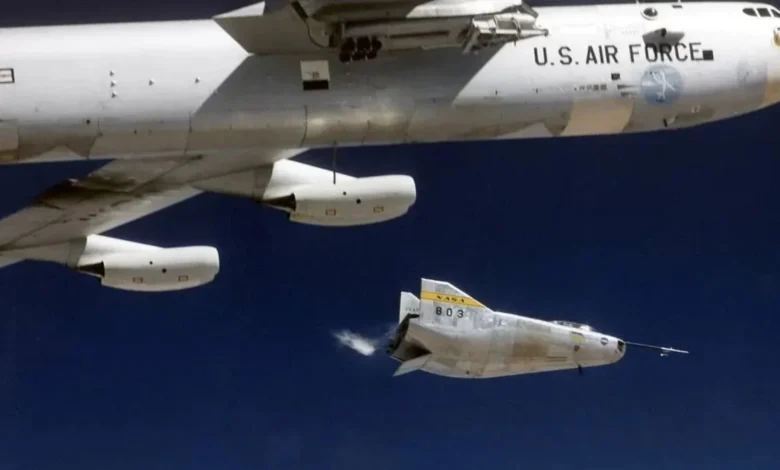
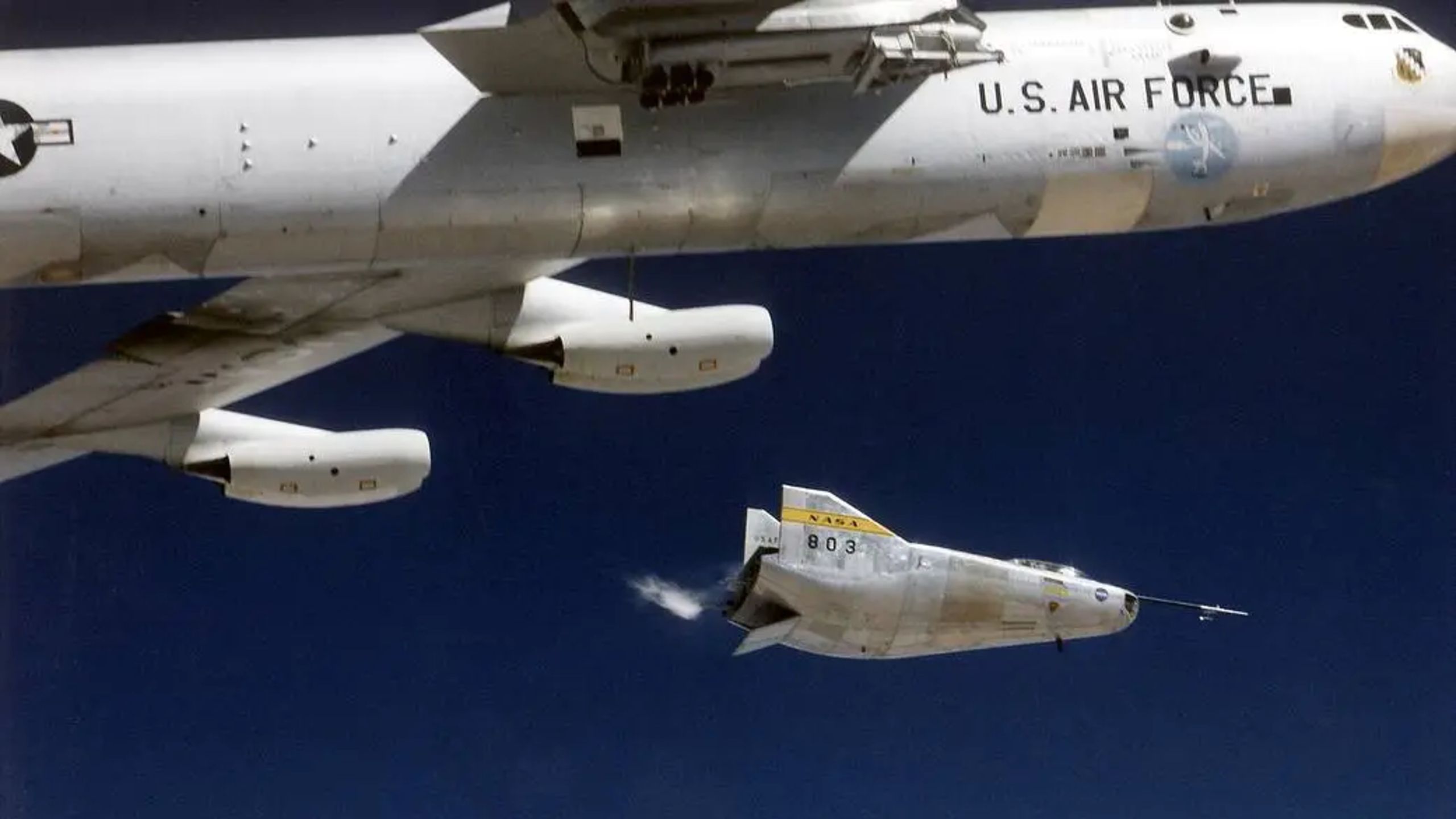
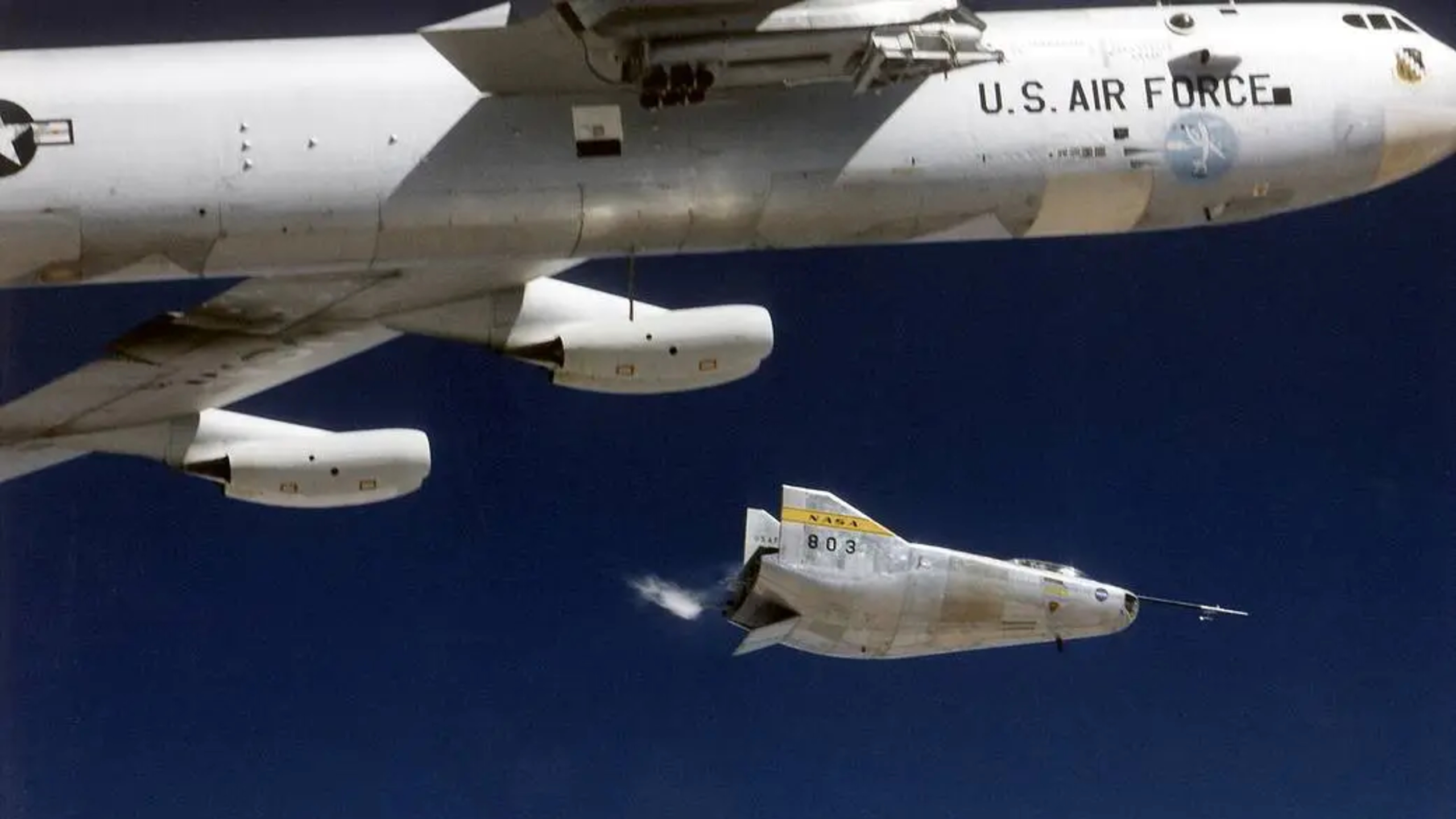
On November 25, 1970, the annals of aviation history were marked by a pivotal milestone at the NASA Flight Research Center—now known as the Armstrong Flight Research Center—at Edwards Air Force Base in California. On this date, the Northrop M2-F3, a heavy-weight lifting body experimental aircraft, successfully completed its maiden powered flight. Piloted by Air Force test pilot Bill Dana, the flight represented a critical step in proving that a vehicle could generate sufficient lift through its fuselage geometry alone, effectively eliminating the need for traditional aerodynamic wings.
The flight lasted approximately six minutes and reached an altitude of 45,000 feet. While the aircraft did not achieve supersonic speeds during this specific sortie, the mission validated the complex control systems and the structural integrity of the vehicle, setting the stage for subsequent high-speed, high-altitude tests that would eventually see the M2-F3 exceed 1.6 times the speed of sound.
The Genesis of the Lifting Body Program
To understand the significance of the M2-F3, one must look back to the mid-1960s, a period when NASA and the U.S. Air Force were actively seeking ways to return spacecraft from orbit with greater maneuverability than the ballistic capsules used in the Mercury and Gemini programs. Engineers theorized that if a spacecraft were shaped like an airfoil, it could generate "lift" upon re-entering the atmosphere, allowing pilots to steer toward a specific landing site rather than relying on a predetermined splashdown zone in the ocean.
The M2-F3 was not an entirely new concept but rather a critical evolution. It was a reconstruction of the M2-F2, which had suffered a catastrophic crash in 1967. The M2-F2 accident, which was famously captured on film and later repurposed for the opening credits of the television series The Six-Million-Dollar Man, highlighted significant longitudinal stability issues. Following the accident, NASA engineers went back to the drawing board. They determined that the M2-F2’s instability was largely due to a lack of directional control. The solution was the addition of a third, center vertical fin to the tail section. This design change, alongside a significantly upgraded control system, transformed the M2-F2 into the M2-F3.
Chronology of Development and Testing
The path to the November 25, 1970, flight was methodical and rigorous. Following the reconstruction of the vehicle, the M2-F3 underwent a series of unpowered glide tests throughout the summer of 1970. These initial flights, launched from a B-52 "mothership" at high altitude, were designed to verify the aircraft’s handling characteristics in the landing phase.
- June 1970: Commencement of initial unpowered glide flights to test flight envelope and handling.
- November 25, 1970: First powered flight utilizing the rocket engine, piloted by Bill Dana.
- 1971–1972: Continued flight testing, achieving maximum altitudes of 71,500 feet and speeds reaching Mach 1.6.
- December 1972: Final flight of the program, concluding a three-year historical run of 27 total missions.
The powered flights were essential for evaluating the aircraft’s behavior in the trans-sonic and supersonic regimes. By firing its reaction motor, the M2-F3 could simulate the approach speeds and flight profiles expected of future space shuttle vehicles, providing invaluable telemetry to the engineers at NASA.
Technical Innovations and Control Systems
The M2-F3 was more than just a shape; it was a testbed for advanced aeronautical systems. One of the most notable technical additions was the implementation of a reaction jet control system. Because the aircraft was designed to operate in thin, high-altitude air where conventional aerodynamic surfaces like ailerons and rudders lose their effectiveness, the integration of thrusters—similar to those used on the Apollo Command Module—allowed for precise attitude control.
Furthermore, the M2-F3 evaluated a rate command augmentation control system. This system allowed the pilot to command a specific roll or pitch rate rather than simply moving a control surface, which drastically reduced pilot workload and improved safety. The cockpit also featured a side-arm control stick, a design that would eventually become the industry standard for modern fly-by-wire fighter jets and commercial fly-by-wire systems.
Official Perspectives and Data Analysis
NASA officials viewed the M2-F3 program as an unqualified success in terms of data collection. In technical summaries released following the conclusion of the program, the agency noted that the addition of the center fin provided the "directional stability and control characteristics that had been lacking in the original M2-F2 design."
Data derived from the 27 missions proved that a lifting body could be landed with the precision of a conventional aircraft, provided the pilot had the appropriate visual cues and flight control augmentation. This research provided the foundational aerodynamic data used in the development of the Space Shuttle Orbiter. Without the risks taken by pilots like Bill Dana and the engineers at Edwards, the shuttle’s ability to perform an unpowered, cross-range landing at Kennedy Space Center would have been significantly more difficult to achieve.
Broader Implications for Spaceflight
The legacy of the M2-F3 extends far beyond its three-year service life. The program demonstrated that the "wingless" concept was not only viable but highly efficient for specific types of atmospheric entry. By utilizing the fuselage as the primary lifting surface, designers could create more robust heat-shield structures, as the vehicle lacked the vulnerable leading edges of traditional wings.
This research trajectory eventually led to the development of other lifting body designs, such as the HL-10 and the X-24, which further refined the landing characteristics of high-speed aerospace vehicles. The implications were clear: the future of human spaceflight required a transition from "ballistic capsules" to "spaceplanes." The M2-F3 served as the bridge between the rudimentary designs of the early space race and the sophisticated, reusable architectures that dominated the 1980s and 1990s.
Preservation and Historical Significance
Today, the M2-F3 is preserved as a national treasure. After its retirement in 1972, the vehicle was donated to the Smithsonian Institution. It is currently housed at the National Air and Space Museum in Washington, D.C., where it serves as a testament to the experimental spirit of the 1970s. It stands as a reminder of a time when the boundaries of flight were being pushed on the dry lake beds of the Mojave Desert.
For students of aerospace engineering and aviation history, the M2-F3 is frequently cited as a case study in "lessons learned." It represents the iterative nature of the scientific method: the failure of the M2-F2 was not viewed as a setback, but as an opportunity to refine the physics of flight. The success of the M2-F3, starting with that cold November day in 1970, proved that with enough engineering ingenuity, humanity could indeed learn to fly vehicles that, by all traditional metrics, should not have been able to stay in the air.
As the aerospace industry shifts toward a new era of private spaceflight and suborbital tourism, the lessons learned from the M2-F3 regarding stability, control, and atmospheric entry remain as relevant as ever. The pursuit of reusable space vehicles continues to rely on the fundamental principles of lifting body aerodynamics first validated by these experimental aircraft half a century ago. The 1970 flight of the M2-F3 remains a seminal moment in that ongoing narrative of human ingenuity, marking the day we moved one step closer to making space travel a routine, controlled, and safe endeavor.