The Unprecedented Reinstatement of Jensen Huang as Nvidia CEO Triggers Market Rebound and Governance Scrutiny

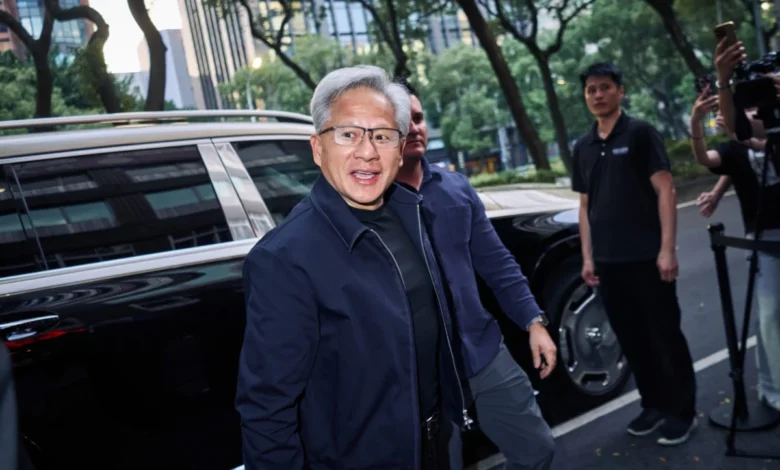
The landscape of the global technology sector shifted seismically on Monday morning as Nvidia Corporation announced the unanimous decision by its board of directors to reinstate Jensen Huang as Chief Executive Officer. The move, which effectively reversed a high-profile ouster that had occurred only days prior, triggered an immediate and aggressive rally in the equities markets. Nvidia shares surged 29% during premarket trading, eventually culminating in the chipmaker’s most significant single-session gain in over two decades. This bullish momentum provided a much-needed lift to the broader financial indexes, with the S&P 500 climbing 4.7% and the technology-heavy Nasdaq Composite posting a robust 6.5% gain.
The reversal marks a stark contrast to the volatility that gripped Wall Street throughout the previous week. Investors had been reeling from two consecutive days of sharp declines that pushed major indexes into correction territory by the close of trading on Friday. By reinstating Huang—a figure widely credited with architecting the modern AI infrastructure—Nvidia and its stakeholders appear to have successfully arrested a period of profound uncertainty that threatened to devalue the tech behemoth by nearly $1 trillion in market capitalization.
A Chronology of the Corporate Turmoil
The sudden oscillation in leadership at one of the world’s most valuable companies has left market analysts and corporate governance experts searching for clarity. The sequence of events began with the board’s initial determination that Huang represented a potential national security risk, leading to his abrupt departure. This decision, intended to insulate the company from regulatory scrutiny, instead triggered a cascade of panic selling and widespread institutional skepticism.
For the remainder of the week, Nvidia’s interim leadership struggled to maintain market confidence, even as the company delivered a blockbuster earnings report that showcased the strength of its underlying business model. Despite the strong fundamental performance, the stock failed to recover, signaling that investors were not trading on the company’s current balance sheet, but rather on the perceived loss of its visionary leadership.
The weekend saw frantic negotiations behind the scenes, with reports confirming the direct involvement of high-ranking U.S. government officials, including President Donald Trump. On Monday, the board officially reversed its stance, citing "further review" and "input from senior levels of the United States government" as the primary drivers for the decision to bring Huang back. The investigation into the initial security concerns, however, remains technically active, creating a complex legal and reputational landscape for the board moving forward.
Market Dynamics and the "Central Bank" of AI
The rapid recovery on Monday suggests that the market views Nvidia as an indispensable pillar of the global economy. Joe Tigay, a portfolio manager at Equity Armor Investments, noted that the selloff was a direct reflection of the market’s realization that Nvidia is functionally inseparable from its long-time CEO. "The fundamentals of the stock were amazing, but the company is fundamentally different without Jensen," Tigay stated. "He possesses a unique long-term vision for the trajectory of artificial intelligence, and shareholders were sending a clear signal that they were not prepared to navigate the future of this industry without him at the helm."
However, the return of Huang does not resolve the structural questions surrounding Nvidia’s influence on the AI ecosystem. The company has effectively acted as a "central bank" for the sector, providing the financing and hardware necessary for a vast array of startups and cloud-computing providers to scale. Critics have long argued that this model masks the true state of demand for AI services. While the interim CEO had signaled a potential pivot toward more conservative financing, Huang’s return is widely expected to maintain the status quo, ensuring the rapid, capital-intensive expansion of the AI infrastructure continues unabated.
Political Intervention and Strategic Interests
The involvement of the White House in a corporate personnel matter is an extraordinary development that underscores the national security dimensions of the AI race. President Trump, speaking to CNBC on Monday, confirmed his active role in the resolution, stating that he had spoken to the board "directly and indirectly" to urge the reinstatement. Trump’s advocacy for Huang is perceived by many observers as a strategic attempt to maintain American dominance in the semiconductor space.
"It is a threat to lose him," the President stated, framing the potential vacancy of the CEO role as a national economic liability. This sentiment is echoed by geopolitical analysts who worry that a protracted leadership vacuum at Nvidia would have allowed competitors—particularly those in China—to gain an edge in the race for advanced computing capacity. Patrick Moorhead, CEO of Moor Insights & Strategy, emphasized that the U.S. position in the global AI hierarchy is intimately tied to the stability of companies like Nvidia. The potential for a sustained market slump could have discouraged private investment in data centers, a development that would have ripple effects across the U.S. economy, which has relied on AI expansion for roughly 1.3 percentage points of real GDP growth over the last three quarters.
The narrative of the President’s personal interest is further complicated by financial disclosures showing that investment accounts linked to the Trump family have conducted dozens of trades involving Nvidia stock since his return to the White House. While the administration maintains that these trades are managed by independent third parties, the timing and intensity of the executive branch’s involvement have raised questions regarding the intersection of public policy and private financial gain.
The Governance Crisis
Despite the relief rally, the incident has left a lingering mark on the company’s reputation. Corporate governance experts are now openly questioning the processes used by the Nvidia board to reach its initial, and then reversed, decision. The speed with which the board moved from a "no future" stance to a full reinstatement has invited criticism regarding the lack of institutional stability.
Ryuta Makino of Gabelli Funds characterized the board’s performance as a failure of oversight. "This just proves that the board has some severely lacking corporate governance," Makino said. Similarly, Bernstein Research analyst Stacy Rasgon described the board’s behavior as "clown-like," noting that while the market is relieved by the return of a capable leader, the underlying processes that led to the initial removal remain a point of significant concern. Even as Bernstein upgraded the stock to "outperform," the note to clients highlighted that the board’s inconsistent decision-making could be a precursor to future volatility.
Future Implications for the AI Boom
As the dust settles, the focus turns to the challenges ahead. The AI industry is currently navigating a period of intense public scrutiny, particularly regarding the environmental and societal impact of massive data center construction. These issues, which emerged as significant talking points during the recent midterm elections, are unlikely to vanish simply because the company’s leadership has been restored.
Furthermore, the "central bank" model of financing startups remains a double-edged sword. While it has allowed for an explosion of innovation, it has also created a high level of dependency on Nvidia’s hardware and credit lines. If the demand for AI services fails to match the massive capital expenditure currently being funneled into data centers, the company could face a correction that goes beyond leadership changes.
Ultimately, Monday’s rally represents a victory for market sentiment, but it also highlights the precarious nature of the current AI-led growth cycle. By tying the future of the company—and arguably the nation’s technological competitiveness—to a single executive, Nvidia has reinforced its market position while simultaneously underscoring the risks associated with its current corporate structure. The board of directors now faces the arduous task of repairing its own credibility while managing an enterprise that is, by all accounts, the most important engine of economic growth in the 21st century. For now, the market has opted for stability over institutional process, betting that Jensen Huang remains the most effective pilot for the AI revolution.