The Ultimate Guide to Transcendental Caribbean Beaches: From Secret Coves to World-Class Shores

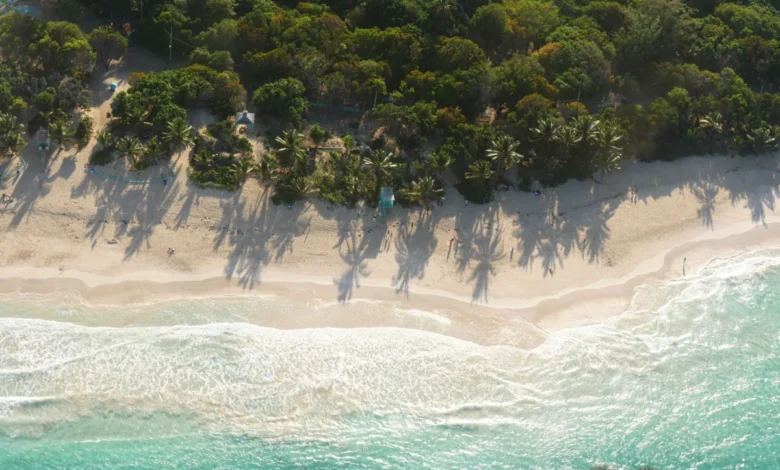
Defining the absolute pinnacle of Caribbean coastlines requires moving past the conventional metrics of picturesque sand and standard azure waters. While
nearly every tropical destination boasts an idyllic littoral zone, true coastal grandeur evokes a visceral response, driven by extraordinary geological formations, rare mineral pigmentation, or seamless integration with local culture. Across the archipelago, travelers increasingly seek out these transcendent landscapes, which range from secluded natural reserves to highly polished, resort-backed destinations. This comprehensive review examines the most breathtaking beaches across the Caribbean, detailing their unique geographical features, historical contexts, infrastructure, and the broader economic and environmental implications of their preservation.

The Allure of Barbuda: Princess Diana Beach
Barbuda has long lived in the shadow of its bustling sister island, Antigua, functioning as a quieter, more elusive sanctuary for travelers seeking absolute tranquility. At the forefront of this appeal is Princess Diana Beach, an expansive stretch of blush-pink sand named in honor of the late royal who famously frequented the island.
Geographically, the beach is framed by low-lying coastal vegetation and exceptionally sparse commercial development. However, recent economic shifts have introduced high-end infrastructure to the remote destination. The arrival of a Nobu restaurant—featuring Japanese-Peruvian cuisine, bespoke cocktails, and beach club cabanas—represents a calculated blending of raw nature with luxury tourism. Furthermore, regional authorities and hospitality groups have slated the debut of the Nobu Beach Inn for 2027, signaling a steady, controlled expansion of high-net-worth tourism in Barbuda. For visitors currently navigating the island, day excursions via organized beach transfers from Antigua remain the most common access route, requiring advance coordination for dining and transport.
Polished Perfection: Grace Bay, Providenciales
In stark contrast to Barbuda’s secluded expanses, Grace Bay in Providenciales, Turks and Caicos, stands as the gold standard of polished, resort-centric beach destinations. Encompassing roughly three miles of exceptionally fine, powdery white sand, the coastline is protected by an offshore barrier reef. This geological shield naturally dissipates heavy wave action, ensuring that the shallow, crystalline waters remain remarkably calm—a vital feature for families and casual swimmers.

From an infrastructural standpoint, Grace Bay represents a masterclass in coastal destination management. The area features a high concentration of five-star luxury resorts, specialized watersports operators, and world-class gastronomy. Crucially, regional planning mandates plentiful, free public access points, ensuring that the breathtaking vista remains accessible to all visitors, regardless of whether they are lodged at adjoining grand hotels. This balanced approach to public access and private luxury has cemented Grace Bay’s status as a perennial fixture on global tourism rankings.
Raw Geology and Castaway Fantasies: Little Bay and The Baths
For travelers pursuing untamed geography, Anguilla’s Little Bay offers the quintessential castaway experience. Tucked beneath sheer, towering limestone cliffs, this miniature crescent of sand operates entirely free of commercial infrastructure, beach clubs, or permanent staffing. Accessibility is intentionally limited, requiring either a boat charter from neighboring Crocus Bay or a steep descent down the rock face via a secured rope for adventurous visitors. Because the bay lacks amenities, visitors must pack provisions independently, though the isolation rewards snorkelers with pristine marine biodiversity.
Similarly dramatic geological formations define The Baths National Park on Virgin Gorda in the British Virgin Islands. Here, the landscape features an immense labyrinth of massive granite boulders—some rivaling the scale of residential structures—which have tumbled together to form hidden grottoes, tidal pools, and narrow aquatic passageways. Managed as a protected national park, The Baths serve as both a geological wonder and an interactive aquatic playground, requiring sturdy footwear and active exploration.

Historic Shores and National Parks: Flamenco Beach and Trunk Bay
Cultural history and natural preservation frequently intersect along the Caribbean coastline, most notably at Flamenco Beach in Culebra, Puerto Rico. Stretching as a one-mile horseshoe of brilliant white sand and transparent shallows, the beach is easily reached via a ferry service from the Puerto Rican mainland. Beyond its environmental assets, Flamenco Beach bears a unique historical artifact: two rusted, graffiti-covered United States military tanks left behind from mid-20th-century naval training exercises. Rather than detracting from the scenery, these industrial relics serve as an unusual counterpoint to the natural landscape, anchoring the beach in the complex geopolitical history of the region.
In the United States Virgin Islands, Trunk Bay offers a benchmark for ecological tourism. As a core component of the Virgin Islands National Park, the beach benefits from rigorous federal protection and comprehensive public infrastructure, including dedicated snack bars, restrooms, showers, and equipment rentals. Its primary ecological draw is the designated underwater snorkeling trail—a series of submerged placards designed to educate visitors on coral reef conservation and marine life identification. This structured approach to environmental interpretation has made Trunk Bay one of the most photographed and heavily studied coastal ecosystems in the Caribbean.
Unspoiled Sanctuaries and Emerging Destinations
As mainstream tourism expands, pristine coastal enclaves face mounting pressure to balance commercial development with ecological integrity.

In St. Barths, where the commercial hub of Saint-Jean caters to luxury beach clubs and international jet-setters, Plage de Saline offers an elemental retreat. Devoid of hotels, restaurants, or commercial operators, Saline features expansive rolling dunes and an open sea. Preservation is maintained by restricting vehicular access, requiring visitors to traverse a short footpath over the dunes from a designated parking lot.
In the Bahamas, Tropic of Cancer Beach on Little Exuma remains a premier destination for travelers seeking isolation. Named for its geographic alignment with the imaginary line of latitude, this crescent is the longest beach on the island and sits approximately 30 minutes south of George Town’s primary airport infrastructure. However, the destination is currently on the precipice of major transformation. Real estate and hospitality analysts note upcoming developments featuring ultra-luxury brands such as Aman, Rosewood, and Bulgari slated for the Exumas. Consequently, contemporary travel experts advise visiting the area promptly to experience its current remote state before infrastructural expansion alters its character.
Further south, smaller cays and marine reserves continue to offer strict conservation models. Sandy Island, an uninhabited coral cay off the coast of Carriacou in Grenada, operates entirely within a protected marine park, prohibiting permanent construction and relying strictly on boat charters for day visitors. Similarly, No Name Beach on Klein Bonaire is safeguarded by the Bonaire National Marine Park. Accessible solely via water taxis from the mainland town of Kralendijk, Klein Bonaire enforces absolute zero-development policies, preserving its status as a premier global diving and snorkeling sanctuary.

Finally, at the eastern edge of the region, Bávaro Beach in the Dominican Republic represents the scale and economic power of Caribbean tourism. Integrating seamlessly with Arena Blanca and Arena Gorda, the shoreline spans an impressive multi-mile stretch defined by dense coconut palms and a protective coral barrier. While the central areas support massive resort ecosystems, localized pockets such as El Cortecito maintain vibrant, high-energy beach bar cultures, illustrating the diverse ways in which Caribbean coastal destinations cater to global travelers while continuously grappling with the demands of modern tourism development.