Navigating Scale and Soul: Accor CEO Sébastien Bazin on Balancing Data, Technology, and Human Hospitality in the Modern Era

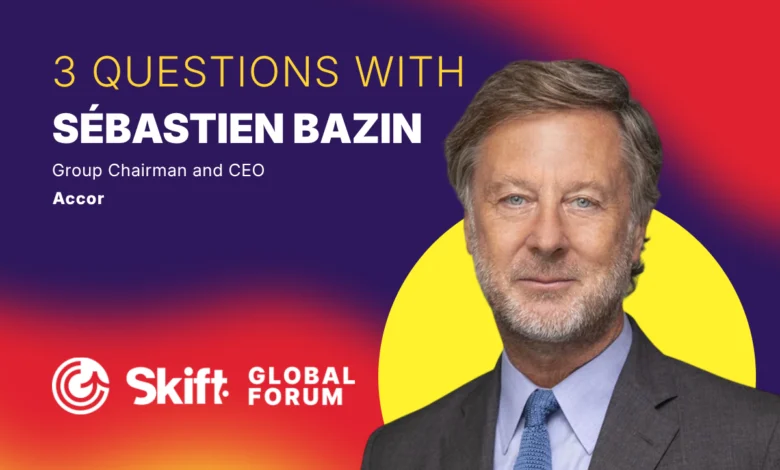
Leadership in the modern hospitality industry requires balancing massive operational scale with the intimate, deeply personal nature of guest service. Few executives understand this dichotomy better than Sébastien Bazin, who has served as the Chairman and Chief Executive Officer of Accor since 2013. Overseeing a vast global portfolio comprising more than 45 distinct hotel brands and approximately 5,800 properties spread across over 110 countries, Bazin has spent more than a decade steering one of the world’s most influential hospitality conglomerates through periods of unprecedented technological disruption, macroeconomic volatility, and shifting traveler expectations. As the travel sector accelerates its adoption of artificial intelligence, advanced analytics, and fragmented digital distribution channels, Bazin’s leadership philosophy offers a compelling study in contrasts. He maintains that while data is an indispensable tool for sharpening corporate strategy, it must serve merely to inform human instinct rather than override it.
This leadership ethos, along with broader discussions regarding the future of global travel, will take center stage at the upcoming Skift Global Forum, scheduled to run from September 22 to 24, 2026, in New York City. Bazin is slated to join a high-profile roster of industry luminaries—including Expedia Group CEO Ariane Gorin, Wyndham Hotels & Resorts President and CEO Geoff Ballotti, and Qatar Airways Group Chief Executive Officer Hamad Al-Khater—to deliberate on the trajectory of the travel economy. The dialogue surrounding Bazin’s operational principles comes at a critical juncture for the industry, as hospitality groups worldwide grapple with the dual imperatives of digital transformation and the preservation of authentic human engagement.
The Evolution and Scale of Accor Under Bazin
To understand Bazin’s philosophy on decision-making, one must first examine the sheer scale of the enterprise he manages. Appointed as CEO of Accor in August 2013—after previously serving as a member of the board of directors and heading the North American operations of Colony Capital, a major shareholder—Bazin immediately set about restructuring the French multinational hospitality company. Under his leadership, Accor underwent a profound metamorphosis, transitioning from a traditional asset-heavy hotel owner and operator into an agile, asset-light hospitality powerhouse divided into distinct operating divisions: luxury and lifestyle properties, and premium, midscale, and economy brands.
This strategic pivot involved high-stakes acquisitions and partnerships. Accor expanded its footprint aggressively, acquiring iconic brands such as Fairmont, Raffles, and Swissôtel under the FRHI Hotels & Resorts umbrella in 2016, and later building a dominant position in lifestyle hospitality through a joint venture with Ennismore. Today, Accor’s brand ecosystem spans luxury flagships like Orient Express, Sofitel, and Pullman, alongside robust midscale and economy staples such as Novotel, Mercure, and Ibis. Managing a portfolio of this magnitude across diverse geographic markets requires a sophisticated infrastructure supported by millions of data points processed daily regarding pricing elasticity, booking behaviors, and operational efficiencies.
Yet, despite the proliferation of enterprise resource planning tools, business intelligence dashboards, and predictive algorithms, Bazin has consistently cautioned against analytical paralysis. In an industry where market conditions can shift overnight due to geopolitical events, currency fluctuations, or public health crises, waiting for absolute certainty can prove fatal to commercial success.
The Decision-Making Framework: Gut, Heart, and Brain
At the core of Bazin’s managerial approach is a disciplined, three-tiered rule for executive decision-making. When faced with complex, high-stakes corporate dilemmas, Bazin sequentializes his internal calculus: first the gut, then the heart, and finally the brain.
According to Bazin, instinct serves as the initial filter, providing an immediate sense of alignment with the company’s core identity and long-term vision. This is followed by the heart, which evaluates the human impact of the decision—considering how employees, local communities, and loyal guests will be affected by the outcome. Only in the final stage does the brain engage, assessing empirical data, financial viability, and optimal timing.
Data, in Bazin’s view, is vital for validation and refinement, but it cannot substitute for leadership courage. In a hyper-connected global marketplace where consumer trends are amplified and accelerated by digital platforms, over-reliance on historical data can blind executives to emerging paradigm shifts. By feeding instinct with robust analytics rather than subjugating intuition to spreadsheets, Accor has managed to execute bold strategic maneuvers without losing its operational agility.
Artificial Intelligence and the Evolving Customer Journey
As artificial intelligence permeates every facet of the consumer economy, the travel industry is undergoing a profound structural shift in how services are researched, booked, and delivered. The traditional linear customer journey—characterized by browsing travel brochures, consulting travel agents, and booking through static web portals—has been replaced by a fragmented, highly personalized digital ecosystem.
Bazin acknowledges that AI will fundamentally revolutionize the traveler’s path to purchase, particularly in the realms of destination discovery, trip planning, and hyper-personalized recommendations. Within the next few years, travelers will no longer be satisfied with generalized marketing messages or one-size-fits-all packages; they will demand intuitive, frictionless experiences tailored precisely to their individual preferences, past behaviors, and real-time contexts.
For a global hospitality group managing tens of millions of stays annually, harnessing AI and advanced data architecture is essential to meeting these elevated expectations. However, Bazin sounds a pragmatic note of caution regarding the limits of technology. He argues that as digital interfaces become more sophisticated and pervasive, the genuine human touch delivered by hotel staff becomes paradoxically more valuable. In an era where booking engines and virtual concierges can be replicated across competing brands, a property’s ultimate competitive differentiator lies in the empathy, warmth, and cultural fluency of its people. Technology should act as an enabler that strips away administrative friction, allowing hotel personnel to focus entirely on meaningful human engagement.
The Human Element and Hospitality as a Social Elevator
While industry discussions frequently center on distribution models, loyalty program monetization, and technological integration, Bazin maintains that the travel sector often overlooks its most critical asset: its workforce. Hospitality is fundamentally a people-centric enterprise. Hotels serve as physical nodes where diverse cultures intersect, local communities congregate, and individuals forge lifelong careers.
Furthermore, Bazin frequently emphasizes the unique socio-economic role that the hospitality industry plays on a global scale. Unlike many corporate sectors that demand specialized, higher-education credentials for entry-level positions, hospitality functions as a powerful social elevator. It provides tangible pathways to upward mobility, professional development, and economic independence for individuals from wildly divergent educational, socioeconomic, and cultural backgrounds. Across Accor’s global network, countless general managers, regional directors, and corporate executives began their careers in entry-level housekeeping, food and beverage, or front-desk roles.
As hotel groups race to automate front-of-house operations through self-service kiosks, mobile keys, and AI-driven chatbots, Bazin issues a clear warning: the industry must guard against marginalizing the human workforce in the name of operational efficiency. Technology must remain subordinate to human purpose, serving to elevate the employee experience and empower staff to deliver memorable guest interactions.
Context and Implications for the Global Hospitality Industry
Bazin’s perspective arrives at a pivotal moment for the international travel economy. Following the severe disruptions of the early 2020s, the industry has experienced a robust multi-year recovery driven by pent-up consumer demand, the rise of bleisure travel, and strong spending in the luxury and lifestyle segments. However, hospitality leaders now face new headwinds, including persistent inflationary pressures, labor shortages in key markets, and rising capital costs.
In response to these macroeconomic challenges, major hotel groups are increasingly looking toward technology to optimize labor productivity and streamline supply chains. Companies like Marriott International, Hilton, and IHG Hotels & Resorts are similarly investing heavily in proprietary technology stacks, cloud-based property management systems, and generative AI capabilities to capture direct bookings and enhance loyalty engagement. Yet, the tension between automation and authentic hospitality remains a central strategic debate for boardrooms across the globe.
Bazin’s balanced stance suggests that the winners of the next decade will not be those who achieve total automation, but rather those who successfully deploy technology to amplify human hospitality. By maintaining that data should inform instinct rather than dictate strategy, Accor continues to chart a course that respects both the analytical demands of modern scale and the timeless art of making guests feel welcome.
Outlook for Skift Global Forum 2026
The upcoming Skift Global Forum in New York City will provide an essential platform for Bazin and his industry peers to dissect these pressing issues in real time. As travel executives navigate an increasingly complex geopolitical and technological landscape, sessions featuring leaders of Bazin’s stature offer invaluable insight into the mechanics of global enterprise management.
Whether examining the boundaries of artificial intelligence in guest personalization, evaluating the structural resilience of multi-brand portfolios, or championing the social impact of the hospitality workforce, the dialogue in New York is expected to set the strategic agenda for the travel sector in the years ahead. For an industry built on the simple yet profound act of welcoming the traveler through the door, the challenge moving forward will be ensuring that as the systems grow smarter, the human heart of hospitality remains at the very center of the experience.