Navigating the AI Visibility Landscape: An In-Depth Comparison of Scrunch and Ahrefs Brand Radar for 2026

The shift from traditional Search Engine Optimization (SEO) to Answer Engine Optimization (AEO) has fundamentally altered the digital marketing landscape, forcing brands to reconsider how their content is discovered, processed, and cited by large language models (LLMs). As platforms like ChatGPT, Perplexity, and Google Gemini increasingly serve as the primary interface for consumer research, two major players have emerged with distinct philosophies for tracking brand visibility: Scrunch and Ahrefs Brand Radar. While both aim to solve the challenge of brand presence in generative AI, they represent divergent approaches—one being a specialized, purpose-built AEO suite and the other an integrated module within a legacy SEO ecosystem.
The Evolution of Discovery: From Links to Citations
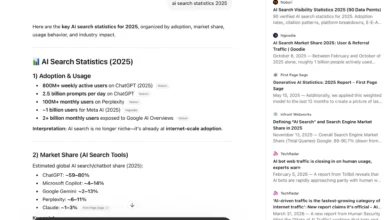
For over two decades, the "ten blue links" model defined the internet’s information architecture. However, the 2023 generative AI boom catalyzed a transition toward "answer engines," where users receive synthesized responses rather than a list of websites. By 2025, industry data indicated that nearly 40% of professional research queries were being funneled through AI-driven interfaces. This shift created a data vacuum for marketers who could no longer rely solely on click-through rates and keyword rankings.
In response, specialized tools began to emerge. Scrunch entered the market as a dedicated AI Experience Platform (AXP), focusing on the technical nuances of how bots "crawl" and "understand" data. Conversely, Ahrefs—long a titan in the SEO space—developed Brand Radar to prevent platform fragmentation, allowing teams to monitor AI visibility alongside their existing backlink and keyword data.
Methodological Divergence: Synthetic vs. Real-World Prompts
The most significant distinction between Scrunch and Ahrefs Brand Radar lies in their data collection methodologies. Understanding these differences is critical for enterprise teams that require high-fidelity data for executive reporting.
Scrunch utilizes a sophisticated combination of browser automation and official platform APIs. Its architecture is designed to convert a brand’s specific keyword data into custom prompts, providing a controlled environment to test how different personas or competitors are represented. This "synthetic" prompt architecture allows for high precision; however, it occasionally lacks the nuance of organic user behavior. Scrunch mitigates this by refreshing data every 72 hours, with the option for manual triggers to capture real-time shifts in AI sentiment.
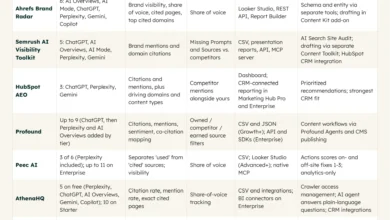
Ahrefs Brand Radar takes a different path, leveraging a massive database of over 406 million monthly prompts derived from actual user queries. This scale provides a broader signal, allowing brands to benchmark themselves against real-world search intent rather than just team-generated questions. However, this breadth comes with trade-offs. Independent reviews have noted accuracy gaps in how Brand Radar tracks specific engines like Perplexity, and as of early 2026, the tool notably lacks coverage for Claude—a significant omission for B2B brands whose buyers frequently use Anthropic’s models for technical and professional research.
Technical Capabilities and the AXP Frontier
For technical marketing teams, the choice often hinges on how a tool interacts with a site’s underlying infrastructure. Scrunch has positioned itself as more than just a monitoring tool through its AI Experience Platform (AXP).
The AXP is an enterprise-grade solution that operates at the "edge" of a website’s content delivery layer. It serves an AI-optimized, token-light version of a site to bots while maintaining the traditional human-facing site for standard visitors. According to technical audits, this dual-delivery system can reduce token loads by up to 26%, effectively unblocking AI agents that might otherwise struggle with complex JavaScript or heavy markup. This proactive optimization is a departure from traditional SEO, where the goal was simply to be "crawlable." In the AEO era, being "parsable" and "efficient" is the new benchmark.
Ahrefs Brand Radar, while lacking an edge-optimization component, provides a "Discovery" dashboard that contextualizes AI mentions within the broader web. It layers AI visibility data against mentions on Reddit, YouTube, and traditional news outlets. For many SEO-led teams, this unified view is more valuable than technical edge optimization, as it allows them to see the correlation between a viral Reddit thread and a subsequent increase in AI citations.
Comparative Data: Pricing and LLM Coverage
The financial and operational commitments required for these tools vary significantly based on the scale of the organization.
Scrunch Pricing Tiers:
- Brand Core ($250/month): Covers 125 unique prompts across ChatGPT, Perplexity, Google AIO, and Copilot. Includes five site audits per month.
- Agency Core ($500/month): Increases capacity to 250 prompts and adds multi-brand workspaces.
- Enterprise (Custom): Unlocks the AXP optimization layer, API access, and expands coverage to nine LLMs, including Claude, Gemini, and Grok.
Ahrefs Brand Radar Pricing Tiers:
- Standalone Entry ($199/month): The lowest barrier to entry for dedicated AI monitoring.
- All Platforms ($699/month): Provides access to the full 406M+ prompt database and 2,500 custom checks.
- SEO Bundle: Often included as an add-on for existing Ahrefs users starting at approximately $129/month for Lite plans, though custom prompt capacity remains limited at lower tiers.
The Role of HubSpot and Semrush in the Ecosystem
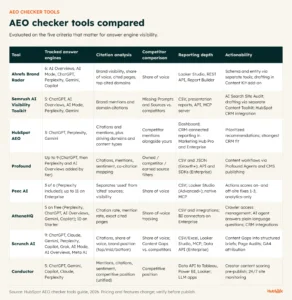
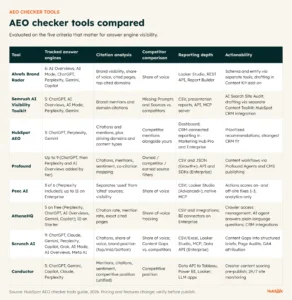
The market is not a duopoly. HubSpot has introduced a suite of free and low-cost tools that serve as a bridge for teams not yet ready for a full platform commitment. The HubSpot AEO Grader provides a snapshot of brand visibility across the "Big Three" (ChatGPT, Perplexity, Gemini) at no cost. For brands looking for actionable data without the $200+ monthly price tag, HubSpot’s AEO Sensor offers industry-level citation trends.
Semrush, another heavyweight in the space, has framed the challenge as a "combined discovery problem." Unlike Scrunch, which focuses heavily on the bot experience, Semrush emphasizes dominating both Google’s traditional SERPs and AI search simultaneously. Their toolkit, which analyzes a database of 26.8 billion keywords, is built for the "power user" who views AI visibility as one of many performance indicators.
Strategic Implications: ROI and Pipeline Attribution
One of the most persistent challenges in AEO is measuring return on investment. Raw citation counts are often dismissed as "vanity metrics" because they do not always correlate with traffic or revenue.
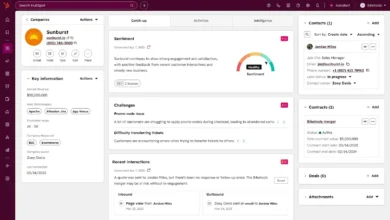
Scrunch addresses this through its "Agent Traffic" and "Shopping" features. Agent Traffic identifies which specific AI bots are consuming a site’s content, providing proof of engagement. The Shopping feature is particularly relevant for e-commerce and B2B software brands, as it tracks which products are being recommended in purchase-intent prompts.
Marketing leaders are increasingly moving away from "single-point metrics" in favor of trend lines. As AI models are non-deterministic—meaning they may give different answers to the same prompt at different times—a single citation is statistically insignificant. Both Scrunch and Ahrefs emphasize the importance of monitoring sentiment and "share of voice" over time to filter out the noise of AI variability.
Official Responses and Industry Sentiment
Industry analysts suggest that the choice between these tools should be dictated by the organization’s primary "pain point."
A representative from a leading digital agency noted, "If the question is ‘Why isn’t ChatGPT recommending us?’ you need Scrunch. Its diagnostic tools and Site Maps tell you exactly where the bot is getting stuck. But if the question is ‘How are we doing across the entire internet?’ Ahrefs remains the gold standard because AI is still just one piece of the discovery puzzle."
There is also a growing debate regarding the risks of "dual-site" architectures like Scrunch’s AXP. Some SEO purists argue that serving different content to bots versus humans could eventually be flagged as "cloaking" by traditional search engines, though Scrunch maintains that their optimization is purely technical (reducing token weight) rather than a change in core messaging.
Future Outlook: The Convergence of Search and Synthesis
As we look toward the remainder of 2026, the distinction between SEO and AEO will likely continue to blur. The emergence of "SearchGPT" and the integration of Gemini into every facet of the Google ecosystem mean that brands can no longer afford to treat these as separate workstreams.
The broader impact of these tools is a move toward "source-of-truth" marketing. To be cited by an AI, a brand must first be cited by the sources the AI trusts—forums, reputable news sites, and niche industry publications. The workflow is evolving: marketers are no longer just trying to rank; they are trying to become the most "authoritative data point" in a given category.
In conclusion, Scrunch is the superior choice for enterprise brands requiring deep technical audits and proactive bot optimization. Ahrefs Brand Radar is the more pragmatic choice for established SEO teams that value ecosystem integration and real-world prompt data. For those in the middle, tools like HubSpot’s AEO Grader provide a necessary starting point to benchmark visibility before committing to the significant overhead of a dedicated AEO platform. Regardless of the tool chosen, the mandate for 2026 is clear: visibility is no longer about being found; it is about being cited.
Related posts: