Trump’s childhood home sells for $1.9 million after prior owner bought it for $835,000 last year, when it was a mold-ridden den of feral cats | Fortune

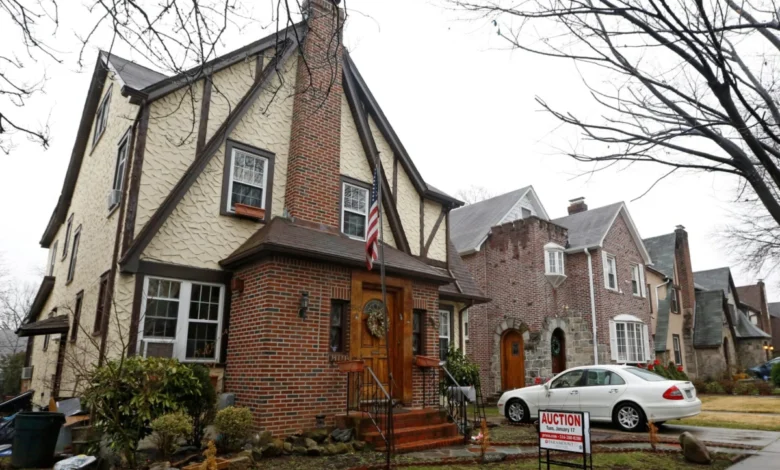
The Tudor-style residence, located in the affluent Jamaica Estates neighborhood of Queens, New York, marks a significant chapter in the early life of the 45th and current president. Built in 1940 by his father, Fred Trump—a prolific real estate developer who shaped much of the outer-borough landscape—the home served as the family’s residence until Donald Trump turned four years old. While the property has been detached from the Trump family’s portfolio for decades, its historical connection to the president has made it a focal point for investors, collectors, and real estate enthusiasts alike.
The Restoration: From Neglect to Modern Luxury
The recent sale marks the conclusion of a tumultuous period for the house. Before its current transformation, the five-bedroom, three-bathroom residence had languished on the market, suffering from severe neglect. Previous reports indicated that the home had fallen into a state of disrepair characterized by water damage from burst pipes, extensive mold growth, and, at one point, an infestation of feral cats.
The turnaround was spearheaded by developer Tommy Lin, who acquired the property last year for $835,000. Recognizing the potential to restore value to the historic structure, Lin invested an additional $500,000 into an eight-month interior overhaul. The renovation project focused on modernizing the living space while maintaining the exterior Tudor aesthetic that defines the Jamaica Estates neighborhood.
Upgrades to the interior include the installation of a high-end chef’s kitchen, the restoration of herringbone wood floors, and the creation of spa-like bathroom facilities. These modern amenities were designed to appeal to contemporary luxury buyers, successfully elevating the property’s market position. The identity of the new owner, who entered into the contract in July, remains undisclosed, shielded by the privacy afforded by the legal entity used for the purchase.
A Chronology of Ownership and Market Volatility
The market history of the Jamaica Estates home has been anything but conventional. Its value has fluctuated wildly, driven by speculative interest tied to Donald Trump’s political ascent.
- 1940: Fred Trump completes the construction of the home in Jamaica Estates, a neighborhood known for its grand, detached houses and tree-lined streets.
- 1940–1944: The Trump family resides at the home during Donald Trump’s early childhood.
- 2017: Shortly after Donald Trump’s inauguration as the 45th president, the home sold for $2.14 million. The buyer, an entity identified as Trump Birth Home LLC, attempted to monetize the property’s notoriety.
- 2017–2018: The property was listed on Airbnb as a short-term rental. The listing featured kitschy decor, including life-sized cardboard cutouts of the president, copies of his memoir "The Art of the Deal," and a framed People magazine cover featuring his likeness.
- 2019: The property returned to the market with an ambitious asking price of $2.9 million. It failed to attract a buyer at that valuation and subsequently sat vacant.
- 2023: After years of deferred maintenance and damage, the property was purchased by Tommy Lin for $835,000, signaling a bottoming-out of its speculative value.
- 2024: Following an intensive renovation, the home sells for $1.93 million, reflecting a return to market-driven valuation based on physical quality rather than political provenance.
Real Estate Market Context in Jamaica Estates
The sale at $1.93 million places the property well above the average price for homes in the immediate area, yet it remains significantly below the peak speculative pricing of 2019. Jamaica Estates is categorized as a high-end enclave within Queens, where property values are generally driven by lot size, architectural integrity, and proximity to transit hubs like the F-train line.
Real estate analysts observe that the "Trump premium"—the added value derived from a property’s association with a famous figure—often creates an unstable market environment. When a property’s value is untethered from its structural reality, it often leads to the kind of neglect seen during the years the house sat vacant. The current sale price of $1.93 million is viewed by local brokers as a "reset" to a more sustainable market valuation, where the quality of the recent renovations dictates the price rather than the residence’s historical pedigree.
Implications of the President’s Personal Aesthetic
The transformation of the childhood home stands in stark contrast to the aesthetic evolution observed in the president’s more recent residential projects. Throughout his career, Donald Trump established a signature design language—characterized by the extensive use of marble, gold-plated fixtures, and opulent, neoclassical elements—most notably at Trump Tower on Fifth Avenue.
Observers have noted that the president’s influence on interior design has migrated from the private sector to the public sphere. Since assuming the presidency, he has overseen significant decorative changes to the White House. These include the addition of a massive ballroom and the installation of fixtures that mirror the gold-heavy, high-gloss aesthetic of his private Manhattan properties.
While the renovated home in Jamaica Estates reflects modern, minimalist luxury—with its herringbone floors and clean, spa-like finishes—it serves as a reminder of the president’s roots in the traditional residential real estate development business. The contrast between the simple, functional Tudor structure of his youth and the gilded, maximalist aesthetic of his later properties highlights a lifetime of personal and professional shifts.
The Broader Impact on Historical Preservation
The sale also touches upon the ongoing debate regarding how society treats properties associated with polarizing political figures. Historically, childhood homes of presidents are often acquired by non-profit organizations or historical societies to be preserved as museums. In this case, the market-driven approach—where the home is bought and sold by private developers—has resulted in a "boom and bust" cycle that nearly saw the structure lost to decay.
Critics of the speculative buying that occurred in 2017 argue that treating a president’s birthplace as a novelty asset on platforms like Airbnb cheapens the historical record. Conversely, proponents of private ownership argue that the free market is the most efficient way to ensure the upkeep of such properties. By renovating the home into a high-end residence, the current developer has ensured the physical longevity of the structure, even if it is no longer being marketed as a tourist attraction.
As the property enters this new phase under an anonymous owner, it is likely to disappear from the headlines as a point of political interest and return to its status as a private family residence. The $1.93 million transaction closes a chapter on a house that became a symbol of the intersection between American real estate, celebrity culture, and political fame. For the neighborhood of Jamaica Estates, the primary hope remains that the property will continue to be maintained to a standard that protects the overall real estate value of the community, regardless of the historical identity of its former, four-year-old resident.