Trump is Proposing a US Space Academy If Created It Could Blur the Lines Between NASA and the Military

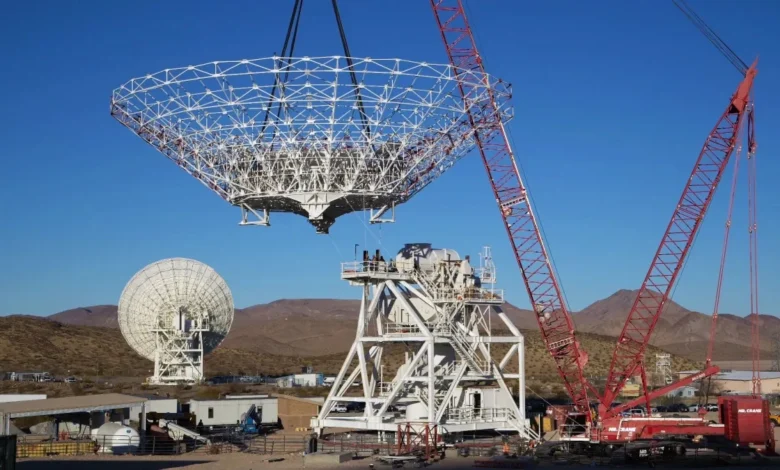
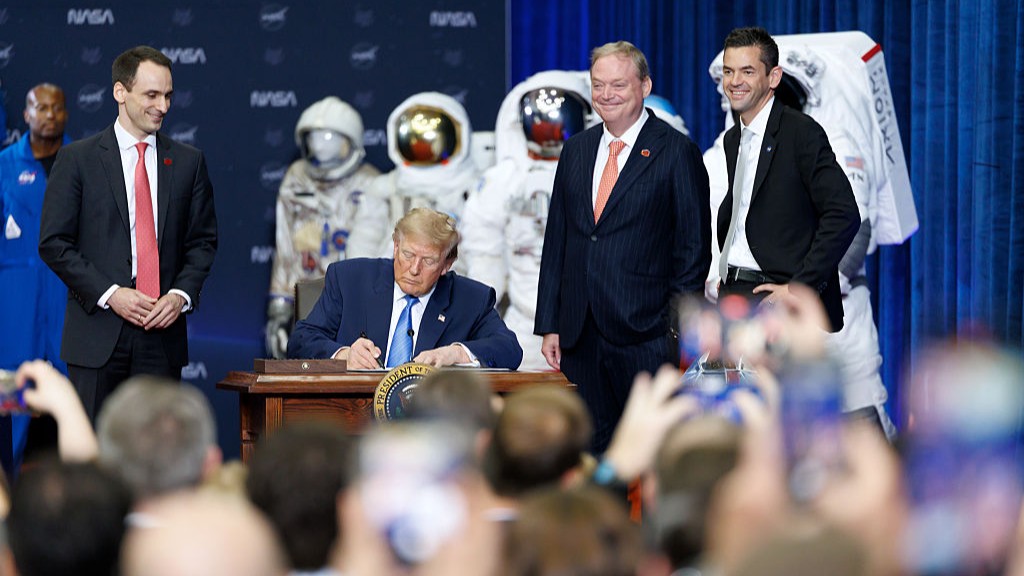
On August 28, 2026, during a high-profile visit to the Johnson Space Center in Houston, President Donald Trump signed an executive order initiating the formal process of establishing a United States Space Academy. This proposed institution aims to cultivate a new generation of leaders for the burgeoning space sector, spanning civilian, commercial, and military domains. While the administration has framed the project as a necessary evolution for American space dominance, the proposal has ignited a vigorous debate among policy experts, historians, and legislators regarding the potential erosion of the long-standing firewall between civilian scientific research and national defense.
The executive order does not immediately break ground on a new campus. Instead, it mandates the creation of a high-level commission tasked with evaluating the feasibility, structure, and curriculum of such an academy. This body, chaired by NASA Administrator Jared Isaacman, is required to submit a comprehensive report within 120 days. The commission includes key stakeholders from the Department of Defense, the National Security Advisor’s office, and the Office of Management and Budget, signaling the administration’s intent to bridge the gap between military and civilian aerospace training.
A Chronology of Space Policy Under the Trump Administration
The proposal for a Space Academy is the latest in a series of administrative actions that have fundamentally altered the trajectory of the U.S. space program. To understand the current policy, one must look at the foundations laid during the President’s first term:
- December 2017: The White House issues Space Policy Directive-1, formalizing the Artemis program, which aims to return human beings to the lunar surface.
- March 2018: President Trump formally floats the concept of a "Space Force," envisioning a military branch dedicated to projecting power in the extraterrestrial domain.
- December 2019: The United States Space Force is officially established as the sixth branch of the armed forces, following the signing of the National Defense Authorization Act.
- August 2026: The administration announces the intent to create a Space Academy, positioning it as the educational backbone for the future of both NASA and the Space Force.
Defining the Mission: Education vs. Militarization
The core challenge facing the proposed academy is its dual-purpose identity. In his remarks at the Johnson Space Center, President Trump drew direct parallels between this new school and the existing service academies—West Point, the Air Force Academy, and the Naval Academy. He emphasized that the institution would serve the United States Space Force as well as NASA and the commercial space industry.
However, critics point out that this "West Point for Space" framing creates an inherent contradiction. NASA is, by statute, a civilian agency. Since the passing of the National Aeronautics and Space Act in 1958, American space policy has intentionally maintained a separation between the scientific, peaceful exploration missions of NASA and the defensive or offensive capabilities managed by the Department of Defense.
The concern among policy experts is that by placing a civilian agency at the helm of an institution modeled after military training, the government risks "militarizing" the image of space exploration. If the academy adopts a rigid, military-style curriculum, it may discourage the international collaboration and open scientific exchange that have defined NASA’s success for decades.
Economic and Logistical Hurdles
Beyond the philosophical debate, the project faces significant fiscal and bureaucratic hurdles. Creating a federal service academy is an enormous undertaking that requires legislative approval from Congress. Lawmakers, who hold the "power of the purse," are likely to scrutinize the project’s price tag closely.
While official estimates have not been finalized, historical data on service academies provides a baseline for the costs involved. One member of Congress, speaking on the condition of anonymity regarding pending legislation, estimated that maintaining an existing service academy costs roughly $1 billion annually. Building an entirely new institution from the ground up would require billions more in capital investment and operational funding.
Furthermore, NASA’s budget is historically discretionary and subject to the ebbs and flows of political priority. In times of fiscal austerity, NASA programs are often the first to face budget sequestration. Committing the agency to the long-term, high-cost maintenance of an academy could potentially cannibalize funding from critical scientific missions, such as deep-space exploration or climate monitoring satellites.
The Role of Commercial Space
The rise of the commercial space sector adds a layer of complexity not present when the original service academies were formed. Companies like SpaceX, Blue Origin, and various satellite constellations have changed the nature of space travel. The administration argues that a Space Academy could serve as a talent pipeline for these private enterprises, ensuring that the U.S. retains a competitive edge in a rapidly globalizing space economy.
However, the legal framework for "civically grounded leaders" working in a space-military-commercial hybrid remains undefined. Questions regarding whether graduates would have mandatory service obligations to the Space Force or whether they could transition freely into private aerospace companies remain unanswered. If the academy is to be truly "civilian-led," it must define how it will handle proprietary commercial technologies alongside classified military data.
Expert Analysis and Global Implications
The geopolitical climate of 2026 is vastly different from the era in which the current space policy was written. With rising tensions among global powers regarding orbital security and anti-satellite capabilities, the need for clear communication is paramount.
"The distinction between civilian and military space is not just a bureaucratic preference; it is a signal of intent," notes one policy analyst. "When we blend these roles, we invite miscalculation by our adversaries."
If a student at the U.S. Space Academy receives military training and then joins a scientific mission, that individual may be perceived by international actors as a military operative. This ambiguity could undermine diplomatic efforts to establish "norms of behavior" in space, potentially leading to escalation in the event of an orbital incident.
Next Steps for the Commission
The 120-day window given to the commission led by Administrator Isaacman will be critical. The report will likely determine whether the academy becomes a reality or remains a rhetorical initiative. To succeed, the commission must address several key technical questions:
- Curriculum: How will the academy balance technical engineering degrees with military strategy and leadership training?
- Selection: Will the academy be open to the public, or will it be a competitive recruitment program limited to military-track individuals?
- Governance: If NASA leads the academy, what mechanisms will be put in place to ensure that the Department of Defense does not dictate the curriculum for purely civilian students?
- Location: Which existing government facility or university campus has the infrastructure to support such a specialized institution?
The proposal for a U.S. Space Academy reflects a government responding to the reality that space is no longer a "final frontier" to be explored, but a critical domain of national power. Whether this institution becomes a hub for scientific innovation or a point of confusion in the international order remains to be seen. As the commission begins its work, the eyes of the aerospace community will be fixed on Washington, waiting to see if the U.S. will choose to reinforce the civilian nature of space or integrate it permanently into its defense apparatus.
Ultimately, the creation of such an academy would signal a fundamental shift in the American approach to the heavens. If established, it will mark the end of an era of compartmentalized space policy, replaced by a more integrated, perhaps more powerful, but certainly more complex, vision for the future of humanity in orbit.