The Ultimate Travel Guide to Newport, Rhode Island: Where to Eat, Stay, and Play in America’s Gilded Age Coastal Haven

Newport, Rhode Island, is currently experiencing a profound cultural renaissance. Fueled by the popularity of Gilded Age period dramas on streaming platforms, the viral "old-money aesthetic" trend across social media, and persistent interest from reality television, this compact coastal city has firmly established itself as a premier destination for travelers seeking an authentic New England escape. Characterized by classic maritime traditions, historic architecture, and a bustling harbor, Newport successfully bridges its aristocratic 19th-century origins with contemporary coastal tourism.
Despite its current surge in popularity, Newport has maintained its status as a premier American resort destination for over two centuries. Originally developed in the early 19th century as a warm-weather sanctuary for the nation’s industrial elite—including legendary dynasties such as the Vanderbilts and the Astors—the city became synonymous with opulent coastal living. These families constructed sprawling architectural masterpieces, known locally as "cottages," along the dramatic Atlantic coastline. Today, the city has evolved beyond its exclusive origins, welcoming a diverse array of visitors throughout the calendar year. Tourists routinely spend sunny days relaxing on the shores of Easton’s Beach, navigating the breezy pathways of the Cliff Walk, and experiencing the vibrant culinary and nightlife scenes along Bowen’s Wharf before retiring to historic shingled cottages and luxury boutique hotels.
A Historical Chronology of the City by the Sea
To fully appreciate Newport’s current cultural footprint, it is necessary to examine its extensive history, which spans over three and a half centuries.

Founded in 1639 by dissenters from the Massachusetts Bay Colony, including Anne Hutchinson and William Coddington, Newport rapidly developed into a prominent colonial seaport. By the 18th century, the city was a thriving hub for maritime trade, shipbuilding, and the triangular trade route, establishing an economy that funded the construction of some of the finest colonial-era architecture in North America. Notably, this era yielded enduring institutions such as the White Horse Tavern, established in 1673 and recognized as one of the oldest operating restaurant buildings in the United States.
Following the disruptions of the American Revolutionary War—during which British occupation severely impacted the local economy—Newport experienced a period of prolonged dormancy. However, the mid-19th century marked a transformative turning point. Wealthy industrialists, particularly from New York and Philadelphia, recognized the city’s geographic advantages and temperate maritime climate. This realization catalyzed the Gilded Age, a period spanning the late 19th and early 20th centuries characterized by rapid economic growth and conspicuous consumption.
During the Gilded Age, Newport transformed from a quiet coastal town into the summer social capital of the United States. Titans of industry commissioned renowned architects, such as Richard Morris Hunt, to design palatial estates inspired by European royal residences. The completion of landmarks like The Breakers in 1895—a 70-room mansion built for Cornelius Vanderbilt II—cemented the city’s reputation as an epicenter of architectural grandeur.
As the 20th century progressed, economic shifts following the Great Depression and World War II led to the decline of private estate living. Many families could no longer afford the exorbitant maintenance costs associated with these massive properties. Consequently, a significant number of estates were donated to the Preservation Society of Newport County, an organization founded in 1945 to safeguard the city’s architectural heritage. This pivotal preservation effort shifted Newport’s economic model from private exclusivity to heritage tourism, paving the way for the vibrant, accessible coastal hub observed today.
Where to Eat: A Culinary Landscape Blending Tradition and Modernity

Newport’s gastronomic identity is anchored by its rich maritime resources, offering a diverse array of dining experiences that range from historic taverns to contemporary farm-to-table establishments.
For the morning hours, visitors frequently patronize Cru Cafe for elevated comfort food, such as smoked salmon avocado toast, set within a relaxed bistro environment. The Nitro Bar has gained considerable traction among contemporary travelers, offering specialized coffee programs and artisanal pastries. For a traditional, unpretentious dining experience, the Franklin Spa maintains its retro greasy-spoon aesthetic, serving classic diner fare that has remained largely unchanged for decades.
As the day progresses toward lunch, Bowen’s Wharf serves as a central hub for waterfront dining. Establishments like 22 Bowen’s offer upscale outdoor bar and dining options, while The Mooring provides classic seafood plates with unobstructed harbor views. The Black Pearl remains a local institution, renowned for its dockside clam chowder. Nearby, the Clarke Cooke House operates out of a historic wharf setting, offering an expansive menu that transitions seamlessly from summer sushi selections to traditional steak frites and native cod. For casual daytime wandering along Thames Street, Wally’s Wieners provides a straightforward, highly rated hot dog option.
Expanding beyond casual fare, the culinary landscape includes upscale destinations such as Flora, located within the recently opened Gardiner House hotel, which presents a Mediterranean-inspired menu against the backdrop of the harbor. For historic dining, the aforementioned White Horse Tavern pairs farm-to-table American cuisine with classic rum cocktails inside a structure that has stood for over 350 years. Those willing to cross the Pell Bridge into neighboring Jamestown will find Beech, a local favorite offering seasonal American dishes.
Where to Stay: Accommodations Ranging from Gilded Age Palaces to Coastal Resorts

Lodging in Newport is characterized by geographic diversity and architectural significance, with properties distributed from the bustling commercial corridors of Thames Street to the tranquil bluffs of Castle Hill Cove.
Travelers seeking an authentic immersion into the Gilded Age frequently choose historic properties such as The Vanderbilt, an Auberge Resorts Collection hotel originally built in 1908 by Alfred Gwynne Vanderbilt. Alternatively, the Francis Malbone House provides a Georgian-style mansion experience dating back to 1760.
For visitors prioritizing proximity to specific landmarks, options include The Chanler at Cliff Walk, which offers direct access to the famous coastal pathway, and Hammetts Hotel, situated steps away from the downtown commercial district. Forty 1º North Hotel Marina Resort places guests immediately adjacent to the active marina.
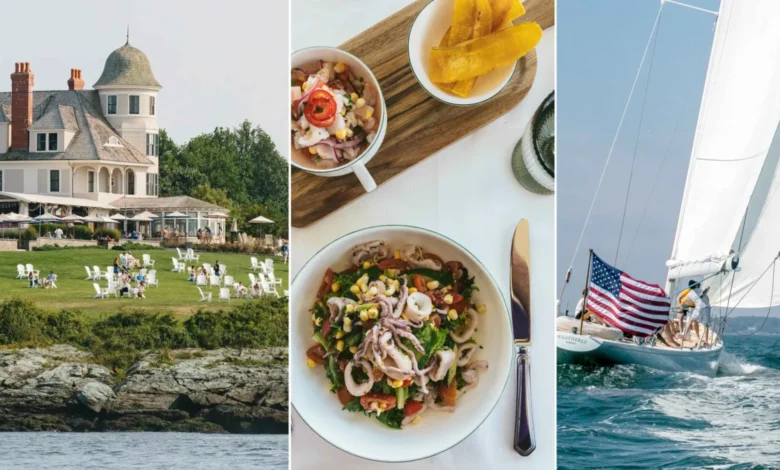
Castle Hill Inn remains one of the city’s most distinguished architectural and hospitality landmarks. Perched on a rocky peninsula overlooking the Atlantic Ocean, the Victorian mansion features a sprawling Lawn Terrace where guests routinely gather to experience the coastal environment.
For travelers requiring extended living spaces or operating within specific budget parameters, alternative lodging configurations are readily available. The short-term rental market includes historic townhouses in downtown Newport, minimalist waterfront condominiums in the Historic District, and larger residential properties located in adjacent Middletown, which provide close proximity to downtown while offering increased capacity for families and groups.

Where to Play: Exploring Culture, Recreation, and Maritime Heritage
Recreation in Newport is intrinsically linked to its coastal geography and cultural history. During the summer months, beach access is a primary draw. Easton’s Beach provides convenient access near the city center, while Gooseberry Beach offers a protected cove along Ocean Drive. Second Beach (Sachuest Beach) in neighboring Middletown features an extensive expanse of sand and Atlantic surf, complemented by traditional beachside concession stands offering classic lobster rolls and clam chowder, alongside mobile vendors serving regional treats like Del’s Lemonade.
Cultural events play a vital role in the city’s tourism calendar. The Newport Jazz Festival and the Newport Folk Festival, both hosted annually at Fort Adams State Park in late July and early August, draw tens of thousands of music enthusiasts. Established in 1954 and 1959 respectively, these festivals occupy a foundational role in the history of American popular music, having hosted legendary performances by artists such as Miles Davis, Bob Dylan, and Joan Baez. Securing attendance requires advance planning due to high demand.
For outdoor enthusiasts, the Cliff Walk offers a free, publicly accessible 3.5-mile path that runs parallel to the Atlantic coastline, juxtaposing natural marine vistas with the exterior facades of the historic Newport Mansions. Guided interior tours of properties such as The Breakers, Marble House, and Rosecliff are administered by the Preservation Society, offering insight into the domestic lives of the 19th-century elite.
On-the-water activities are facilitated by organizations like Sail Newport, which offers public sailing programs and excursions ranging from afternoon outings to sunset cruises. For indoor and land-based exploration, the International Tennis Hall of Fame—situated on the historic grass courts of the Newport Casino—documents the history of the sport through extensive museum exhibits. Further inland, options include equestrian excursions at regional facilities and wine-tasting experiences at vineyards such as Shepherd’s Run in nearby South Kingstown.

Economic and Tourism Implications
The consistent influx of domestic and international visitors to Newport generates substantial economic benefits for the region, supporting local commerce, hospitality employment, and historic preservation initiatives. However, this tourism-dependent economic model also presents ongoing municipal challenges. Local governance and community stakeholders continually navigate the delicate balance between promoting economic growth through tourism and mitigating the impacts of seasonal congestion, housing affordability concerns, and environmental wear on historic infrastructure. Despite these challenges, Newport remains a resilient economic and cultural anchor within New England, successfully sustaining its historical identity while adapting to the demands of modern travelers.