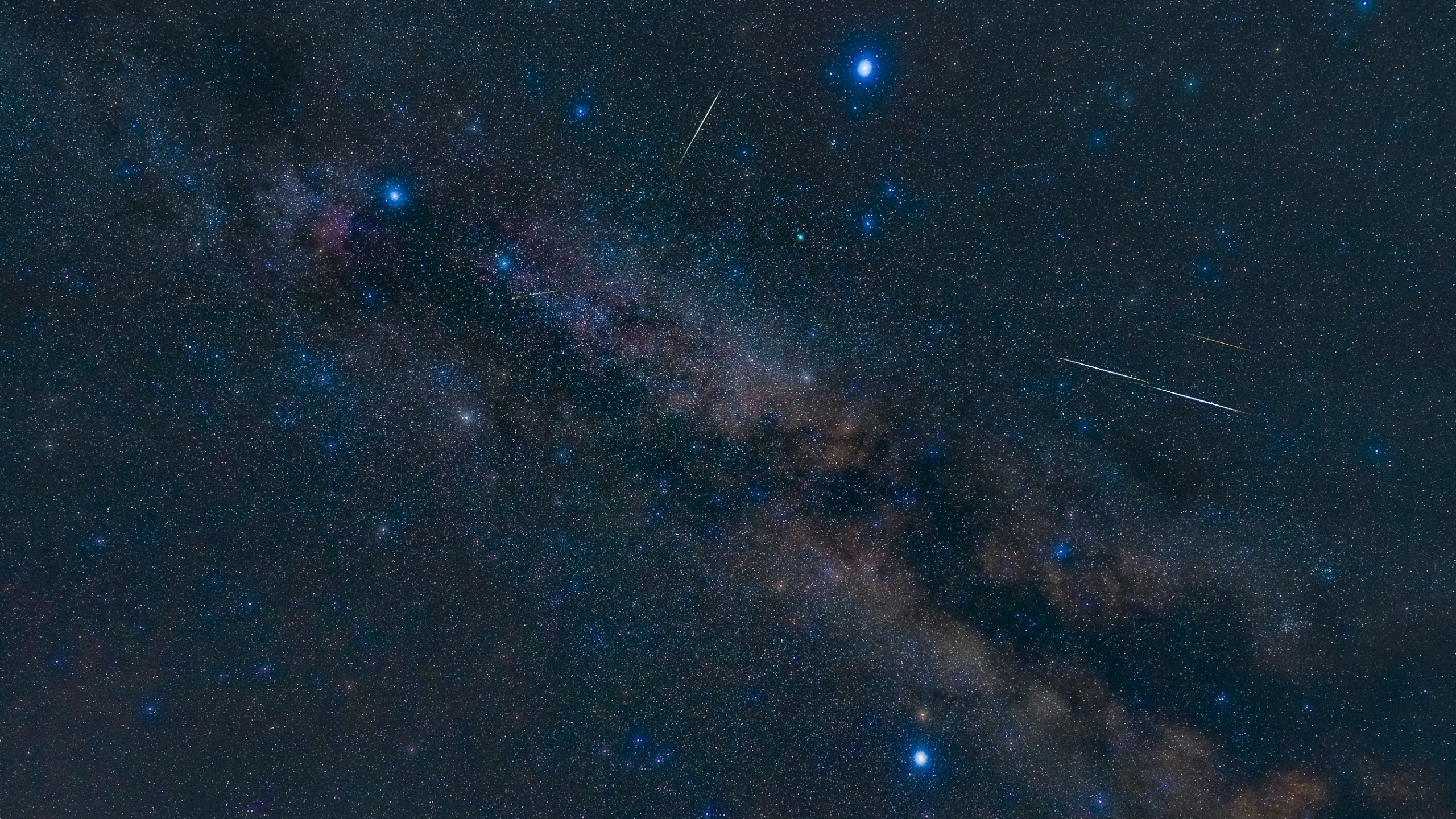
As the Northern Hemisphere transitions from the sweltering heat of August into the crisp, cooling air of September and October, the night sky undergoes a profound transformation. However, one prominent feature remains remarkably stubborn: the Summer Triangle. Composed of the three brilliant stars Vega, Altair, and Deneb, this asterism continues to dominate the zenith long after the summer solstice has passed. While the changing foliage and earlier sunsets signal the arrival of autumn, this celestial formation lingers overhead, prompting both amateur observers and seasoned astronomers to question why such a permanent fixture of the seasonal sky retains its summer-centric nomenclature.
The persistence of the Summer Triangle deep into the autumn months is not a paradox, but a consequence of the Earth’s orbital position and the mechanics of our viewing perspective. Understanding this requires a look at the specific behavior of these stars throughout the calendar year.
Celestial Mechanics and Seasonal Visibility
The designation of the "Summer Triangle" is rooted in the observability window of these stars during the warmer months. From June through August, the trio makes a grand transit across the sky, rising in the east-northeast at dusk and remaining visible until they descend in the west-northwest as dawn approaches. During the peak of summer, they are overhead for the duration of the night.
As autumn progresses, the geometry of the Earth relative to these stars shifts. By mid-September, the Triangle is already nearing the meridian at nightfall. By November, the stars are still visible shortly after sunset, but they occupy the western sky much earlier in the evening. The "Summer" label remains appropriate because the triangle is most accessible and visible for the longest duration of the night during the summer months. By the time winter truly settles in, the Earth’s rotation during the sunlit hours causes the Triangle to set shortly after the sun, eventually disappearing from the evening sky entirely as the constellations of winter—such as Orion and Taurus—rise to prominence.
The Composition of the Triangle: A Study in Stellar Distances
While the Summer Triangle appears to be a cohesive unit to the naked eye, the three stars that define it are vastly different in nature and distance. This is a critical factor in the "apparent brightness" that draws human attention to them.
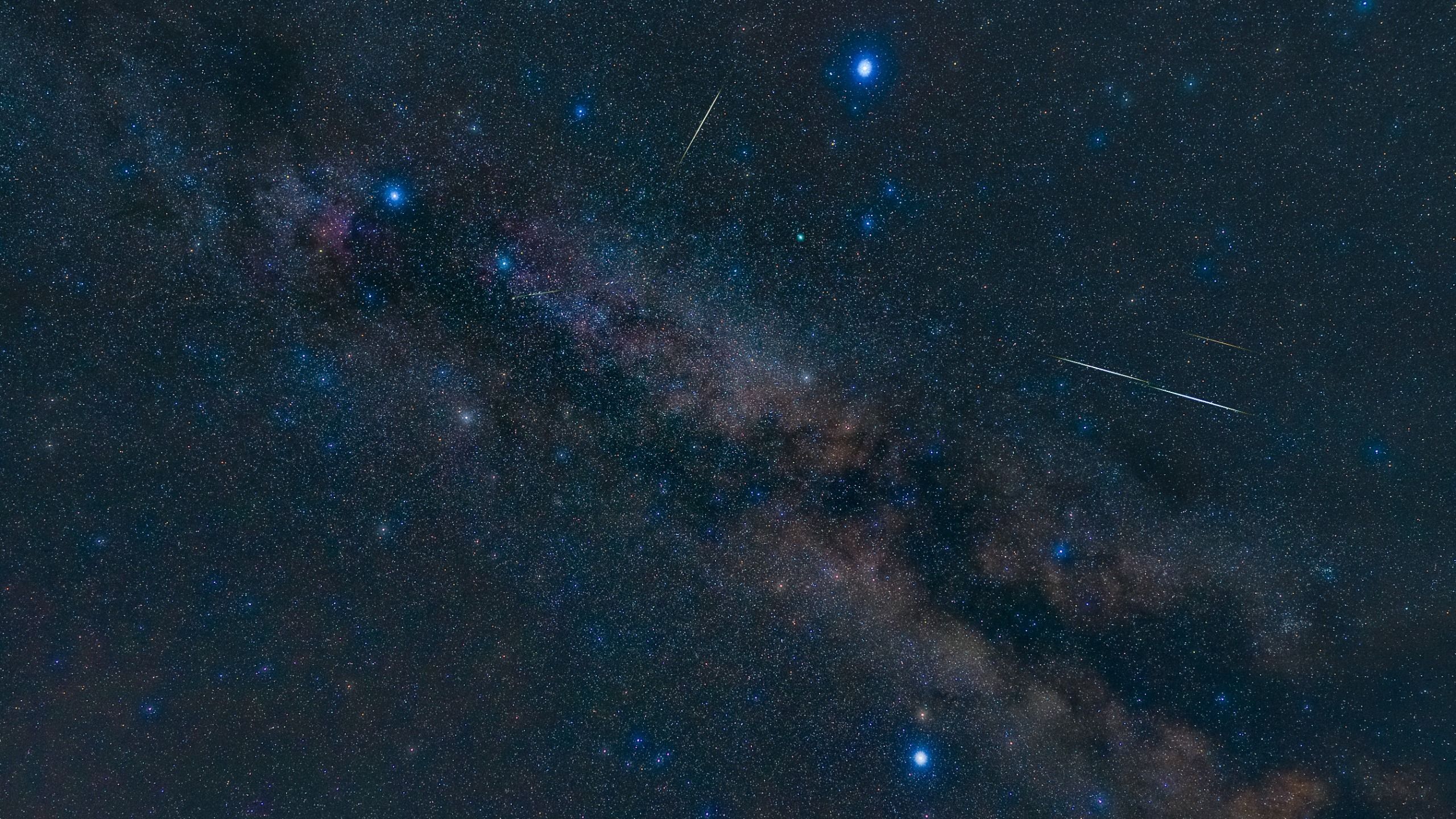
Altair, located in the constellation Aquila (the Eagle), is the closest of the three at approximately 16.7 light-years from Earth. It is a main-sequence A-type star, significantly hotter and more luminous than our Sun, though modest when compared to its companions in the Triangle. Vega, situated in the constellation Lyra (the Harp), is a blue-white main-sequence star roughly 25 light-years away. It is often considered the "anchor" of the group due to its position near the zenith in mid-summer.
The true outlier, however, is Deneb, located in the constellation Cygnus (the Swan). Deneb is a massive blue-white supergiant. Its distance is subject to some scientific debate, with estimates ranging from 1,400 to 2,600 light-years. Even at the lower end of that estimate, Deneb is an extraordinarily powerful star. Its intrinsic luminosity is estimated to be at least 55,000 times that of the Sun. If Deneb were placed at the same distance as Vega, it would outshine the full moon. The fact that it appears roughly equal in brightness to its closer neighbors is a testament to its gargantuan energy output.
The Linguistic and Cultural History of the Asterism
The nomenclature of the Summer Triangle is a relatively modern invention, lacking the ancient heritage of the constellations themselves. The history of the name is a subject of scholarly interest, with several figures vying for credit in its popularization.
The term "Summer Triangle" gained widespread traction in the mid-20th century. Sir Patrick Moore, the late British astronomer and host of the long-running BBC program The Sky at Night, frequently cited a 1958 broadcast as the moment he introduced the term to a mass audience. Moore’s influence on amateur astronomy was profound, and his usage likely cemented the name in the English-speaking world.
However, historical records suggest the term predates Moore’s 1958 broadcast. H.A. Rey, the noted author and illustrator best known for the Curious George series, utilized the term in his 1954 children’s book Find the Constellations. Furthermore, the German astronomer Oswald Thomas had already laid the groundwork in the 1920s and 1930s, describing the formation as the "Grosses Dreieck" (Great Triangle) and later the "Sommerliches Dreieck" (Summerly Triangle). It is widely believed that the name was also utilized in navigational training manuals for Allied pilots during World War II, as the three stars provided a reliable, high-visibility reference point for celestial navigation in the Northern Hemisphere.
The Pronunciation Debate: A Legacy of Media Influence
Beyond the naming of the Triangle, the pronunciation of its most famous member, Vega, has been a source of minor contention in astronomical circles. The popular 1997 film Contact, based on the novel by Carl Sagan, featured a lead character who consistently pronounced the star as "Vey-gah." This pronunciation—which matches the name of the discontinued Chevrolet Vega automobile—is widely considered incorrect by professional astronomers.
The accepted astronomical pronunciation is "Vee-gah," with the stress placed on the first syllable. The late George Lovi, a respected expert in celestial nomenclature, famously summarized this distinction for the public: "Vee-ga is a star and Vey-gah is a car." The film’s influence was so pervasive that it temporarily shifted public usage, illustrating the power of mass media to alter scientific discourse, even in small, phonetic ways.
Scientific and Educational Implications
The Summer Triangle serves as an invaluable educational tool for teaching the fundamentals of stellar classification and celestial navigation. Because the three stars are visible from almost any location in the Northern Hemisphere, they function as a "gateway" for new observers to identify the constellations of Lyra, Aquila, and Cygnus.
From a professional standpoint, these stars offer diverse opportunities for observation. Vega, for instance, has served as a fundamental calibration star for astronomers establishing the magnitude scale. Because of its proximity and stability, it is often used to define the zero-point of photometric systems. Deneb, as a distant supergiant, provides a laboratory for studying the life cycles of massive stars that are destined to end their existence in supernova events.
Furthermore, the study of the Summer Triangle highlights the importance of distinguishing between absolute magnitude (actual luminosity) and apparent magnitude (what we see from Earth). The contrast between the "penlight" nature of the relatively nearby Altair and the "lighthouse" nature of the distant Deneb provides an essential lesson in the scale of the galaxy.
Conclusion
As the nights continue to lengthen and temperatures drop, the Summer Triangle remains a testament to the constancy of the night sky. While the labels we apply to celestial objects are often human constructs designed to categorize the heavens, they facilitate a deeper engagement with the cosmos. Whether referred to as the Summer Triangle, an autumn guide, or simply a collection of light-years-distant fusion reactors, the triad of Vega, Altair, and Deneb continues to serve as an enduring focal point for humanity’s gaze. Its transition from a marker of summer warmth to a companion of the autumn chill serves as a reminder that while the seasons on Earth are fleeting, the patterns of the stars remain as steady observers of our changing world.