The Evolution of Global Connectivity: Analyzing the New Holafly Subscription Model for International Travelers

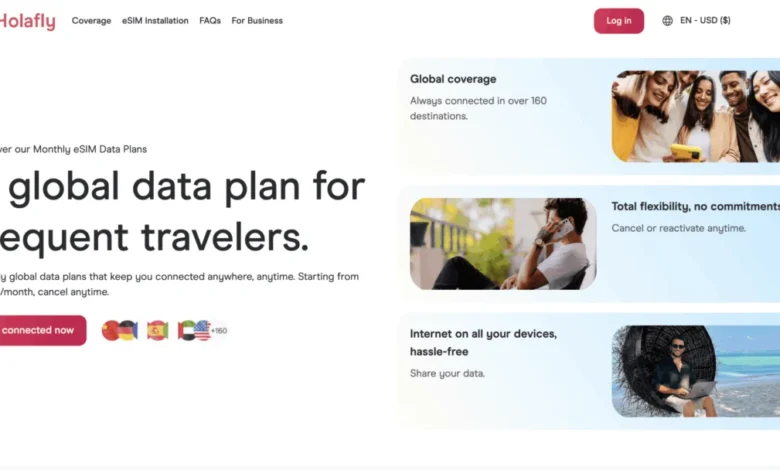
The landscape of international mobile connectivity has undergone a significant paradigm shift with the introduction of Holafly Plans, a subscription-based eSIM service designed to provide seamless, borderless data access for long-term travelers and digital nomads. Historically, international mobile usage was dominated by two disparate models: expensive roaming add-ons provided by domestic carriers, or the fragmented approach of purchasing individual, region-specific SIM cards upon arrival in each new country. The emergence of eSIM (embedded SIM) technology has already begun to disrupt this market by allowing users to switch carriers via software rather than physical card swaps. Holafly’s latest iteration takes this a step further by offering an ongoing, multi-country subscription service covering over 160 destinations, marking a departure from their previous model of single-trip, country-specific products.
The Technological Context of eSIM Integration
An eSIM is a digital version of the traditional plastic SIM card, integrated directly into the hardware of modern smartphones. This technology allows users to store multiple profiles simultaneously, enabling them to toggle between a home carrier and a travel-specific provider without physically opening their device. The global eSIM market has experienced exponential growth, driven by the increasing number of smartphone manufacturers—including Apple, Samsung, and Google—incorporating dual-SIM capabilities as a standard feature.
Market analysts observe that this technology addresses the "friction" associated with international travel, specifically the time-consuming process of visiting local kiosks or managing multiple physical cards. By utilizing QR-code activation or direct app-based installation, travelers can secure connectivity before reaching their destination. The introduction of a subscription model by major providers like Holafly represents an effort to capture the "digital nomad" demographic—a segment of the workforce that, according to recent labor market reports, has grown by over 130% since 2019.
Holafly Plans: Operational Structure and Tiered Offerings
The newly launched Holafly Plans operate on an ongoing, subscription-based framework rather than a transactional, per-trip basis. This model allows the eSIM to remain active as the user crosses international borders, eliminating the need for recurring re-configuration. The service is bifurcated into two primary tiers: the Light Plan and the Unlimited Plan.

The Light Plan provides 25GB of monthly data with integrated hotspot capabilities across the 160+ supported countries. In contrast, the Unlimited Plan removes data caps and provides full tethering permissions, a critical requirement for remote professionals who rely on high-bandwidth video conferencing and cloud-based collaboration tools. A distinctive feature of the Unlimited tier is the provision of a local phone number originating from the United States, United Kingdom, or Canada, facilitating the reception of SMS messages, which is frequently required for two-factor authentication on banking and professional platforms.
Both plans include a permanent "Always On" feature, which provides a baseline of 1GB of emergency data each month, ensuring basic connectivity even if a user chooses to cancel their primary subscription. This strategy aligns with industry trends toward "value-added services," where providers seek to increase customer retention by offering persistent utility beyond the initial purchase period.
Comparative Cost Analysis and Market Positioning
When compared to traditional international roaming packages offered by Tier-1 mobile carriers in North America, the Holafly subscription model presents a notable price discrepancy. Major U.S. carriers often charge upwards of $100 per month for international roaming add-ons, which frequently include data speed throttling after a specific usage threshold is met. By contrast, the Holafly Unlimited Plan is positioned at approximately $55 to $65 per month, depending on the commitment duration—monthly, quarterly, or annually.
Financial analysts note that the quarterly and annual payment structures incentivize long-term commitment, offering discounts of 10% and 15% respectively. This pricing architecture is designed to compete directly with local SIM providers in developing markets, where prices vary significantly but often aggregate to $60–$120 per month for heavy data users. For the frequent traveler, the primary advantage is not merely the per-gigabyte cost, but the elimination of "administrative overhead"—the time and potential for error associated with finding, purchasing, and activating new SIMs in every jurisdiction.
The Emergence of the Ultra Plan: Value-Added Services
Holafly has expanded its portfolio with the "Ultra Plan," an enterprise-adjacent product that includes the benefits of the Unlimited tier supplemented by integrated travel assistance. This tier represents an attempt to bundle auxiliary services into the mobile data product. The plan includes access to medical, psychological, and logistical support services.
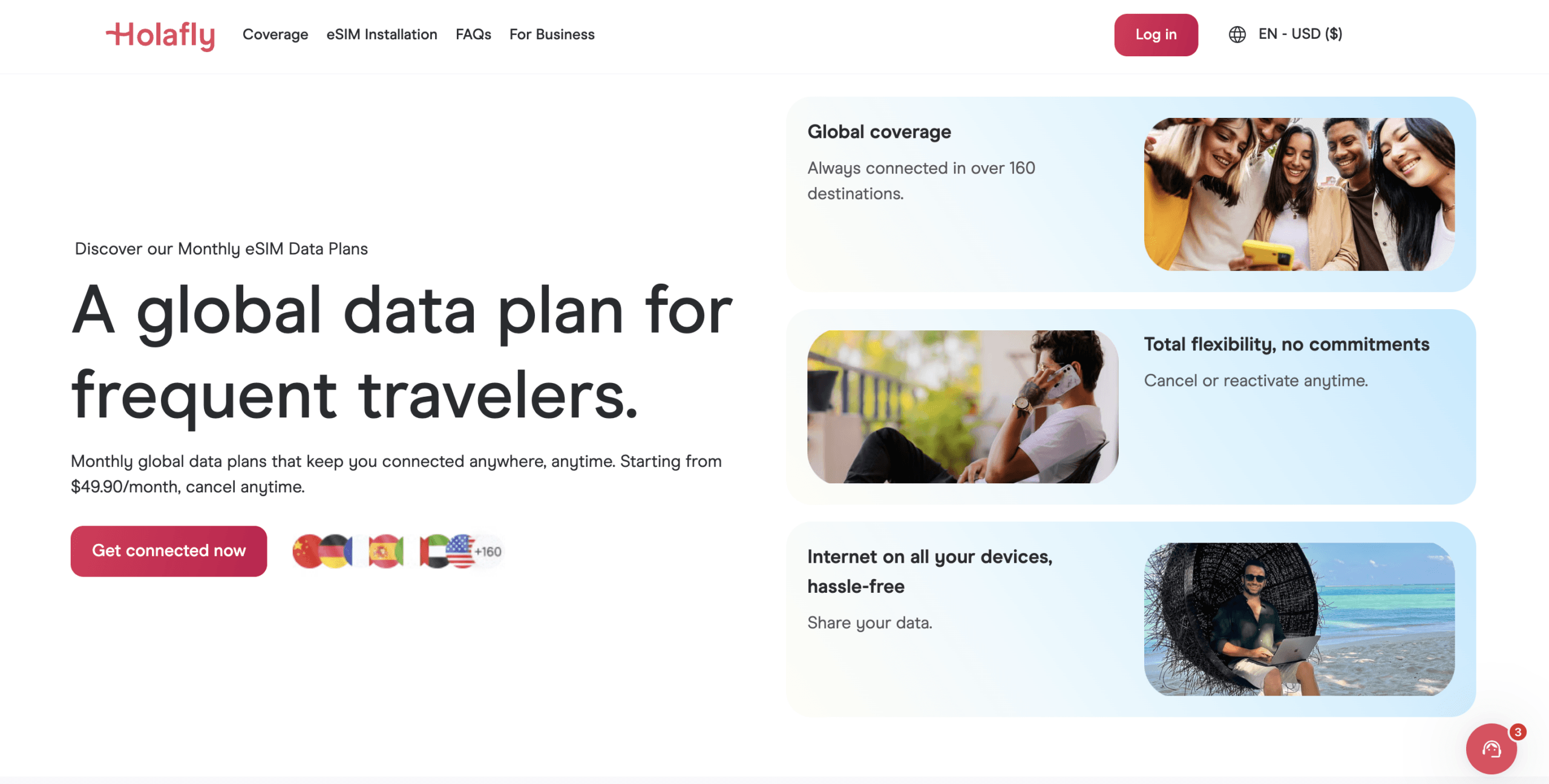
While the Ultra Plan is not a replacement for comprehensive travel insurance—as it lacks coverage for major hospitalizations, theft, or emergency medical evacuation—it functions as a supplementary service for minor, travel-related issues. The inclusion of such support services reflects a broader industry trend of "ecosystem building," where mobile service providers expand into the lifestyle and safety sectors to differentiate themselves from commodity data providers.
Strategic Implications for the Telecommunications Industry
The rise of global, subscription-based eSIM providers presents a significant challenge to traditional roaming revenue models. For decades, mobile network operators (MNOs) have relied on high-margin roaming fees to bolster bottom lines. However, the rise of independent, third-party eSIM providers shifts this leverage toward the consumer.
From an infrastructure perspective, these companies do not own the cellular towers; instead, they operate as Mobile Virtual Network Operators (MVNOs) or aggregators, leasing capacity from local networks across the globe. This "asset-light" model allows them to maintain lower operating costs and pass savings to the consumer. Furthermore, the 24/7 customer support infrastructure inherent in these services is designed to mitigate the primary complaint of international travelers: the inability to resolve connectivity issues in foreign languages or across different time zones.
Implementation and User Adoption
The transition to a subscription-based eSIM model involves a simplified, three-step process: account registration, plan selection, and QR-code installation. Once the profile is installed, the device automatically recognizes the local partner network upon landing in a new country. This process has effectively reduced the "time-to-connect" from hours or days—the time required to find a local vendor and register a SIM—to a matter of minutes.
However, the model is not without limitations. Users must possess an unlocked, eSIM-compatible device. Furthermore, while the coverage spans over 160 countries, there are still regions where connectivity may be limited due to local regulations or lack of carrier partnerships. As such, the product is primarily optimized for the modern, urban-centric international traveler rather than those exploring highly remote or geographically isolated regions.
Future Outlook and Conclusion
The long-term viability of the Holafly subscription model depends on its ability to maintain high service quality while scaling its user base. As global roaming regulations evolve and more countries adopt standardized eSIM frameworks, the barrier to entry for these services will likely continue to drop.
For the professional, long-term traveler, the shift toward a single, global data subscription represents a maturation of the digital economy. The ability to maintain a persistent, secure, and cost-effective connection across borders is no longer a luxury but a fundamental necessity for modern global mobility. As the market continues to evolve, the distinction between "local" and "international" data will likely continue to blur, driven by providers that offer seamless integration through software, effectively rendering the physical SIM card a relic of the past. The success of these plans serves as a bellwether for the future of mobile telecommunications, where agility and global consistency take precedence over legacy carrier structures.
Related posts: