The Jackson Heights Opportunity: Laburnum Court
The centerpiece of this week’s market review is a top-floor unit located at 37-28 80th Street, within the historic Laburnum Court cooperative. Constructed in 1922, the building is a quintessential example of the "garden cooperative" movement that defined much of Jackson Heights’ early development. Designed to integrate urban density with suburban-style green space, these buildings feature shared interior courtyards that remain a significant draw for buyers seeking respite from the noise of the city.
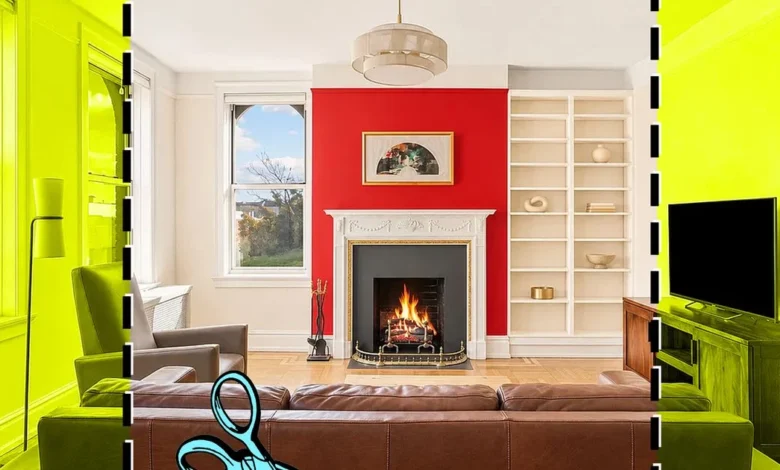
The unit, priced at $775,000, offers a blend of prewar architectural integrity and modern convenience. The interior retains original details, such as parquet flooring and authentic hardware, but has been updated to accommodate contemporary living standards. The living area is centered around a wood-burning fireplace, a rare amenity in New York City co-ops, set against a bold accent wall. The kitchen has been fully renovated to include high-end appliances and dual pantry storage, reflecting a shift in buyer preferences toward turnkey properties that require minimal capital expenditure post-closing.
Monthly maintenance fees for the unit are $1,397, which include access to the building’s private garden, basement laundry facilities, and bicycle storage. The location is strategically positioned within a five-minute walk of the 7 train, offering a direct transit link to Manhattan, and is situated near the neighborhood’s renowned food scene, including the Birria-Landia truck, which has become a symbolic touchstone for the neighborhood’s culinary evolution.
Market Context: The "Under a Million" Challenge
The current New York City real estate market is characterized by a persistent imbalance between supply and demand. According to recent industry data, the inventory of homes priced between $500,000 and $999,000 has remained tight, forcing buyers to look beyond traditional hot spots like the West Village or Brooklyn Heights.

The strategy of "trading space for commute" has become increasingly prevalent. As prices in Manhattan core neighborhoods remain prohibitive, buyers are finding that their purchasing power stretches significantly further in neighborhoods like Jackson Heights, where the square footage-to-price ratio is more favorable. This trend is further supported by the increasing interest in "garden co-ops," which provide a sense of community and outdoor access that is difficult to replicate in high-rise condominiums.
Comparative Listings: From the West Village to Brooklyn Heights
While Jackson Heights offers value, other listings highlight the trade-offs required to secure a foothold in more established, high-demand neighborhoods.
At 135 Perry Street in the West Village, a one-bedroom co-op currently listed at $750,000 illustrates the premium paid for location. The unit features a classic "railroad" layout and exposed brick, with a renovated spa-inspired bathroom. However, at $1,657 in monthly maintenance fees—without the inclusion of extensive amenities—the cost of ownership is significantly higher than in Queens. This reflects a broader trend where buyers in historic neighborhoods pay for proximity to cultural landmarks and established retail, often at the expense of monthly liquidity.
In Brooklyn Heights, the property at 155 Henry Street, listed for $875,000, offers a different proposition: high beamed ceilings and historic moldings. While the unit is aesthetically impressive, the kitchen is notably compact, requiring creative storage solutions or future renovation. The $1,228 monthly fee covers standard building services but underscores the reality that in older, prewar buildings, the "bones" of the unit are often the primary value proposition, with kitchens and bathrooms frequently requiring modernization.
Finally, 101 W. 12th Street in Manhattan represents the "modern luxury" segment of the sub-$1 million market. This 600-square-foot unit, priced at $925,000, prioritizes efficiency. By utilizing a sleeping alcove rather than a true separate bedroom, the apartment maximizes floor space and light. With $1,692 in monthly fees, the buyer is paying for a full-service experience—including a doorman and concierge—which remains a non-negotiable priority for many Manhattan-based professionals.

Chronology of Recent Market Shifts
The current state of the New York City real estate market is the result of several years of volatility.
- 2021–2022: The post-pandemic surge saw a rapid depletion of inventory as buyers capitalized on historic low-interest rates.
- 2023: Interest rate hikes by the Federal Reserve caused a cooling effect, leading to a period of price stabilization but sustained high costs of borrowing.
- 2024–2025: A "wait-and-see" approach from both sellers and buyers led to stagnant inventory levels.
- Late 2026: A slight uptick in inventory, coupled with moderate adjustments in buyer expectations, has created a window for motivated buyers to secure units in established co-ops, provided they are prepared to act quickly.
Financial and Social Implications
The implications of these market conditions are significant for the city’s demographics. As the barrier to entry for homeownership remains high, the prevalence of "turnkey" listings—properties that have been renovated by previous owners—has become a dominant factor. Buyers are increasingly risk-averse regarding renovations due to the rising costs of construction materials and labor. Consequently, units that offer modern kitchens and updated bathrooms command a premium, even in neighborhoods that were previously considered "up-and-coming."
Furthermore, the role of co-ops continues to be a subject of debate. While co-ops offer lower purchase prices than condos, their strict board requirements and high monthly maintenance fees can act as a gatekeeper. For many, the decision to purchase a co-op like Laburnum Court in Jackson Heights is as much about the lifestyle—the garden, the community, the proximity to transit—as it is about the financial investment.
Conclusion
For those looking to buy in New York City with a budget of under $1 million, the strategy is clear: define the priority. Whether that is the space and charm of a prewar co-op in a transit-friendly outer borough, or the prestige and service-oriented lifestyle of a Manhattan high-rise, the current market offers options for those willing to navigate the trade-offs. The listing at 37-28 80th Street stands as a prime example of the value that can be found by looking outside the traditional city center, providing a blueprint for how modern buyers can secure a long-term residence in an increasingly competitive urban environment. As interest rates and inventory fluctuate in the coming months, the resilience of the New York City market will likely continue to hinge on the ability of buyers to balance the practical realities of maintenance costs against the long-term appreciation potential of their investments.
Related posts: