Airbus North America CEO Robin Hayes Emphasizes Durability and Operational Reliability at Skift Aviation Forum

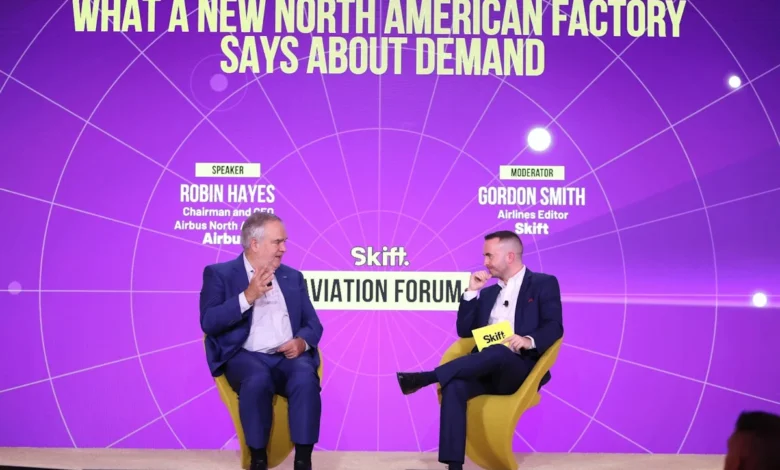
The global commercial aviation sector stands at a critical juncture, balancing the aggressive pursuit of decarbonization and fuel efficiency with the immediate, uncompromising demands of daily operational reliability. This delicate equilibrium took center stage at the Skift Aviation Forum, where industry leaders gathered to dissect the future of flight, supply chain resilience, and technological innovation. Among the keynote speakers was Robin Hayes, Chairman and CEO of Airbus North America, who sat down for a high-profile discussion moderated by Skift Airlines Editor Gordon Smith. Hayes offered profound insights into the evolving priorities of major aircraft manufacturers, noting that durability has surged to the forefront of modern aircraft development. As airlines grapple with lingering post-pandemic supply chain bottlenecks, engine durability issues, and mounting pressure to meet net-zero emissions targets by 2050, the calculus behind introducing next-generation technology has become increasingly intricate.
The core takeaway from Hayes’ address underscores a fundamental shift in how aircraft designers and manufacturers approach the drawing board. Historically, the Holy Grail of commercial aviation engineering was maximizing fuel efficiency and aerodynamic performance. While these metrics remain critically important, Hayes emphasized that operational reliability and structural longevity have now become equally vital pillars of aircraft design. Airlines, operating in an environment of tight profit margins and high capacity utilization, cannot afford premature maintenance cycles or unexpected groundings. Consequently, manufacturers like Airbus face a multi-layered challenge: they must engineer revolutionary, highly efficient airplanes that can also withstand the punishing rigors of intensive, high-frequency commercial deployment without skipping a beat.
Background Context of the Skift Aviation Forum and the Modern Aerospace Landscape
To understand the weight of Hayes’ remarks, one must examine the broader economic and operational backdrop of the global aviation industry. The Skift Aviation Forum has established itself as a premier annual gathering where top executives, strategists, and analysts converge to debate the forces reshaping travel. The timing of this year’s forum was particularly poignant. The aviation industry is still navigating a complex recovery arc following the unprecedented disruptions of the COVID-19 pandemic, which permanently altered travel patterns, labor availability, and manufacturing supply chains.
Over the past several years, the aerospace sector has been caught in a persistent squeeze. On one side, commercial airlines are experiencing robust, sometimes record-breaking passenger demand, creating an urgent appetite for new fleet capacity. On the other side, aerospace manufacturers—plagued by shortages of skilled labor, raw material constraints, and regulatory tightening—have struggled to meet delivery schedules. Furthermore, the industry is bound by ambitious environmental mandates. International bodies, governments, and airline alliances have committed to achieving net-zero carbon emissions by 2050, putting immense pressure on manufacturers to accelerate the development of sustainable aviation fuels (SAF) compatibility, hybrid-electric propulsion, and hydrogen-powered technologies.
Against this turbulent background, the decision-making process for launching a brand-new aircraft program has evolved from a primarily financial and engineering calculation into a high-stakes balancing act. Introducing cutting-edge technology too quickly can introduce unforeseen mechanical vulnerabilities, as evidenced by recent global issues with certain geared turbofan engines across the industry. Conversely, moving too slowly risks rendering a manufacturer’s portfolio uncompetitive in a carbon-conscious marketplace.
Chronology of Modern Aerospace Pressures: From Efficiency to Reliability
The evolution of priorities in commercial aviation can be traced across several distinct phases over the past two decades. Understanding this timeline helps contextualize why durability has suddenly re-emerged as a dominant boardroom topic.
In the late 2000s and early 2010s, the industry was primarily focused on mitigating the shock of volatile jet fuel prices. This era catalyzed the development of clean-sheet aircraft designs and engine upgrades, such as the Airbus A320neo family and the Boeing 373 MAX. The emphasis was heavily skewed toward fuel burn reduction, leading to double-digit improvements in efficiency. These technological leaps relied on high-bypass engines operating at unprecedented internal temperatures and pressures, utilizing advanced composite materials to reduce overall aircraft weight.
Between 2020 and 2022, the COVID-19 pandemic froze global travel demand, causing massive financial distress across the airline ecosystem and forcing manufacturers to decelerate production lines. As the industry experienced a rapid, pent-up surge in travel demand starting in late 2022 and extending through 2024, airlines urgently needed aircraft to fly. However, the fragile aerospace supply chain could not instantly reactivate. During this recovery phase, reliability became the paramount concern. Airlines found themselves heavily reliant on older, proven aircraft frames because newer, highly sophisticated models occasionally required unexpected maintenance interventions, exacerbating the capacity crunch.
Entering the mid-2020s, the industry has entered a maturation phase where efficiency and reliability are no longer viewed as competing priorities, but as absolute prerequisites. As Robin Hayes articulated during the forum, manufacturers can no longer afford to design airplanes that achieve record-breaking efficiency at the expense of time-on-wing longevity.
Supporting Data and Market Implications

The economic stakes surrounding aircraft manufacturing decisions are staggering. A typical commercial aircraft program requires tens of billions of dollars in upfront capital expenditure and a development timeline spanning a decade or more. Once deployed, these assets are expected to generate revenue for airlines over a 20- to 30-year operational lifecycle.
According to recent industry forecasts, global airlines will need tens of thousands of new commercial passenger and freighter aircraft over the next two decades to replace aging fleets and accommodate expanding middle-class populations in developing aviation markets, particularly in the Asia-Pacific region. However, current delivery backlogs at both Airbus and Boeing stretch well into the late 2020s and early 2030s. This backlog means that any design flaw, maintenance bottleneck, or durability issue discovered in current-generation fleets ripples aggressively through airline network planning, resulting in canceled flights, reduced frequency, and billions in lost revenue.
Furthermore, the financial burden of maintenance, repair, and overhaul (MRO) services has escalated sharply due to inflation, component shortages, and rising labor costs. When an engine or structural component fails to meet its projected time-on-wing milestone, the financial penalty is borne not just by the manufacturer through warranty claims and support costs, but acutely by the airline operator whose revenue-generating asset is sidelined. Therefore, Hayes’ emphasis on durability is deeply intertwined with airline profitability.
Official Responses and Industry Reactions
While Robin Hayes’ commentary at the Skift Aviation Forum specifically highlighted Airbus North America’s strategic perspective, industry analysts and airline executives across the globe have echoed similar sentiments. In recent earnings calls and industry symposia, leadership teams from major global carriers have increasingly voiced frustration over unexpected maintenance intervals, urging equipment makers to prioritize mature, battle-tested reliability over aggressive technological leaps that carry high operational risks.
Engine manufacturers, who work in tandem with airframers like Airbus, have also adjusted their messaging. Major suppliers have acknowledged that the pursuit of ultimate thermodynamic efficiency must be balanced against the physical limits of materials used in turbine blades and combustors. The consensus emerging from the aerospace sector is a renewed commitment to rigorous, prolonged ground and flight testing before pushing new architectures into full-scale commercial production.
Broader Impact on the Future of Flight
The implications of prioritizing durability alongside efficiency extend far beyond corporate boardrooms and manufacturing floors; they directly shape the trajectory of global travel and environmental sustainability.
First, the transition to next-generation propulsion technologies—such as hydrogen combustion or advanced hybrid systems—will likely proceed with an abundance of caution. While environmental groups and regulatory bodies push for rapid decarbonization, manufacturers are acutely aware that any high-profile reliability failure in a novel propulsion system could severely damage public and airline confidence, setting back the green transition by years. Consequently, the pathway to zero-emission aviation will likely rely heavily on bridging technologies, such as the scaled use of sustainable aviation fuels in existing, highly durable aircraft families, before introducing radical new airframe architectures.
Second, the relationship between airlines and manufacturers is undergoing a structural shift. The traditional transactional model—where manufacturers simply build and deliver planes—is evolving into a deeply collaborative partnership focused on predictive maintenance, data analytics, and lifecycle asset management. Manufacturers are leveraging real-time telemetry data transmitted by modern aircraft to monitor component wear and tear proactively, ensuring that durability is not just a theoretical design goal, but a measurable, continuously optimized operational reality.
Conclusion
As the aviation sector looks toward the horizon, the insights shared by Airbus North America CEO Robin Hayes at the Skift Aviation Forum serve as a guiding compass for the industry. The challenge of the coming decade is not merely about inventing airplanes that burn less fuel or emit fewer greenhouse gases. It is about engineering marvels of modern technology that can deliver uncompromised safety, structural durability, and relentless operational reliability day in and day out. In an interconnected global economy that depends on the seamless movement of millions of passengers and cargo tons daily, reliability is the ultimate currency—and the aerospace manufacturing sector is rising to meet that standard with newfound prudence and resolve.