Skydance removes James Gunn and Peter Safran as leaders of DC Studios as Jeremy Latcham takes the helm

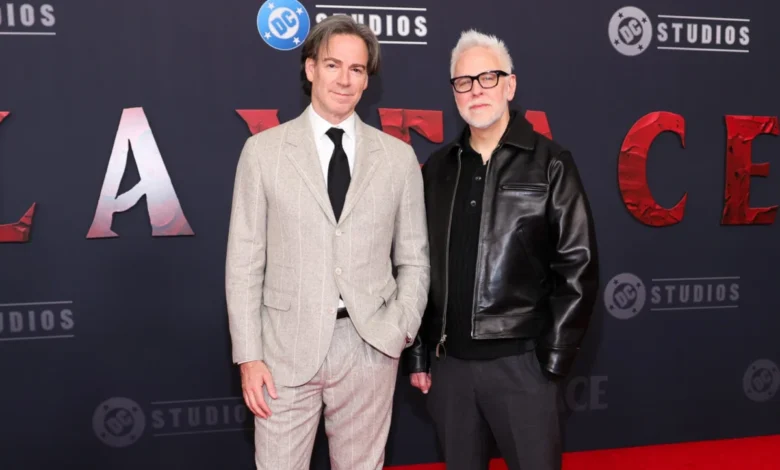
In a seismic shift for the entertainment industry, Skydance—the newly formed media conglomerate resulting from the acquisition of Warner Bros. Discovery—has officially terminated the contracts of James Gunn and Peter Safran as co-chairmen and co-CEOs of DC Studios. The announcement, confirmed on November 9, 2026, marks the end of a tumultuous four-year tenure that began with the ambitious promise of a unified cinematic universe. Replacing the duo is veteran producer Jeremy Latcham, a key architect of the early Marvel Cinematic Universe (MCU), who will assume the roles of president and chief creative officer effective December 1.
This leadership transition arrives less than thirty days after the finalization of the Skydance-Warner Bros. Discovery merger on October 6. While initial reports suggested that Gunn and Safran might retain their positions to ensure stability during the corporate integration, the reality of the post-merger restructuring proved more unforgiving. Skydance chairman and CEO David Ellison and co-CEO Ynon Kreiz personally delivered the news to Gunn and Safran on November 6, signaling a definitive change in the studio’s creative trajectory.
A Chronology of DC’s Turbulent Decade
The DC franchise has experienced significant instability over the past thirteen years, undergoing multiple strategic pivots that have often left audiences and stakeholders in a state of flux.
- 2013: The launch of the DC Extended Universe (DCEU) with Zack Snyder’s Man of Steel, marking the first attempt at a shared cinematic narrative.
- 2017: The release of the theatrical Justice League, which sparked a massive fan-led campaign for a director’s cut, eventually released in 2021.
- 2022: The official hiring of James Gunn and Peter Safran to spearhead a comprehensive reboot of the DC character roster under the newly formed DC Studios.
- 2025: The July debut of Gunn’s Superman, which grossed $618.7 million, establishing a new baseline for the franchise.
- 2026 (October): Paramount completes the takeover of Warner Bros. Discovery, establishing the entity known as Skydance.
- 2026 (November): Gunn and Safran are removed from their posts, with Jeremy Latcham appointed as the successor.
Assessing the Tenure of Gunn and Safran
Gunn and Safran entered their roles in November 2022 with a mandate to streamline a fractured intellectual property portfolio. Their tenure was characterized by a hybrid approach: they attempted to balance the integration of existing fan-favorite actors, such as John Cena’s Peacemaker, with the introduction of new talent like David Corenswet’s Superman.
The financial performance of their projects was notably bifurcated. While Superman provided a respectable $618.7 million global return, subsequent entries struggled to maintain momentum. The $170 million production Supergirl served as a critical and commercial low point, failing to connect with audiences and becoming one of the most significant box-office disappointments in the studio’s history. Conversely, the low-budget, R-rated experiment Clayface proved that there was still an appetite for riskier, genre-bending content, having grossed $109 million against a modest $44 million budget.
Despite these results, the overarching strategy—the "connected universe"—remained incomplete. The studio continued to navigate the complexities of "Elseworlds" projects, such as the Joker sequels and Matt Reeves’ The Batman series, which operated outside the main continuity. This bifurcation of the brand often created confusion among casual viewers, potentially diluting the impact of the primary franchise offerings.
The Latcham Mandate: Lessons from the MCU
Jeremy Latcham’s appointment is viewed by industry analysts as a strategic move to pivot toward the production philosophy that defined the early success of the Marvel Cinematic Universe. Having served as a production executive during the foundational years of Marvel, Latcham’s resume includes significant contributions to Iron Man, The Avengers, and the Tom Holland-led Spider-Man trilogy.
His transition to DC is not merely a change in management but an attempt to apply a proven, long-term development playbook to a franchise that has struggled with tonal consistency. Latcham’s primary challenge will be to balance the "connected" requirements of a superhero franchise with the creative freedom that modern directors demand.
"I have had the privilege to help bring some of the most celebrated superhero stories to life on the big screen, and I am excited and honored for the opportunity to now lead DC Studios into its next era," Latcham stated following his appointment. His reporting structure will place him directly under the authority of Dana Goldberg and Josh Greenstein, the co-chairs of the Skydance Motion Picture Group, ensuring a more direct link between DC Studios and the parent company’s broader corporate objectives.
Implications for Future Production
The immediate future of DC remains in a state of "controlled transition." Projects already deep in the pipeline, such as the Superman sequel Man of Tomorrow and the second installment of Matt Reeves’ The Batman—which recently brought on Steven Soderbergh to assist with remaining production—will proceed under current creative visions.
However, the long-term roadmap is now under intense scrutiny. The status of Corenswet’s Superman, the potential for further seasons of Lanterns, and the fate of the television slate—including The People v. Gorilla Grodd—are currently being evaluated by Latcham.
Analysts suggest that Skydance is unlikely to tolerate the extended period of "creative drift" that characterized the previous regime. The pressure is on Latcham to deliver a unified vision that can compete with an increasingly crowded superhero marketplace. The departure of Gunn and Safran also leaves a vacuum in terms of brand identity; Gunn, as a prominent director and producer, provided a clear, recognizable voice for the studio. Latcham, by contrast, is a behind-the-scenes executive, suggesting that the brand may shift toward a more studio-led, corporate-governed model.
Industry Impact and Financial Outlook
The removal of Gunn and Safran also raises questions regarding the internal culture at Warner Bros. Discovery under its new Skydance ownership. The reversal of the decision to keep the duo in place—originally touted as a sign of continuity—suggests that the new ownership is prioritizing a total overhaul of the creative suite.
Financial analysts note that the DC franchise remains one of the most valuable assets in the media landscape, but its volatility has become a liability on the balance sheet. For a newly formed company like Skydance, the ability to generate predictable, recurring revenue from the DC roster is essential. The "hit or miss" performance of the last two years has likely been deemed unacceptable by investors looking for a return on the massive acquisition.
Furthermore, the transition serves as a broader commentary on the current state of the superhero genre. After nearly two decades of dominance, the "connected universe" model faces fatigue. Latcham’s challenge is not just to repeat the success of the 2008-2012 era of Marvel, but to reinvent it for an audience that has grown skeptical of formulaic franchise expansion.
As of November 2026, the industry awaits a formal update on the "DC Bible"—the master plan for the next five to ten years of content. Whether Latcham opts to prune the existing universe or initiate a third total reboot in just over a decade remains the central, defining question for the studio’s future. For now, the only certainty is that the DC brand is undergoing yet another metamorphosis, attempting to find a winning formula that has remained elusive for over a decade.
Related posts: