Who pays when an AI booking agent makes a costly travel mistake? Citi says the liability belongs to the technology provider.

The rapid evolution of artificial intelligence has transitioned these tools from passive conversational assistants into active autonomous participants in global commerce. Consumers increasingly rely on software agents to search, plan, coordinate, and execute complex travel itineraries, shifting the burden of digital interaction from human hands to algorithmic execution. However, this shift introduces unprecedented operational, financial, and legal vulnerabilities. When an autonomous system misinterprets a prompt, books an incorrect flight date, reserves the wrong hotel property, or incurs non-refundable cancellation fees, a critical question emerges regarding who ultimately bears the financial responsibility for the error.
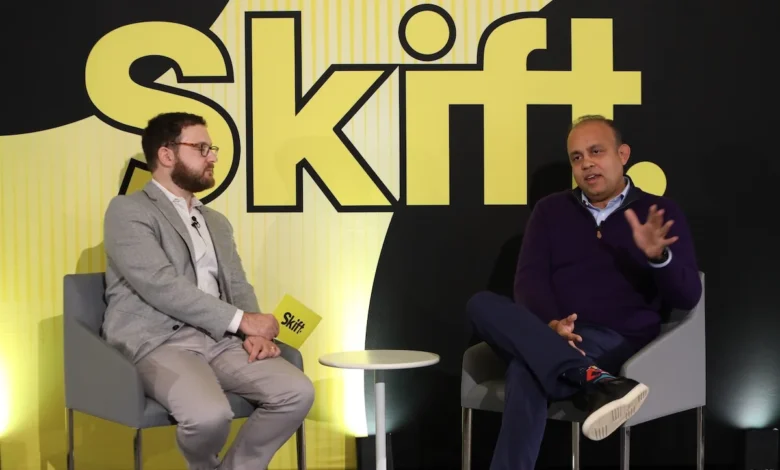
During the recent Skift Commerce Summit in New York City, financial industry leaders, travel executives, and technology developers confronted this dilemma head-on. The consensus from traditional financial institutions is beginning to crystallize, with major global banks asserting that the creators of autonomous agents must shoulder the liability for transactional errors rather than shifting the burden onto merchants, hospitality providers, or traditional card issuers.
The Liability Crisis in Autonomous Commerce
The fundamental mechanics of travel booking are undergoing a profound structural transformation. Historically, consumer transactions relied on direct engagement between a human buyer and a merchant platform, protected by established legal frameworks, chargeback mechanisms, and explicit terms of service. Today, the introduction of autonomous AI agents—software applications capable of making purchasing decisions, handling payment credentials, and executing transactions on behalf of human users—disrupts these traditional models.
When an AI agent books the wrong trip, someone has to pay for the mistake, and determining that responsible party has become the most contentious issue in digital payments. Abhinav Anand, Citi’s Head of Value Cards, Lending and Commerce for U.S. Consumer Cards, addressed this exact friction point during his keynote appearance at the Skift Commerce Summit. According to Anand, the question of who takes the agent liability is currently the single biggest puzzle pieces that banks, payment networks, merchants, and artificial intelligence developers are attempting to solve.
In Citi’s view, the allocation of liability should not fall upon traditional financial institutions, nor should it unfairly penalize hotels, airlines, or other travel suppliers who merely fulfilled a digitally submitted reservation request. Instead, Anand argued that liability should fall directly to the agents themselves—specifically, the technology company that developed, deployed, and commercialized the agent.
This perspective introduces a radical shift in accountability. Rather than treating an AI agent as a sophisticated web browser or a passive tool used by the consumer, major financial institutions are advocating for a framework where AI developers act as accountable commercial intermediaries. Under this proposed paradigm, if a proprietary algorithm misreads a user’s preferences and books a non-refundable ticket for the wrong month, the technology company behind the software would be financially on the hook to reimburse the consumer or cover the merchant’s loss.
The Intersection of Financial Networks and AI Providers
The debate over liability is deeply intertwined with the underlying rails of global commerce. Payment networks such as Visa and Mastercard, along with major issuing banks, maintain strict regulatory and contractual compliance frameworks that govern fraud, unauthorized transactions, and merchant disputes. Integrating autonomous AI agents into these ecosystems requires entirely new protocols to authenticate agent-initiated transactions.
One emerging mechanism discussed by industry stakeholders involves conditional network access. Under this potential model, technology companies seeking to deploy AI agents that transact on major payment networks like Visa or Mastercard could be required to formally accept explicit liability frameworks as a precondition for network participation.
This approach mirrors the strict onboarding and risk-assessment procedures currently applied to merchant acquirers and payment aggregators. If an AI developer wishes to allow its software to hold tokenized payment credentials and execute high-value travel purchases autonomously, that company would need to establish financial guarantees, maintain insurance coverage, or sign indemnity agreements covering algorithmic errors.
Payment networks and card issuers are understandably cautious about inheriting new vectors of fraud and operational risk. If consumers begin filing chargebacks for erroneous AI-driven bookings under standard consumer protection rules, banks could face an unsustainable volume of dispute claims for mistakes they did not cause and could not prevent. By placing the onus on the AI creators, financial institutions aim to insulate the traditional payments infrastructure from the unpredictable failure rates of early-stage generative AI and autonomous decision-making systems.
Background Context of the Skift Commerce Summit
The discussions at the Skift Commerce Summit reflect a broader industry-wide reckoning regarding the commercialization of generative AI and autonomous agents within the travel and retail sectors. As artificial intelligence models transition from text-generation tools to fully transactional ecosystems, the intersection of commerce and artificial intelligence has become the focal point of technological investment and regulatory scrutiny.
Travel represents one of the most complex testing grounds for autonomous commerce due to its intricate web of dynamic pricing, disparate reservation systems, strict cancellation policies, and multi-vendor itineraries. A single travel booking often involves an airline ticket, a hotel reservation, a car rental, and local activity bookings, each governed by separate terms and conditions. When an AI agent attempts to orchestrate this multi-variable puzzle autonomously, the probability of algorithmic misinterpretation increases exponentially.
Industry analysts note that the timeline for AI agents moving from experimental novelty to mainstream commercial adoption has compressed dramatically. Throughout 2024 and 2025, major tech conglomerates and agile startups alike introduced autonomous shopping and travel assistants designed to browse the web, compare prices, and execute checkouts on behalf of users. However, the legal and financial infrastructure required to support these agents has lagged significantly behind their engineering capabilities. The Skift Commerce Summit served as a critical forum for bridging this gap, bringing together the architects of digital payments and the pioneers of artificial intelligence to negotiate the rules of engagement.
Industry Perspectives and Stakeholder Reactions
While financial institutions like Citi are drawing a hard line on liability, technology developers and software platform providers view the challenge through a different lens. Many AI companies argue that strict liability frameworks could stifle innovation, particularly for smaller startups and open-source developers who lack the balance sheets to absorb catastrophic financial losses from edge-case algorithmic errors.
Tech sector representatives suggest a shared-responsibility model, similar to cybersecurity frameworks, where liability is distributed among the user, the platform, the payment network, and the travel supplier depending on the root cause of the error. For instance, if an AI agent makes a mistake because a travel supplier provided ambiguous or misleading API data, the software developer argues they should not bear full financial responsibility. Conversely, if the error stems from a fundamental hallucination or flawed reasoning loop within the core language model, accountability would naturally shift back to the AI provider.
Merchants and travel suppliers, meanwhile, are watching these developments with cautious optimism mixed with apprehension. Hotels and airlines are eager to capture the demand generated by AI-driven discovery platforms, but they are fiercely protective of their revenue streams and cancellation policies. Travel suppliers have historically resisted absorbing the costs of customer-side booking errors, and they strongly support financial models that insulate them from disputes arising out of autonomous agent miscommunications.
Broader Economic Impact and Future Implications
The resolution of the AI liability debate will have profound implications for the future of digital commerce, consumer trust, and the broader travel economy. If financial institutions and payment networks successfully establish developer-side liability as an industry standard, several critical shifts can be expected in the marketplace.
First, the cost of developing and deploying autonomous AI agents will rise significantly. Technology companies will need to factor the cost of liability insurance, risk management compliance, and financial indemnification into their business models. This could create a higher barrier to entry, potentially consolidating the autonomous commerce market among well-capitalized technology giants capable of absorbing or insuring against potential liabilities.
Second, consumer trust will depend heavily on the clarity and reliability of these dispute-resolution mechanisms. For mainstream consumers to embrace autonomous agents for high-stakes purchases like family vacations or corporate travel, they must have absolute confidence that they will not be financially penalized for a machine’s misunderstanding. Clear assignment of liability ensures that consumers have a straightforward recourse when things go wrong.
Finally, the regulatory landscape will undoubtedly evolve to address autonomous transactions. As global regulators scrutinize artificial intelligence, automated decision-making, and consumer financial protection, policymakers are likely to take a keen interest in how liability is distributed between software creators and traditional financial institutions.
The dialogue initiated at the Skift Commerce Summit marks only the beginning of a complex negotiation. As autonomous agents become permanent fixtures of the global travel marketplace, the financial and technology sectors must forge a cooperative framework that balances rapid innovation with rigorous accountability—ensuring that when an algorithm makes a mistake, the path to resolution is as seamless as the technology itself.