Jensen Huangs resignation from Nvidia hits the AI industrys most indebted borrowers hardest according to one investor who backs AI infrastructure

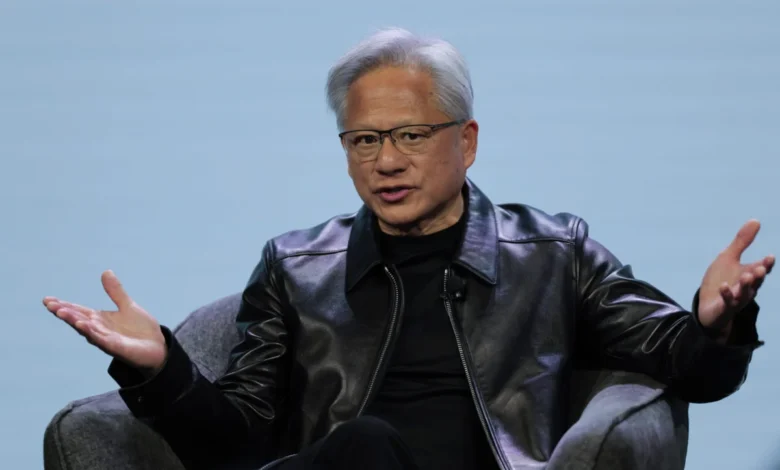
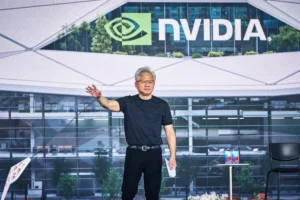
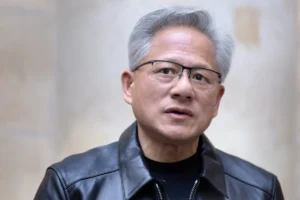
The departure of Jensen Huang as the chief executive officer of Nvidia marks the end of a transformative era in semiconductor history, casting a long shadow over the broader artificial intelligence ecosystem. Following a swift series of disclosures regarding an extramarital affair with an individual reportedly linked to Chinese intelligence, Huang’s immediate resignation has triggered a massive recalibration of market expectations. With CFO Colette Kress stepping into the role of interim CEO and the appointment of Harvey Jones as board chair, the company is grappling with both a leadership vacuum and a fundamental question regarding the stability of the "neocloud" business model that Nvidia spent the last several years architecting.
The crisis began in early November 2026, when revelations regarding Huang’s personal life and subsequent board-led investigations into potential security implications sent shockwaves through the financial markets. Between the initial admission and the official announcement of his resignation on November 12, Nvidia’s market capitalization suffered a historic contraction, shedding approximately $450 billion. The volatility has not been contained within Nvidia’s stock price; it has cascaded into the capital structures of the specialized cloud service providers—or "neoclouds"—that have become the primary vehicles for deploying Nvidia’s high-end H100 and Blackwell-class GPU clusters.
A Chronology of the Nvidia Leadership Crisis
The timeline of the collapse reveals a rapid escalation from personal scandal to systemic corporate governance shift:
- November 9, 2026: Public reporting emerges regarding an extramarital affair involving Jensen Huang. Intelligence officials suggest the individual involved has ties to Chinese state espionage, prompting an immediate internal investigation by the Nvidia board of directors.
- November 10, 2026: Investor confidence wavers as reports of a potential national security breach and the fragility of Nvidia’s "hub-and-spoke" management structure circulate.
- November 11, 2026: The board formally announces the resignation of Huang as President, CEO, and Director, effective immediately.
- November 12, 2026: CFO Colette Kress is named interim CEO. The market reacts with significant sell-offs in both Nvidia stock and the equities of major infrastructure partners like CoreWeave and Nebius.
The Financial Backstop: Why Neoclouds Are Vulnerable
To understand why Huang’s exit is existential for certain players, one must look at the unique symbiotic relationship between Nvidia and the neocloud providers. These companies, such as CoreWeave and Nebius, operate on a capital-intensive model. They purchase massive quantities of Nvidia hardware, build out expansive data centers, and lease computing power to AI labs.
Joe Kaiser, founder of Switchyard Partners, highlights that the primary risk to these firms is not the hardware itself, but the sophisticated financial architecture built to support their acquisition of it. Nvidia has effectively acted as a private equity firm and a debt guarantor for its largest customers. By offering to rent back unused GPU capacity at fixed rates, Nvidia provided a "floor" for these businesses, which in turn allowed them to secure tens of billions of dollars in credit from institutional lenders like Blackstone and Brookfield.
"The chip isn’t what puts them at risk; it’s the financial backstop that allows companies like CoreWeave to secure hundreds of millions in debt," Kaiser noted. "Lenders were willing to back these massive, highly leveraged projects because they had a written guarantee from Nvidia. If the market now perceives that the Nvidia guarantee is worth less—or that the new leadership may seek to unwind these risky off-balance-sheet commitments—the cost of capital for these neoclouds could skyrocket overnight."
As of mid-2026, CoreWeave was reported to carry roughly $35 billion in debt. With the departure of the primary architect of this strategy, lenders are now performing a rigorous stress test on these debt loads. If the "Nvidia premium" in their financing agreements is stripped away, these firms may face a liquidity crunch that could lead to widespread consolidation or bankruptcy.
Market Reactions and Shifting Competitive Dynamics
The reaction on Wall Street was immediate and severe. On the day of the leadership announcement, CoreWeave shares tumbled by approximately 9%, retracing a portion of a 25% rally that had occurred just 24 hours prior. Nebius saw a steeper decline of 16%, compounded by concerns regarding their full-year guidance.
The broader implications extend into the competitive landscape of AI compute. While Nvidia’s software moat—specifically the CUDA ecosystem—remains intact, the industry is entering a period of forced diversification. Kaiser points out that while training models will remain tied to Nvidia for the next two to three years due to the sheer inertia of software development, the "inference" market is wide open.
"We are seeing a shift where inference—running the models once they are trained—is becoming the dominant driver of compute volume," Kaiser explained. "In this arena, companies are increasingly looking at specialized silicon. Qualcomm in robotics, Cerebras for high-throughput tasks, and the in-house TPUs from Google or Trainium from Amazon are all gaining traction. Without Jensen as the ‘rainmaker’ to force the industry toward monolithic Nvidia clusters, the scale may finally tip toward specialized, application-specific chips."
The "Intel Roadmap" and the Future of Governance
The transition at Nvidia is already drawing inevitable comparisons to the post-Andy Grove era at Intel. Both Huang and Grove were known for their uncompromising, "iron-fist" management styles. They built organizations that were highly centralized, with dozens of direct reports funneling information to a single, hyper-focused decision-maker.
The "hub-and-spoke" model was highly effective during a period of exponential, predictable growth. However, history suggests that such structures often struggle during transitions. After Grove stepped down, Intel maintained revenue growth but began to lose its edge in operational margins and failed to pivot effectively as the market shifted away from the PC-centric paradigm.
Analysts are now questioning whether Nvidia can sustain its culture of intense, rapid innovation without the singular vision that Huang provided. The "vision vacuum" is particularly concerning as the company faces a more hostile regulatory environment. Data center energy usage and the geopolitical sensitivity of high-end GPU exports have become central political issues in the United States. With Huang—who served as the primary spokesperson and diplomat for the firm—gone, the company faces a more difficult path in navigating potential antitrust scrutiny and federal oversight.
Broader Implications for Infrastructure
The shift in leadership also signals a potential retreat from the "mega-datacenter" trend. Kaiser suggests that the industry is at an inflection point. "Huang was the champion of the monolithic, massive-scale data center. With his departure, and with the political winds shifting toward distributed edge computing, we may see a strategic pivot. If the massive, centralized backstop arrangements for multi-billion-dollar campuses like the one planned for OpenAI and SB Energy are renegotiated or canceled, the entire premise of the AI infrastructure gold rush will be fundamentally altered."
For competitors like Google, Amazon, and Microsoft, the current volatility is viewed as an opportunity. These hyperscalers possess the balance sheets necessary to step into the void left by Nvidia’s retreating financial support. If Nvidia pulls back on its $125 billion backstop platform, the hyperscalers can offer their own infrastructure and compute-as-a-service, effectively consolidating more of the AI value chain under their own roofs.
TSMC, which manufactures the vast majority of Nvidia’s chips, appears to be the most resilient player in this scenario. While approximately two-thirds of its advanced capacity is currently dedicated to Nvidia, the foundry is well-positioned to pivot. As the market for AI chips broadens to include more diverse players and specialized designs, TSMC’s role as the indispensable architect of global silicon remains secure.
Conclusion
The departure of Jensen Huang is not merely a change in personnel; it is a structural shock to an AI industry that had become addicted to easy credit and centralized support. As interim CEO Colette Kress takes the helm, the company faces the dual challenge of stabilizing its financial relationships with the neocloud sector while defining a new vision in a market that is increasingly skeptical of the "Nvidia-only" paradigm.
The coming quarters will be defined by how the board handles the remaining debt-backstop commitments and whether the company can maintain its technological lead without the leader who defined its culture for decades. For investors, the era of unbridled, high-growth speculation in AI infrastructure has likely reached a definitive, sobering conclusion. The focus now shifts from the promise of artificial intelligence to the reality of balance sheets, capital discipline, and the cold, hard math of specialized semiconductor competition.
Related posts: