Navigating the Epic Legacy of Homers Odyssey through Modern Educational Media and Archaeological Insights

The enduring legacy of Homer’s "The Odyssey" continues to captivate global audiences, transcending its origins as an oral tradition from the 8th century BCE to become a foundational pillar of Western literature. As modern media adaptations—ranging from cinematic blockbusters to interactive digital content—bring the tale of Odysseus to new generations, educational platforms like TED-Ed have curated comprehensive resources to bridge the gap between ancient myth and contemporary understanding. This initiative provides a multi-dimensional look at the epic, exploring the literary mechanics of the poem, the historical validity of its settings, and the scientific phenomena that may have inspired its most fantastical elements.
The Structural Complexity of the Homeric Epic
At its core, "The Odyssey" is a 12,000-line poem that chronicles the decade-long journey of Odysseus, the King of Ithaca, as he attempts to return home following the fall of Troy. However, the narrative is far more than a simple travelogue; it is a complex exploration of "nostos" (the Greek concept of homecoming) and "metis" (cunning intelligence). Educational experts, such as Jill Dash, emphasize that understanding the poem requires an appreciation of its non-linear structure. The story begins "in media res"—in the middle of things—with Odysseus held captive on the island of Ogygia, while his wife Penelope and son Telemachus struggle against a sea of suitors at home.
The poem’s influence on the "Hero’s Journey" archetype, later popularized by Joseph Campbell, remains its most significant literary contribution. By breaking down the episodes involving the Cicones, the Lotus-Eaters, and the Cyclops Polyphemus, educators demonstrate how Homer used these encounters to test the protagonist’s character and leadership. These stories serve as didactic tools, illustrating the virtues of hospitality and the perils of hubris, themes that remain central to ethical discourse today.
The Tragedy of Laocoön and the Fall of Troy
While "The Odyssey" focuses on the aftermath of the Trojan War, its origins are inextricably linked to the fall of Troy itself. One of the most poignant episodes in the Trojan cycle involves Laocoön, a seer and priest of Apollo. As the Greeks feigned retreat, leaving behind a massive wooden horse, Laocoön was the sole voice of caution, famously warning the Trojans to "fear the Greeks even when bearing gifts."
The tragic fate of Laocoön, who was strangled by sea serpents sent by the gods to ensure a Greek victory, serves as a focal point for art historians and mythologists alike. As noted by scholar Noah Charney, this narrative highlight illustrates the ancient Greek belief in "Moira," or fate, which even the most insightful mortals could not circumvent. The story was immortalized in the Hellenistic masterpiece "Laocoön and His Sons," a marble sculpture unearthed in 1506 that profoundly influenced Renaissance artists like Michelangelo. This intersection of myth and art history highlights how the Homeric tradition has shaped visual culture for over two millennia.
Geography of the Afterlife: The Greek Underworld
A pivotal moment in the epic occurs in Book 11, where Odysseus performs a "nekyia," or a rite to summon the spirits of the dead. This journey to the Underworld provided ancient Greeks with a geographical and moral map of the afterlife. Unlike later religious traditions that categorized the dead strictly by sin and virtue, the Homeric Underworld was a shadowy realm where most souls drifted in a state of diminished consciousness.
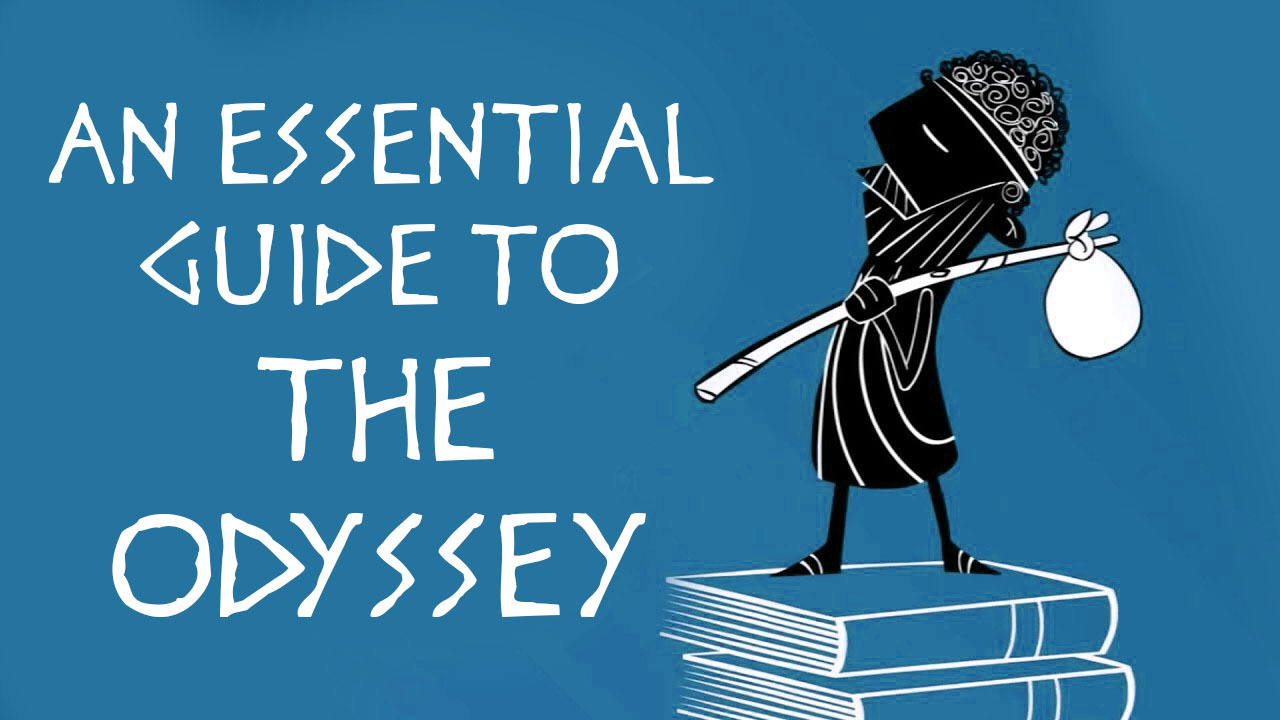
Modern educational tours of this realm, often led by figures such as the Sibyl of Cumae, clarify the distinctions between the Asphodel Meadows, Tartarus, and the Elysian Fields. These accounts offer insight into the Greek psyche, revealing a culture that valued life and "kleos" (eternal glory) above all else, precisely because the afterlife was seen as a bleak, intangible existence. The encounter between Odysseus and the shade of Achilles, who famously stated he would rather be a slave on earth than a king among the dead, remains one of the most powerful critiques of the martial code in ancient literature.
Archaeology and the Search for the Historical Troy
For centuries, the city of Troy was dismissed as a mere legend. However, the late 19th-century excavations by Heinrich Schliemann at Hisarlik in modern-day Turkey revolutionized the field of archaeology. While Schliemann’s methods were destructive and his conclusions often premature, his discovery of nine distinct layers of settlement proved that a powerful citadel had existed on the site for thousands of years.
Archaeological data suggests that "Troy VIIa," dating to approximately 1200 BCE, shows evidence of warfare and fire, aligning with the chronological window of the Late Bronze Age collapse. Scholars like Einav Zamir Dembin investigate the tension between the archaeological record and the poetic narrative. While a ten-year siege may be a literary exaggeration, the geopolitical reality of a conflict between Mycenaean Greeks and the inhabitants of the Troad is increasingly supported by Hittite diplomatic texts, which refer to a city called "Wilusa" (Ilion) and a conflict involving the "Ahhiyawa" (Achaeans).
The Scientific Foundations of Myth
Perhaps the most innovative area of modern Homeric studies is the application of "geomythology" and forensic science to the text. In his analysis, Matt Kaplan explores the possibility that the monsters of "The Odyssey" were inspired by real-world natural phenomena. For instance, the whirlpool Charybdis and the multi-headed Scylla may have been poetic personifications of the treacherous currents and rocky shoals in the Strait of Messina.
Furthermore, astronomers have pointed to a specific passage in Book 20 of "The Odyssey," where the seer Theoclymenus describes the sun being "blotted out of the sky" during a feast. Research published in the Proceedings of the National Academy of Sciences suggests that this could refer to a total solar eclipse that occurred on April 16, 1178 BCE. By aligning celestial events with the internal chronology of the poem, researchers are attempting to ground the "Odyssey" in a specific historical moment, suggesting that the "blind poet" Homer may have been weaving ancestral memories of actual events into his narrative.
The Ethics of Xenia: The Myth of Baucis and Philemon
Central to the Homeric world was the concept of "Xenia," or ritualized guest-friendship. This was not merely a social courtesy but a religious obligation overseen by Zeus Xenios. The importance of this virtue is highlighted in the myth of Baucis and Philemon, an elderly couple who unknowingly welcomed Zeus and Hermes into their humble home after their wealthy neighbors had refused them.
The story serves as a moral counterpoint to the behavior of the suitors in Odysseus’s palace, who abused the laws of hospitality. By examining these myths, educators like Iseult Gillespie illustrate how ancient stories functioned as social contracts. In a world without formal legal protections for travelers, Xenia ensured safety and mutual aid, a concept that Odysseus relies upon throughout his journey among the Phaeacians and even in his return to Ithaca disguised as a beggar.
The Legacy of Achilles and the Heroic Ideal
The shadow of Achilles, the protagonist of "The Iliad," looms large over "The Odyssey." As the "greatest of the Achaeans," Achilles represented the pinnacle of "arete" (excellence) and "timē" (honor). His choice to live a short, glorious life rather than a long, obscure one defined the heroic ideal for centuries.
The tale of Achilles, from his training by the centaur Chiron to his vulnerable heel, provides a psychological framework for understanding the warriors of the Trojan War. While Odysseus represents the hero of "metis" (cunning), Achilles represents the hero of "biē" (force). The transition from the world of Achilles to the world of Odysseus marks a shift in Greek thought—from the raw violence of the battlefield to the strategic resilience required for survival and governance.
Broader Impact and the Evolution of Educational Gamification
The revitalization of Homeric studies through digital media and interactive tools signifies a broader shift in educational philosophy. The integration of high-quality animation, scientific inquiry, and historical context allows complex classical texts to remain accessible in a fast-paced digital age.
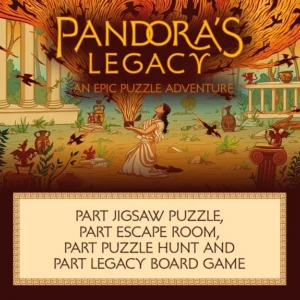
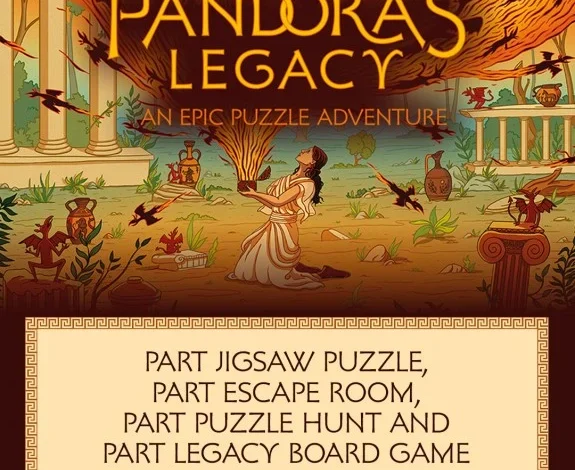
Furthermore, the emergence of "edutainment" products, such as the board game "Pandora’s Legacy," demonstrates a growing market for immersive learning experiences. By placing players in the roles of mythological figures, these games encourage active engagement with the themes of Greek tragedy and heroism. Critics have noted that such tools are "a gift from the gods" for educators seeking to maintain student interest in the humanities.
The continued study of "The Odyssey" is not merely an act of historical preservation; it is an ongoing dialogue with the past. As we uncover more about the archaeology of Troy and the science behind the myths, we find that Homer’s epic remains a surprisingly accurate reflection of the human condition—exploring themes of trauma, resilience, and the universal desire to find one’s way home. Through the efforts of researchers and educators, the gods, monsters, and complicated heroes of the ancient world continue to provide a mirror for our own modern journeys.