Beyond the Epic: Navigating the Enduring Legacy of Homer’s Odyssey in Modern Media and Archaeology


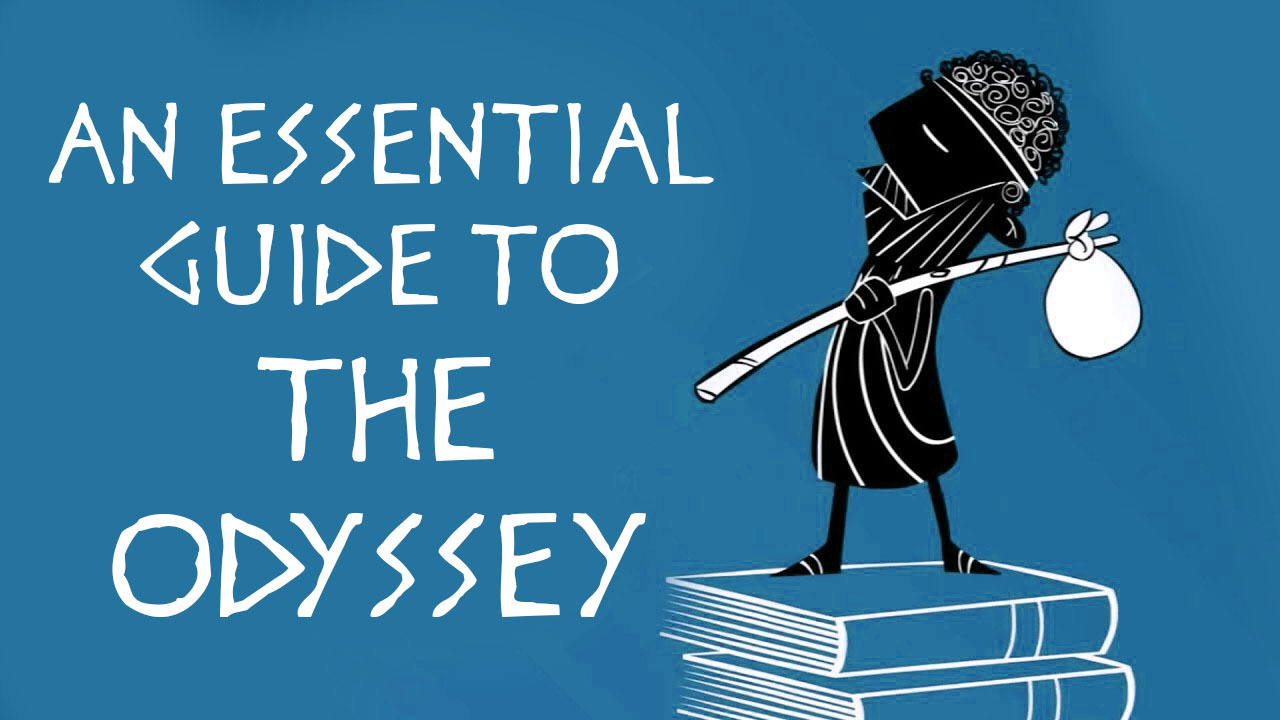
The enduring influence of Homer’s Odyssey on Western literature and cultural consciousness remains unparalleled more than two millennia after its composition. As audiences continue to engage with cinematic and digital adaptations of this foundational epic, educational resources—such as those curated by TED-Ed—have become essential for bridging the gap between ancient Greek tradition and contemporary understanding. From the strategic brilliance of the Trojan Horse to the theological implications of the Greek Underworld, the Odyssey serves not merely as a narrative of a hero’s journey, but as a complex repository of historical, scientific, and moral inquiry.
Historical Context and the Homeric Tradition
The Odyssey, traditionally attributed to the blind bard Homer, is an epic poem of approximately 12,000 lines written in dactylic hexameter. While modern scholarship often debates the “Homeric Question”—the extent to which the poems are the work of a single author versus an amalgamation of oral traditions—the text remains the primary source for the post-Trojan War experience.
The narrative follows Odysseus, the King of Ithaca, as he navigates a decade-long journey home following the fall of Troy. This journey serves as a structural framework for exploring the ancient Greek worldview, encompassing divine intervention, the nature of human heroism, and the geographical limits of the known world. By the 8th century BCE, when these tales were first committed to written form, the Trojan War was already considered a historical touchstone, a pivotal event that defined the transition from the Bronze Age to the Iron Age in the Aegean.
Chronological Overview of the Trojan Cycle
To understand the Odyssey, one must analyze the broader chronology of the Trojan Cycle. The sequence of events provides critical context for the hero’s motivations and the gods’ involvement:
- The Origin of Conflict: The abduction of Helen, Queen of Sparta, by Paris, Prince of Troy, triggers the mobilization of the Achaean forces.
- The Ten-Year Siege: A prolonged stalemate characterized by intermittent duels and divine meddling, as documented primarily in the Iliad.
- The Fall of Troy: The tactical deployment of the Trojan Horse—a ruse that circumvented the city’s impenetrable walls.
- The Nostos (The Return): The period covering the Odyssey, where Odysseus encounters mythological obstacles, including the Sirens, the Cyclops Polyphemus, and the sorceress Circe.
- The Restoration of Ithaca: The final resolution, where the protagonist reclaims his throne and restores domestic order.
Scientific Perspectives and Archaeological Findings
Modern researchers have increasingly scrutinized the Odyssey through the lens of empirical science. The question of whether Troy existed was long considered a matter of pure myth until the late 19th century. In 1870, archaeologist Heinrich Schliemann began excavations at Hisarlik in modern-day Turkey. His findings provided compelling evidence that the site contained multiple layers of habitation, with "Troy VIIa" showing signs of destruction by fire and warfare consistent with the timeline of the Homeric account.
Beyond archaeology, scientists have explored the "science of myth." Researchers like Matt Kaplan have noted that many of the "monsters" described by Homer may have been early attempts to explain natural phenomena. For instance, encounters with giant, rock-throwing cyclopes have been hypothesized by paleontologists to be ancestral memories of fossilized dwarf elephant skulls found in the Mediterranean, which possess a large central nasal cavity often mistaken for a single eye socket.
Theological and Moral Frameworks in Ancient Greece
The Odyssey is defined by a rigorous moral code, specifically the concept of xenia (guest-friendship). The hospitality shown to strangers was a sacred obligation under the domain of Zeus. The failure to uphold this duty—such as the suitors’ consumption of Odysseus’s resources in Ithaca—serves as the primary catalyst for the divine retribution that concludes the poem.
The myth of Baucis and Philemon serves as a profound contrast to the behavior of the suitors. In this narrative, Zeus and Hermes disguise themselves as travelers to test the piety of a village. Only one elderly couple, living in poverty, offers them hospitality. Their subsequent reward and the village’s destruction underscore the high stakes of divine judgment in Greek culture, a theme that persists throughout the Odyssey.
The Underworld and Ancient Eschatology
The Greek concept of the afterlife, or Hades, occupies a central place in the epic. In Book XI, Odysseus performs a ritual to summon the shades of the dead. Unlike later Christian interpretations of the afterlife, the Greek Underworld was a shadowy, neutral realm where the quality of one’s existence was largely determined by the merit of one’s earthly life. The character of Sibyl of Cumae, who acts as a guide in various iterations of the myth, represents the ancient preoccupation with the permeability between the living world and the realm of the dead.
Broader Impact and Implications
The continued relevance of the Odyssey in contemporary education highlights a shift in how we approach classical texts. By leveraging digital platforms and multimedia storytelling, educators are moving away from passive reading and toward active, inquiry-based learning. The integration of "gamification"—such as the board game Pandora’s Legacy—suggests that the modern audience seeks to engage with the agency of these characters, rather than viewing them as static figures in a literary canon.
From an academic perspective, the implications of these studies are twofold. First, they reinforce the interdisciplinary nature of classical studies, where literature, history, archaeology, and physics intersect to provide a holistic view of the ancient world. Second, they demonstrate the resilience of the epic form. As global society faces modern challenges, the fundamental themes of the Odyssey—resilience in the face of isolation, the struggle for identity, and the search for home—remain as poignant today as they were in the 8th century BCE.
Expert Analysis and Official Commentary
Scholars at leading institutions emphasize that the Odyssey should not be viewed as a rigid historical document, but as a "cultural mirror." Experts argue that the monsters and gods are reflective of the societal anxieties of the time. The transition from the chaotic, magical world of the Mediterranean to the ordered, domestic environment of Ithaca represents the triumph of civilization over the "uncivilized" forces of the external world.
"The value of these texts," notes one classical researcher, "is that they provide a framework for discussing human behavior under extreme duress. When we study the Odyssey, we are not just looking at a man trying to get home; we are looking at the foundational principles of justice, loyalty, and the complex relationship between human will and external fate."
Conclusion: The Journey Continues
The study of the Odyssey is not a static endeavor; it is an evolving dialogue between the past and the present. Whether through the scrutiny of archaeological sites in Turkey, the digital reconstruction of the ancient Underworld, or the critical analysis of the text’s 12,000 lines, the epic remains a living document. As new generations approach these myths, they do so with a sophisticated toolkit of scientific and historical methods, ensuring that the legacy of Odysseus—and the gods, monsters, and heroes that populate his world—will continue to influence the cultural landscape for centuries to come.