Navigating the 2026 Housing Market: Is Now the Right Time to Sell Your Home or Should You Wait?

Homeowners across the United States are facing an increasingly complex real estate landscape as autumn unfolds, balancing personal ambitions to relocate with the stark realities of a shifting economic climate. While the desire to move remains strong among many property owners, a combination of stubborn macroeconomic pressures, volatile mortgage rates, and shifting housing inventory has tilted the scales firmly in favor of prospective buyers. With the typical monthly housing payment sitting comfortably above the $2,700 threshold and lingering inflation pushing up the costs of everyday goods, consumer sentiment has cooled significantly. This dynamic has sparked a slower housing market defined by an abundance of supply relative to actual buyer demand, prompting many would-be sellers to pause and reevaluate their timelines.
Understanding the current market requires a close examination of the multifaceted pressures weighing on the economy. Over the past year, broader geopolitical and technological anxieties—including fluctuating oil prices driven by Middle Eastern conflicts, ongoing debates surrounding trade tariffs, and market jitters tied to the artificial intelligence boom—have kept financial markets on edge. These cumulative factors have directly influenced the bond market, keeping mortgage rates hovering stubbornly above the 7% mark since September. Consequently, the Federal Reserve faces a delicate balancing act, occasionally hiking rates to curb persistent inflation pressures while trying to prevent a broader economic slowdown. For the average homeowner contemplating a sale, these macro-level uncertainties translate into a marketplace where buyers are cautious, deliberate, and fiercely protective of their purchasing power.
Economic indicators from late 2026 underscore this cooling trend. As of October, the U.S. median home sale price settled at $388,634, marking a 0.4% decline compared to the previous year and representing the first annual price drop in three years. While slower price growth combined with modest wage gains has marginally improved housing affordability over the past twelve months, the lingering high cost of borrowing continues to sideline many potential purchasers. Industry experts emphasize that unless residential construction surges dramatically or the broader economy enters a severe recession, buyer activity and overall affordability are unlikely to experience a dramatic rebound in the near term.
Daryl Fairweather, Chief Economist at Redfin, notes that sellers must prepare themselves for a decidedly robust buyer’s market. According to Fairweather, slowing inventory growth has technically provided buyers with more choices, but record-high costs have made them exceptionally wary. Volatile mortgage rates and broader economic instability add layers of uncertainty, complicating the decision-making process for individuals trying to coordinate a move. Because affordability has improved only marginally, those buyers who do venture into the market are well-prepared to lead negotiations and demand fair pricing, creating a challenging environment for sellers that nevertheless offers viable paths to completed transactions for those with the right strategies.
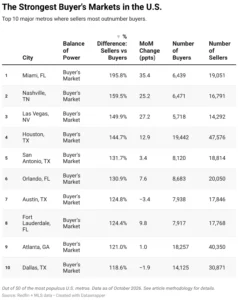
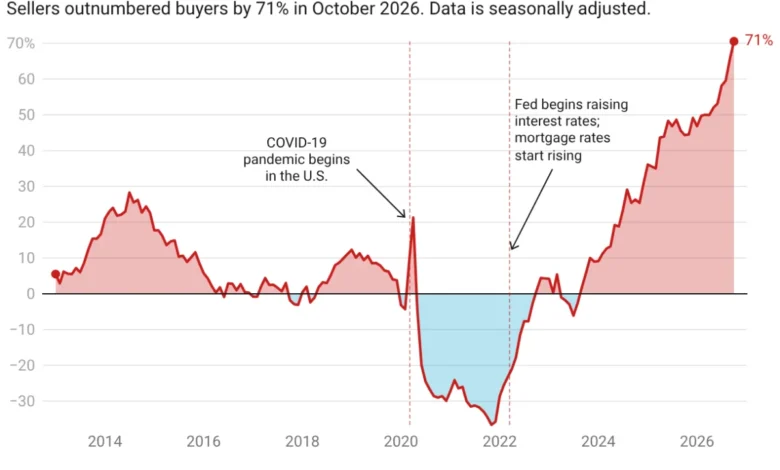
The geographical divergence in the American housing market is another critical factor for sellers to analyze. On a national level, data indicates that there are currently more than 600,000 additional home sellers than active buyers. This supply-demand gap widened considerably as hesitant buyers pressed pause on their home searches, leading to a recent wave of asking price reductions to the lowest levels seen in a year. Some market participants have responded to these conditions by canceling pending contracts, choosing to delay listing their properties, or delisting them entirely. However, these national averages mask significant regional disparities. In the Midwest and the Northeast, chronic shortages of housing inventory continue to drive fierce competition. Cities such as Rochester, New York, and Milwaukee, Wisconsin, frequently experience rapid sales and competitive bidding wars because demand vastly outstrips the available stock. Conversely, many Sun Belt metropolitan areas heavily favor buyers due to prolonged waves of new residential construction that have vastly expanded local housing supply.
Chen Zhao, Head of Economics Research at Redfin, points out that mortgage rates are intimately tied to global currents, responding to energy market fluctuations, geopolitical tensions, and ongoing shifts in investor sentiment. Zhao explains that prolonged tensions keep consumers and investors on edge, reacting instantly to fresh economic reports and energy cost adjustments. For homeowners trying to navigate this landscape, timing the market is rarely straightforward. Traditional real estate patterns suggest that spring remains the optimal time to list a property, as buyer activity historically peaks during April, allowing sellers to secure faster closes and higher returns. Late summer, by contrast, traditionally grants buyers the maximum amount of negotiating leverage.
When evaluating whether to sell, homeowners must weigh a distinct set of market indicators. Circumstances that generally favor a home sale include localized housing shortages where inventory remains constrained, driving up values and accelerating timelines. Similarly, any meaningful downward movement in mortgage rates typically unleashes pent-up buyer demand, sparking renewed market competition and favorable bidding environments. Finally, personal life milestones—such as a growing family, a mandatory job relocation, or the need to care for aging relatives—frequently supersede macroeconomic calculations, making a sale necessary regardless of broader market conditions.
Conversely, certain conditions suggest that homeowners might be better served by waiting. High mortgage rates effectively compress a buyer’s purchasing power, restricting their budgets and frequently resulting in lower initial offers or prolonged days on the market, which currently averages around 50 days nationally—up significantly from the sub-30-day timelines seen during the pandemic boom of 2022, though still faster than the 60-to-100-day durations typical of the early 2010s. Furthermore, homeowners who have recently refinanced into exceptionally low interest rates risk erasing those financial gains by selling now, especially once closing costs and transactional fees are factored into the equation. Properties requiring substantial deferred maintenance or major structural repairs also face an uphill battle in a selective buyer’s market, where discerning purchasers expect move-in-ready conditions.
Faced with these hurdles, a growing segment of homeowners is adopting an alternative, entrepreneurial strategy: retaining their current properties and transitioning them into rental investments rather than selling outright. This phenomenon of the "accidental landlord" has gained traction as housing costs push more Americans toward the rental market. With renting proving more affordable than buying in numerous metropolitan areas across the country, homeownership dynamics are shifting. Property owners who secured ultra-low mortgage rates during the pandemic are increasingly reluctant to surrender those financial anchors, choosing instead to generate supplementary rental income to offset their carrying costs while building long-term equity.
Ultimately, deciding whether to list a home in the current economic climate depends heavily on individual financial readiness and localized market conditions. While the broader national landscape favors buyers and features extended selling timelines, well-prepared sellers who partner with knowledgeable real estate professionals can successfully navigate the market. By pricing their properties competitively, maintaining flexibility during negotiations, and aligning their expectations with realistic timelines, homeowners can achieve their objectives even amidst persistent economic uncertainty. Whether choosing to sell immediately or exploring the rental market, property owners must base their decisions on a clear-eyed assessment of their personal needs rather than attempting to time an unpredictable macroeconomic cycle.