Mahershala Ali reflects on the limitations of industry accolades and the structural challenges of Hollywood stardom

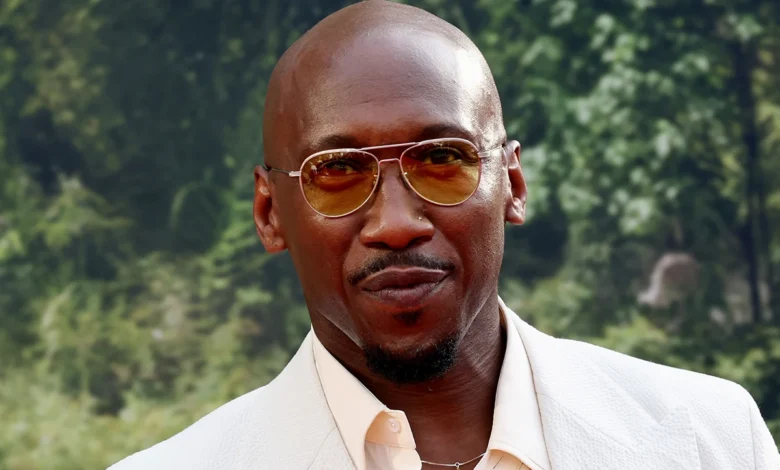
Mahershala Ali, the two-time Academy Award-winning actor celebrated for his transformative performances in Moonlight and Green Book, has offered a candid assessment of the modern film industry, suggesting that critical acclaim does not insulate performers from the harsh realities of project development and casting scarcity. During a recent appearance on the podcast 7PM in Brooklyn, hosted by Carmelo Anthony and Kazeem “Kaz” Famuyide, Ali dismantled the long-standing industry assumption that winning prestigious awards provides a perpetual pass to high-quality work or sustained creative autonomy.
The Myth of Oscar Validation
For decades, the Academy Award has been positioned as the ultimate arbiter of professional success in Hollywood. However, Ali argues that this perception fails to account for the fundamental imbalance between the pool of talented performers and the availability of substantive material. “There’s more good actors than there is good material,” Ali remarked during the podcast. He posits that even at the pinnacle of his career, he remains subject to the same systemic limitations as emerging actors: the lack of available roles that align with his creative interests and the necessity of waiting for projects to be greenlit.
Ali’s skepticism regarding the "validation" provided by an Oscar win is rooted in a pragmatic view of production economics. According to the actor, an award does not generate roles where none exist. Unless a filmmaker or studio head is actively conceptualizing a project with his specific casting in mind, the prestige associated with his previous wins becomes functionally irrelevant. This perspective challenges the common narrative that awards serve as a "golden ticket" to limitless opportunities, revealing instead that the industry remains largely driven by pre-existing scripts and corporate development pipelines rather than the accolades of its individual participants.
The Challenges of Independent Production
When confronted with the suggestion that actors can bypass these systemic barriers by producing their own content, Ali highlighted the logistical hurdles that often remain invisible to the public. He noted that the transition from conceptualization to the screen is rarely a swift process, typically requiring a three-to-five-year timeline for development, financing, and production. For a working actor, this represents a significant commitment of time and resources, which may not always be feasible depending on one’s current contractual obligations and personal circumstances.
Furthermore, Ali addressed the sensitive topic of diversity in casting. When asked if Oscar recognition effectively validates Black actors, he characterized such notions as “talk” that fails to translate into tangible industry reform. He expressed a desire to move beyond the framing of "diversity projects," which often serve as box-checking exercises for studios. Instead, he advocates for a creative environment where Black actors are afforded the same freedom to pursue excellent material without being viewed through the lens of an “exotic other.” This critique underscores a broader dissatisfaction with how identity-based casting is managed by major studios, often favoring optics over genuine creative integration.
The Blade Saga: A Case Study in Corporate Instability
The conversation regarding industry instability naturally pivoted to the long-gestating and ultimately abandoned Marvel Studios project, Blade. Ali was slated to lead the reboot, but the production became a lightning rod for criticism regarding the chaotic nature of contemporary tentpole filmmaking. Bassam Tariq, who was originally attached to direct the film before his departure, provided a window into the systemic issues that plagued the project.
In a recent interview with The New Arab, Tariq described the difficulty of leading a production that lacked a finalized script. The director explained that he was forced to court talent and build a creative team based on promises that the corporate entity, Marvel Studios, was unable to fulfill. Tariq’s account highlights a growing concern in the industry: the loss of director authority to corporate mandates. He noted that as a director, his primary asset is his credibility with his cast; when the script fails to materialize in a way that matches his previous commitments, that credibility is irreparably damaged.
Tariq’s departure from the project served as a warning sign for the wider industry, suggesting that the "corporate entity" model of filmmaking—where decision-making is centralized away from the creative leads—is becoming increasingly untenable. “Life’s too short to make shit films,” Tariq stated, emphasizing his commitment to having full control over his work moving forward.
The Fallout and Industry Implications
The collapse of the Blade project was eventually acknowledged by Marvel Studios president Kevin Feige, who described the situation as a failure of management and development. Ali’s public agreement with this assessment during a GQ interview serves as a rare instance of a high-profile actor aligning with a studio executive to admit to a professional disappointment.
The implications of this failed partnership are significant. The Blade project was widely seen as a centerpiece for the Marvel Cinematic Universe’s expansion into more mature, supernatural themes. Its collapse, coupled with Ali’s recent commentary, suggests that even the most powerful entities in Hollywood are struggling to maintain the quality control and development stability that defined the industry’s previous decade.
Data and Trends: The Scarcity of Substantive Roles
The broader context of Ali’s claims is supported by current industry data. Recent reports from groups such as the Geena Davis Institute on Gender in Media and the UCLA Hollywood Diversity Report have consistently highlighted the "development gap." While there has been progress in on-screen representation, the actual number of roles that allow for complex, non-stereotypical characterization remains low.
Furthermore, the "greenlight" process—the moment where a studio officially approves a project—has become increasingly conservative. With streaming platforms shifting toward profitability over volume, the number of mid-budget films that traditionally provided roles for high-caliber actors has dwindled. This has resulted in a "winner-take-all" environment where actors are forced to compete for a shrinking number of prestige roles, validating Ali’s claim that there are more talented actors than there are roles that meet the necessary threshold for quality.
Moving Forward: Integrity and Agency
Mahershala Ali’s recent comments represent a maturation of his professional outlook. By refusing to lean into the performative gratitude often expected of Oscar winners, he has directed the conversation toward the structural issues that affect the entire labor force of Hollywood, from directors like Bassam Tariq to the actors waiting for their next project.
The shift toward actors and directors asserting greater control over their creative output—evidenced by Tariq’s refusal to sacrifice his integrity for corporate mandates and Ali’s insistence on meaningful, non-performative work—may signal a coming transition in how films are developed. As the industry grapples with the fallout of the streaming era and the limitations of the traditional blockbuster model, the voices of those who have seen both the heights of success and the depths of project failure will be vital in reshaping the creative landscape.
Ultimately, Ali’s message is one of professional autonomy. Regardless of the awards on the shelf, the focus must remain on the integrity of the work itself. Whether through the pursuit of independent projects like his recent film Your Mother Your Mother Your Mother or through more critical engagement with the studios that employ them, artists are increasingly signaling that they are no longer willing to be passive participants in a system that prioritizes corporate milestones over creative substance.