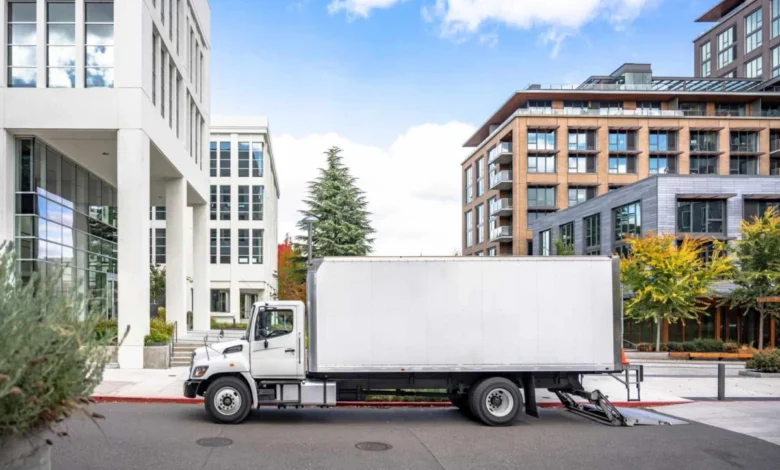
The modern relocation process involves a complex series of logistical choices, chief among them being the determination of how household belongings will travel from an old residence to a new one. As households navigate the transition from urban apartments to suburban homes—spanning locales from Richmond, Virginia, to Portland, Oregon—the traditional moving landscape has evolved significantly. Today, consumers evaluating a change of address are most frequently forced to choose between two primary methods of transport: a traditional moving truck rental or a modern portable moving container. While both logistical pathways successfully accomplish the core goal of transferring property across distances, they diverge sharply in user control, physical labor requirements, scheduling flexibility, and overall expenditure.
Understanding the distinct mechanics of each option requires examining how they function in practice. A conventional moving truck rental places total operational responsibility squarely on the consumer. The renter leases a commercial vehicle for a fixed duration, loads the cargo bay, drives the truck along a self-determined route to the destination, unloads the contents, and returns the vehicle to a designated drop-off location within the agreed-upon timeframe. Conversely, a portable moving container relies on a hybrid model of drop-off, independent loading, and third-party transport. The container provider delivers a weather-resistant storage unit directly to the customer’s property. Once the household goods are loaded at the client’s leisure, the company retrieves the container and either transports it directly to the new address or places it into a secure, climate-controlled storage facility until the homeowner is ready for delivery.
Industry experts emphasize that these two methods cater to fundamentally different relocation philosophies. Mark Rybikov, Chief Executive Officer of 904 Movers, highlights the core operational divergence between the two choices. Moving trucks typically offer more robust cargo-securement options and give the driver direct control over speed, turns, and how the load is handled in transit, whereas moving containers often provide easier ground-level loading and superior flexibility when several days of packing or temporary storage are required. This basic trade-off—direct control and immediate transit versus pacing flexibility and storage convenience—serves as the foundational framework for any household planning a move.
Evaluating the moving truck alternative reveals specific scenarios where this method remains the industry standard. A moving truck is exceptionally well-suited for relocations where the move-out date at the origin home and the move-in date at the destination property align seamlessly. In these instances, homeowners can transport their belongings directly from point A to point B without intermediate warehousing or handling. Representatives from 1st Coast Express Movers note that moving trucks are frequently the superior choice for customers who desire an expedited, direct transfer of their property on a rigidly defined schedule, a factor that becomes increasingly critical for large-scale or long-distance relocations.

Furthermore, traditional truck rentals offer a diverse range of vehicle dimensions to accommodate varying household sizes. While companies specializing in portable containers—such as PODS, which traditionally offers 8-, 12-, and 16-foot container lengths for distinct local and long-distance applications—provide scalable choices, commercial truck rental fleets typically span lengths from 10 to 26 feet or more. However, industry veterans caution that nominal length metrics can be deceiving. Rybikov advises consumers to evaluate actual usable cargo dimensions rather than advertised lengths alone, pointing out that two vehicles of identical length can feature drastically different interior widths, ceiling heights, and overall cubic capacities.
An additional logistical advantage of the moving truck rental is the potential capability to tow an automobile behind the commercial vehicle. For families relocating across state lines with multiple vehicles, the option to hitch a personal car or SUV to the back of a moving truck can streamline travel logistics significantly, provided the renter verifies towing capacities, equipment compatibility, and incremental daily fees beforehand. Moreover, utilizing a truck rental does not inherently mean undertaking the physical labor entirely alone. Consumers can independently contract professional loading and unloading crews to handle the heavy lifting while retaining full command of the vehicle’s transit. David Bos, owner of Bos Enterprises, emphasizes that professional labor integration can mitigate physical strain and save considerable time, though these specialized labor costs must be factored into the overarching financial ledger.
Conversely, moving containers present a distinct set of operational advantages that make them the preferred vehicle for complex or staggered relocations. The primary benefit centers on timeline elasticity. Jim Layton, owner of SpaceMaker Mobile Storage, underscores this convenience, explaining that mobile storage grants households the freedom to pack according to their own schedules while completely bypassing the anxiety of operating a heavy commercial vehicle. Because the container can remain on-site throughout the packing phase, homeowners load and unload their inventory precisely once, minimizing the risk of breakage associated with double-handling items through traditional storage facilities.
This flexibility becomes indispensable when a gap occurs between the sale of an existing property and the acquisition of a new one. Rather than unloading a rental truck into a commercial self-storage unit—only to reload the items weeks later—homeowners utilizing portable containers can store their belongings securely within the container itself. Layton points out that this methodology is particularly advantageous when properties are undergoing professional staging for real estate listings or when closing dates are abruptly delayed. Bos echoes this sentiment, noting that shipping containers offer extended utility by remaining stationary on a residential driveway, thereby serving as a localized staging ground for long-term or multi-phase transitions.
Beyond scheduling flexibility, containers eliminate the psychological and physical hurdles of driving oversized commercial transport. Heavy-duty moving trucks can reach immense gross vehicle weights; for example, major rental providers regularly deploy 26-foot trucks with maximum vehicle ratings approaching 26,000 pounds. For drivers unaccustomed to maneuvering wide-turning radii, elevated blind spots, and restrictive clearance heights over multi-state itineraries, delegating the driving duties to a container transport company represents a major safety and stress-reduction factor.

Loading ergonomics also favor the container model in many residential settings. Traditional moving trucks require the deployment of an inclined loading ramp, which can pose significant physical challenges when moving heavy, dense items such as industrial refrigerators, upright pianos, or oversized sectionals. In contrast, many moving containers rest flatly at ground level, drastically reducing the physical exertion required to wheel or carry heavy items into the storage unit.
Despite these operational benefits, financial comparisons between the two models require careful scrutiny. The sticker price of a moving truck rental rarely reflects the final expenditure. Consumers must calculate hidden ancillary costs, including mandatory commercial insurance policies, refueling charges based on fuel consumption per mile, environmental fees, potential one-way drop-off surcharges, and daily mileage caps. Container pricing structures operate under a different framework, typically bundling delivery, initial transit, container pickup, and a base-level storage allotment into a single quote. However, final expenses can escalate rapidly based on seasonal demand, extended storage durations, specialized delivery permits, and the specific mileage between the provider’s regional facility and the residential address. Financial analysts consistently recommend requesting itemized, comparative estimates that project the cumulative cost of the entire moving lifecycle rather than relying on baseline rental rates.
Logistical constraints extend beyond pricing and scheduling into municipal and residential governance. Before booking either a truck or a container, consumers must investigate local property ordinances, homeowners association (HOA) covenants, and municipal parking laws. Rybikov stresses the importance of assessing equipment placement zones well in advance, warning that local parking enforcement, tight neighborhood streets, narrow driveways, or strict HOA bylaws frequently dictate the permissible duration a commercial vehicle or storage container can occupy residential property. While street-parked trucks often require temporary municipal permits, stationary containers parked in driveways can occasionally run afoul of neighborhood aesthetic regulations or restrictive community charters.
Ultimately, the choice between a moving truck rental and a portable moving container is dictated by the unique parameters of each individual household move. As industry experts summarize, consumers must weigh the specific volume of their possessions, total travel distance, budgetary constraints, physical loading capabilities, intermediate storage requirements, and delivery timeline urgency. By objectively balancing these operational variables against personal comfort levels with heavy vehicle operation and timeline management, households can select the logistical framework that best secures their property and peace of mind during a major life transition.