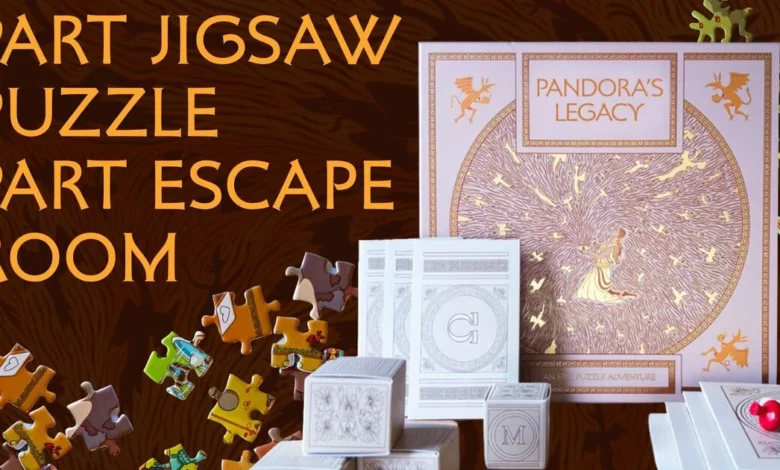
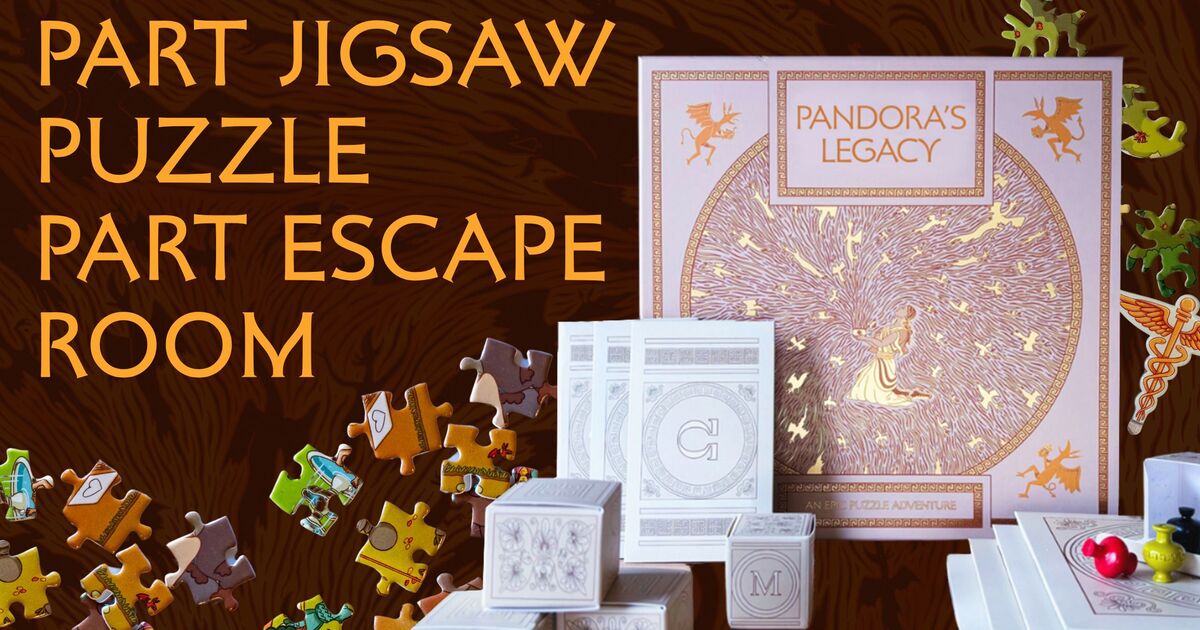
The intersection of classic mythology and modern interactive entertainment has reached a new milestone with the announcement of Pandora’s Legacy, the debut physical board game from TED-Ed. This ambitious project, currently garnering significant attention on the crowdfunding platform Kickstarter, represents a departure from the organization’s traditional digital educational content. By blending the tactile satisfaction of jigsaw puzzles with the narrative complexity of legacy board games and the high-stakes logic of escape rooms, TED-Ed is attempting to redefine how educational organizations engage with tabletop gaming audiences. Designed for 1 to 4 players, the game promises a 12 to 15-hour immersive experience that invites participants to step into the role of Pandora, the mythological figure tasked with rectifying the catastrophic release of chaos into the world.
The Mythological Framework and Narrative Expansion
In the classical Greek myth, Pandora is remembered as the first woman, created by the gods, who was gifted a sealed jar or box—later translated as a box—containing all the miseries of humanity. Despite warnings, her curiosity led her to open the vessel, releasing toil, sickness, and strife into the world, leaving only hope trapped inside. Pandora’s Legacy deviates from this canonical conclusion. Instead of ending the story with the release of misfortune, the game posits a "what if" scenario: Pandora decides to take agency over her actions.
The game’s narrative arc centers on a quest for redemption. Players are tasked with gathering the unleashed chaos, guided—and occasionally hindered—by the pantheon of Olympian gods. By integrating this narrative into a structured, multi-session "legacy" format, the game forces players to grapple with the consequences of their choices, mimicking the permanence of the original myth while allowing for a more active, player-driven resolution.

Mechanical Innovation: The "Puzzle-Within-a-Puzzle" Architecture
The gameplay mechanics of Pandora’s Legacy are structured around a multi-layered approach to problem-solving. Unlike traditional board games that rely on dice rolls or card draws, this experience functions as a sequential logic system.
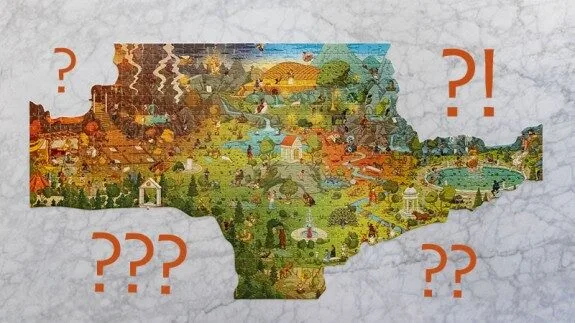
The process begins with the assembly of a jigsaw puzzle. However, the game intentionally withholds specific pieces, creating a deficit that players must address to advance. To obtain these missing components, participants must solve "puzzles-within-the-puzzle." These individual logic challenges are entered into a digital companion application, which acts as the game’s narrative engine. Upon successful submission, the app provides the player with the means to unlock further sections of the physical puzzle.

This iterative loop—assembling, solving, and unlocking—is designed to sustain player engagement over the projected 15-hour runtime. A key feature of the game is the use of numbered jigsaw pieces. By locating specific pieces, players can decipher hidden codes, access additional clues, or discover physical artifacts housed within the game box. These artifacts are not merely decorative; they function as mechanical puzzles in their own right, requiring physical manipulation to unlock the next phase of the quest. This integration of digital interfaces with physical tactile components reflects a growing trend in the hobbyist board game market known as "phygital" gaming.
Chronology and Development Timeline
The development of Pandora’s Legacy marks a strategic pivot for TED-Ed. While the organization has long been recognized for its high-quality animated educational videos, the move into physical game design suggests a broader mandate to explore active learning through play.

The project represents several years of internal research and development. The conceptual phase focused on identifying how to adapt the "legacy" game format—a genre popularized by titles like Pandemic Legacy—to an educational context. By utilizing the legacy model, where the game board is permanently altered or added to throughout the experience, the designers ensure that the narrative weight of the story is felt by the players at every stage.
The Kickstarter campaign serves as the final validation phase for the project. By soliciting funding directly from the gaming community, TED-Ed is able to gauge market demand and build an audience of "early adopters" who can provide feedback during the production cycle. This is a standard procedure in the modern tabletop industry, where established companies often use crowdfunding to mitigate the risks associated with the manufacturing of complex, multi-component game boxes.
Industry Context and Supporting Data
The tabletop gaming industry has experienced a period of unprecedented growth over the last decade. According to market research firm Technavio, the global board games market is projected to grow by billions of dollars through 2028, driven by a surge in demand for cooperative, social, and screen-free entertainment. Within this broader market, the "escape room in a box" category has become a significant sub-sector.
Pandora’s Legacy enters this competitive landscape with a distinct advantage: the TED brand equity. With millions of followers across its digital channels, the organization has a built-in audience that may not be traditional board game hobbyists but are interested in the educational, myth-based content. The cooperative nature of the game, designed for 1 to 4 players, also aligns with consumer trends favoring collaborative play over competitive, player-versus-player environments.

Implications for Educational Media
The move by TED-Ed to produce a physical game carries broader implications for the educational media landscape. Critics and supporters alike often debate the efficacy of "gamification" in education. While some argue that games can trivialize complex subjects, others suggest that the cognitive demand of puzzle-solving promotes critical thinking and retention.
By requiring players to manipulate physical objects, consult digital interfaces, and follow a narrative thread, Pandora’s Legacy functions as a form of "serious game." It provides a platform for logical deduction and collaborative communication. If the game proves successful, it could signal a new pathway for educational institutions to translate academic content into commercial products that are both engaging and intellectually rigorous.

Analysis of Gameplay Dynamics
The inclusion of a digital companion is a noteworthy design choice. In recent years, the integration of apps into board games has been controversial among purists who prefer analog experiences. However, the use of a digital interface in Pandora’s Legacy appears to be functional rather than ornamental. By handling the logic checks, the app removes the need for a "Game Master" or an extensive rulebook, allowing the players to focus entirely on the puzzle-solving experience. This lowers the barrier to entry for casual players while still providing enough depth to satisfy seasoned puzzle enthusiasts.
The physical artifacts included in the game represent the most significant production challenge. Unlike paper components, which are inexpensive to mass-produce, custom-engineered physical puzzles require complex manufacturing processes. This suggests that TED-Ed has invested significantly in the physical quality of the product, positioning it as a premium item within the tabletop market.

Looking Toward the Future
As the Kickstarter campaign for Pandora’s Legacy continues to gain momentum, the focus shifts toward the logistical challenges of fulfillment and the long-term impact on the brand. For the gaming community, the success of the project will depend on the "replayability" of the experience and the satisfaction of the narrative conclusion.
While legacy games are often considered "one-and-done" experiences—meaning the board is essentially finished once the game is solved—the value proposition for players is not necessarily the ability to play it multiple times, but the depth and quality of the single, cohesive narrative journey. As the industry watches, Pandora’s Legacy stands as a bold experiment in the potential of tabletop games to serve as vessels for storytelling, education, and collective problem-solving. Whether it becomes a new standard for narrative-driven puzzle games remains to be seen, but its arrival confirms that the appetite for complex, high-production-value tabletop experiences remains robust.