Hotels Will Block AI Booking Agents Because Software Can Not Be Upsold Says MCR CEO Tyler Morse


The hospitality industry stands on the precipice of a technological revolution that could fundamentally alter how consumers interact with lodging brands, yet not all industry leaders are welcoming the shift with open arms. Speaking at the Skift Commerce Summit in New York City, Tyler Morse, the chairman and chief executive officer of MCR Hotels, articulated a starkly commercial argument against the integration of automated personal assistants in hotel bookings. While major players in adjacent sectors of the travel industry, such as aviation, have begun erecting digital barricades around their booking engines citing data privacy and regulatory compliance, Morse laid bare a different kind of corporate anxiety: artificial intelligence lack of susceptibility to the nuanced art of the upsell.
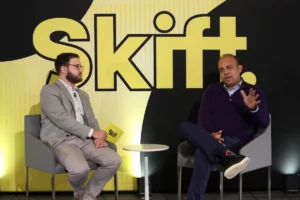
The comments, delivered during a high-profile panel discussion moderated by Skift’s Seth Borko, cast a revealing light on the underlying economics of modern travel retail. For decades, hotel operators, airlines, and online travel agencies have refined digital interfaces designed to trigger impulse decisions, leveraging behavioral psychology to convince consumers to elevate their travel experiences. Morse’s thesis suggests that autonomous software agents, operating purely on logic, algorithmic parameters, and strict budgetary constraints provided by human users, will systematically bypass the emotional and visual triggers that drive ancillary revenue. Consequently, the prospect of artificial intelligence acting as a primary intermediary between guests and inventory has prompted hospitality executives to rethink the very nature of digital distribution channels.
The Intersection of Commerce and Automation at the Skift Summit
The remarks were made against the backdrop of the Skift Commerce Summit, an annual gathering of travel industry executives, technologists, and innovators held in New York. The event serves as a critical forum for discussing the rapid commercialization of digital platforms, changing consumer behavior, and the infusion of emerging technologies into the travel ecosystem.
As artificial intelligence models transition from passive chatbots to active, autonomous agents capable of executing multi-step transactions on behalf of users, travel companies are grappling with the structural implications. Until recently, discussions surrounding AI in travel focused predominantly on customer service automation, predictive pricing models, and operational efficiency. However, the emergence of personal AI booking agents—software capable of scouring the web, negotiating rates, and completing reservations autonomously—has shifted the conversation toward distribution control and revenue protection.
Morse’s perspective highlights a growing ideological split within the broader travel and tourism sector. While tech-forward startups and third-party developers envision a frictionless future where AI agents manage the administrative burden of travel planning, traditional operators whose business models rely heavily on direct-to-consumer engagement and ancillary sales view these automated gatekeepers as a disruptive threat to profitability.
The Economic Engine of Ancillary Merchandising
To understand the rationale behind Morse’s stance, one must examine the modern hotel revenue model. While the nightly room rate remains the foundational source of income for hoteliers, ancillary services—ranging from food and beverage outlets and spa treatments to premium room upgrades, late check-outs, and parking—represent a critical margin-driver.
Modern hotel booking engines are meticulously engineered digital environments. Through high-resolution imagery, strategic layout design, personalized recommendations, and timed promotional offers, these platforms are optimized to encourage travelers to enhance their stays. A consumer initially looking for a standard king room may be persuaded to select a deluxe suite with a view, add a breakfast package, or purchase resort credits during the checkout flow.
Morse emphasized that this architecture of persuasion is entirely lost on an artificial intelligence agent. Programmed to achieve specific utility functions—such as securing the lowest possible rate for a specified set of criteria—an AI agent does not experience the emotional resonance of vacation anticipation, nor is it susceptible to visual marketing tactics. When presented with options for a room upgrade or an optional add-on, an automated script will evaluate the proposition strictly on cost-benefit metrics, routinely rejecting extras that do not align with its pre-programmed optimization goals.
"Everyone is going to ban the agents because it’s in their interest to do so," Morse asserted during the summit, signaling that hotel owners and operators may actively implement technological countermeasures to prevent automated bots from scraping data and executing transactions on their booking platforms.
Divergent Justifications: Privacy Versus Profitability
The timing of Morse’s commentary coincided with a parallel announcement from United Airlines, which publicly declared its intention to block AI-driven booking bots from its systems. However, the motivations cited by the legacy carrier illustrated the complex, multifaceted nature of the industry’s resistance to automation.
While Morse framed his opposition in commercial and economic terms—focusing on the erosion of upselling opportunities—United Airlines justified its exclusionary stance primarily through the lenses of data privacy, security, and regulatory risk. The airline expressed concern regarding the unverified extraction of sensitive customer data, potential vulnerabilities to cyberattacks facilitated by automated scraping, and the lack of clear legal frameworks governing liability when an AI agent makes an error on behalf of a consumer.
The juxtaposition of these two announcements reveals that the travel industry’s resistance to AI agents is not monolithic. Instead, legacy operators and asset owners are evaluating the technology through distinct operational vulnerabilities:
- Airlines are primarily concerned with inventory integrity, fraudulent transactions, consumer data protection, and adherence to complex Department of Transportation regulations regarding transparency and ticketing.
- Hotels and Hospitality Groups are predominantly focused on the protection of customer lifetime value, direct booking channels, loyalty program engagement, and the lucrative ecosystem of ancillary merchandising.
Despite their differing primary justifications, both perspectives converge on a single outcome: a concerted effort by major travel brands to restrict, regulate, or outright block autonomous software agents from bypassing traditional user interfaces.
Industry Implications and the Future of Digital Distribution
The growing hostility toward AI booking agents raises profound questions about the future of digital distribution in travel. For over two decades, the industry has wrestled with the dominance of online travel agencies (OTAs) like Expedia and Booking.com, investing heavily in direct-booking campaigns designed to reclaim ownership of the customer relationship.
The rise of personal AI agents threatens to introduce a new layer of intermediation. Rather than booking directly through a hotel’s branded website or mobile application, consumers may increasingly delegate their travel planning to third-party AI assistants developed by technology giants such as Apple, Google, Microsoft, or specialized travel startups. If these AI agents become the primary interface between the traveler and the hotel, hospitality brands risk losing direct access to their guests, along with the valuable behavioral data generated during the booking process.
Furthermore, the implementation of anti-bot technologies by major hotel chains and airlines could trigger a technological arms race. As travel providers deploy sophisticated CAPTCHA systems, rate-limiting protocols, and behavioral analysis tools to identify and block automated agents, developers of AI software will undoubtedly seek sophisticated workarounds to maintain functionality for their users.
Industry analysts suggest that this friction could eventually lead to negotiated compromises, such as standardized Application Programming Interfaces (APIs) designed specifically for authorized AI agents. Such standards could allow travel brands to present curated merchandising options directly within the AI interface, preserving the opportunity for upselling while accommodating the consumer demand for automation. However, until such frameworks are established, leaders like Morse appear willing to rely on technological exclusions to protect their bottom lines.
Conclusion: Balancing Efficiency and Enterprise Value
The debate ignited by MCR Hotels CEO Tyler Morse at the Skift Commerce Summit underscores the fundamental tension between technological convenience and enterprise profitability. While artificial intelligence promises to streamline the travel planning process for consumers, it simultaneously disrupts the commercial strategies that traditional hospitality businesses depend upon for margin expansion.
As the industry navigates this transitional phase, the confrontation between hotel operators and autonomous booking agents will likely set a precedent for how commerce is conducted across the broader digital economy. Whether through regulatory compliance, data security protocols, or the blunt economic reality of the lost upsell, travel brands are signaling that the keys to their digital front doors will not be handed over to algorithms without a fight.