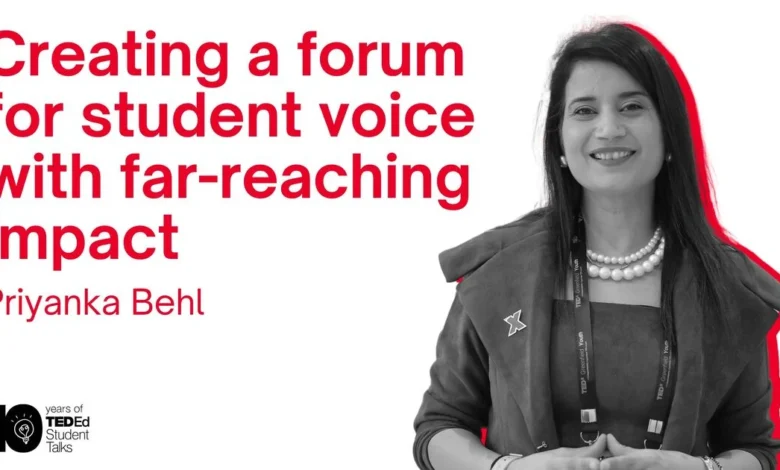
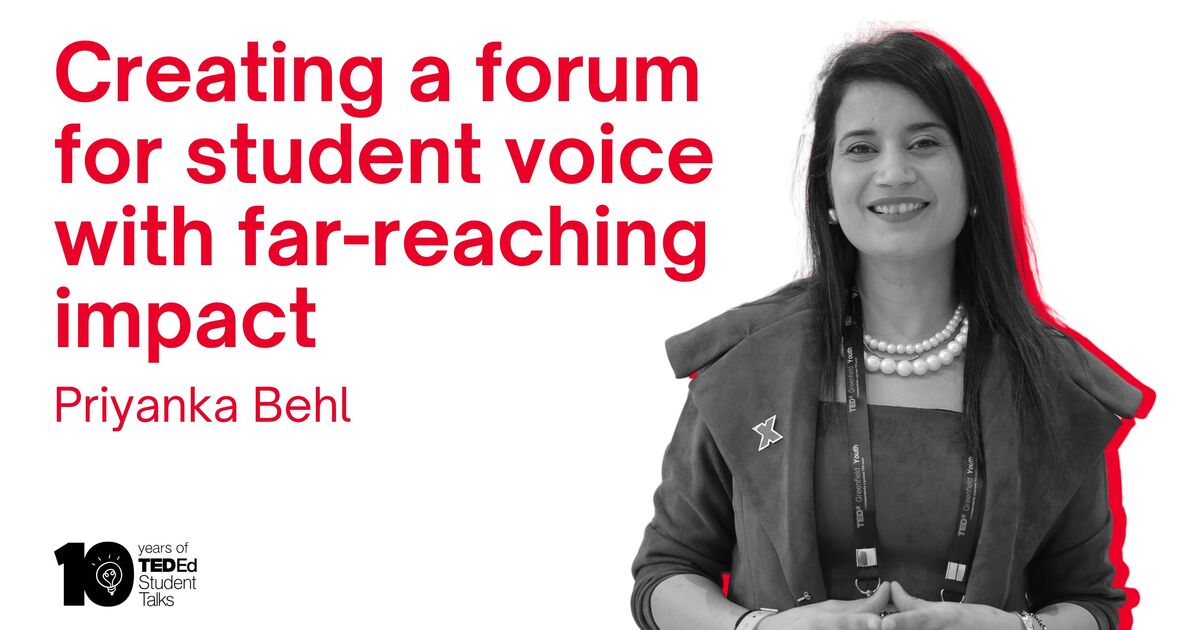
Since its inception in 2014, the TED-Ed Student Talks program has functioned as a global catalyst for youth empowerment, providing a structured framework for students to articulate their ideas and engage with their communities. As the initiative marks its tenth anniversary, the organization is spotlighting the facilitators who have transformed these resources into instruments of social change. Among these educators is Priyanka Behl of the Empower Kids Personality School, whose work exemplifies the program’s capacity to bridge the gap between abstract academic skills and tangible community improvement.
The Mission of Empower Kids Personality School
Empower Kids Personality School operates as a community-based educational initiative, drawing students from 36 diverse schools into its after-school programming. The school’s pedagogical approach is rooted in the concept of "bringing resourcefulness to the resourceless." A central component of its outreach is the "Each One Teach One" program, where students dedicate their weekends to providing basic education to children from NGO-supported backgrounds who lack access to formal schooling.
By integrating the TED-Ed Student Talks curriculum into this ecosystem, Behl has sought to move beyond traditional skill-building. Her objective is twofold: to equip underprivileged students with the communication skills necessary for future employability, and to foster a critical consciousness regarding societal challenges—including gender inclusivity, caste-based disparities, systemic bias, and environmental sustainability.
Chronology and Implementation Strategy
The integration of TED-Ed resources at Empower Kids was not an overnight transition but a methodical expansion of existing educational goals. The process began with identifying significant gaps in the students’ traditional learning experiences. Recognizing that academic knowledge alone was insufficient for long-term success, Behl introduced the program as a vehicle for self-expression and community advocacy.
In the early stages, the program focused on the foundational development of research and oratory skills. As students moved through the curriculum, the scope expanded to include the practical application of their ideas. By leveraging the TED-Ed workbook journals, students were taught not only how to construct a compelling narrative but also how to provide and receive constructive peer feedback. This collaborative environment allowed a small, diverse cohort of students—many of whom had previously felt excluded from public discourse—to develop a platform for their voices.
Quantifiable Impact: From Theory to Sustainable Action
One of the most notable outcomes of the program occurred when a student-led talk on environmental sustainability catalyzed a direct change in community behavior. A student researcher identified the environmental and ethical consequences of using single-use plastic at social gatherings, specifically noting the impact of plastic-laden landfill waste on local cattle populations.
In India, where cows hold significant cultural and religious status, the accidental ingestion of plastic waste represents a major health and ethical concern. Following the student’s presentation, the school transitioned to using wheat-based cutlery for all events. This shift was subsequently adopted by the 36 schools associated with the Empower Kids network. The adoption of biodegradable alternatives demonstrates a successful "trickle-up" model, where individual student research translates into institutional policy changes that have measurable environmental impacts.
Enhancing Reach Through the TEDx Framework
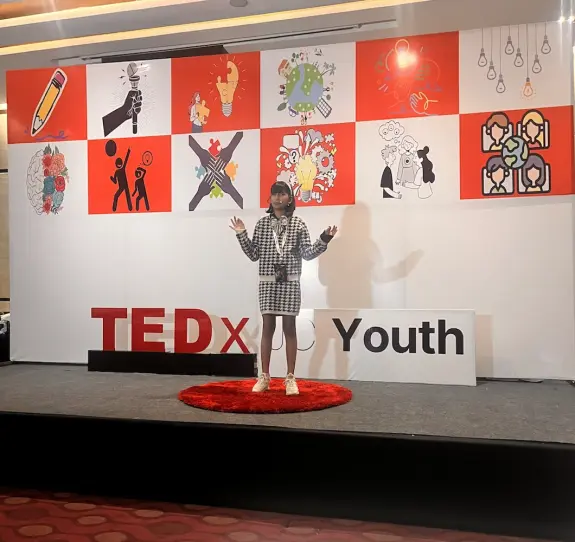
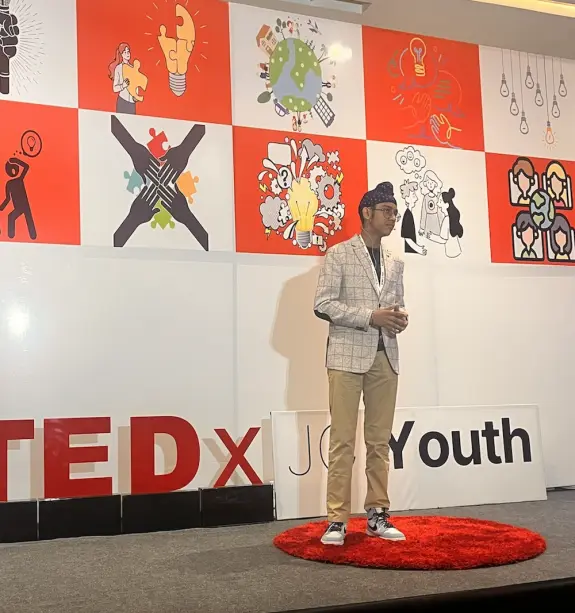
A significant strategic decision made by Behl was to pursue a TEDx license to host local speaker events. While the standard TED-Ed Student Talks provide a robust internal platform, the TEDx format offers a more immediate, scalable method for distributing content to a broader audience.
From an administrative standpoint, this move was intended to elevate the students’ ideas beyond the physical classroom. By producing high-quality video content for global digital platforms, the students’ arguments—ranging from social justice critiques to sustainability solutions—reached decision-makers and community leaders who might otherwise remain unaware of their perspectives. This alignment with external digital distribution channels highlights a sophisticated understanding of modern advocacy, where the "reach" of an idea is as important as the "creation" of it.
Educational Skills and Developmental Outcomes
Data collected from the program’s implementation suggests that student participants show marked improvements in three primary domains:
- Leadership and Adaptability: Participants consistently demonstrate a higher willingness to assist peers, moving from individual performance to group-oriented leadership.
- Advanced Research Literacy: The requirement to support their "big idea" with evidence forces students to navigate complex academic databases, white papers, and historical documents, thereby expanding their information-literacy skills.
- Communication and Oratory: Through iterative practice, students gain proficiency in public speaking and narrative construction, which are critical predictors of future professional success.
Behl notes that the "idea exploration" process begins with a simple, dual-list exercise: students document things they "love" and things they "hate" about their current environment. By focusing on the latter, students are naturally incentivized to propose solutions for existing problems, which increases their investment in the research process.
Challenges in Facilitation and Institutional Growth
The implementation of such a program is not without significant logistical hurdles. Behl identifies the primary challenges as technical and financial: managing the production costs of an event, securing appropriate AV equipment, and navigating the complexities of event management.
For many educators, the transition from classroom teacher to event producer can be daunting. The success of the Empower Kids initiative serves as a case study for overcoming these barriers through institutional partnerships and the support network provided by TED-Ed. Behl emphasizes that the role of the facilitator is not to act as a "hero" or to direct the content, but to create the space for students to find their own voices. This shift in pedagogical power—from teacher-led to student-led—is a defining characteristic of the program’s success.
Broader Implications for Global Education
The success of the TED-Ed Student Talks program at Empower Kids highlights several critical trends in modern education. Firstly, there is an increasing demand for "agentic" learning, where students are not passive recipients of information but active creators of solutions. Secondly, the integration of local issues—such as waste management and social inequality—into global frameworks like TEDx allows for a democratization of knowledge.
Furthermore, the "10 for 10 years" series underscores a shift in how international educational organizations are viewing their legacy. Rather than focusing solely on global metrics, there is an increasing emphasis on qualitative "impact stories" that reveal the human element of education. The ability of a student to influence a local policy change, or to bridge the gap between disparate social groups, represents the ultimate metric of educational success.
Conclusion and Future Outlook
As the TED-Ed Student Talks program enters its second decade, the model established by facilitators like Priyanka Behl provides a blueprint for others looking to foster student agency. The program proves that when provided with the correct tools, structural support, and the encouragement to explore their own perspectives, young people are capable of generating ideas that hold significant societal weight.
The transformation observed at the Empower Kids Personality School is indicative of a broader trend: the classroom is no longer confined by four walls. Through digital connectivity and a focus on critical thinking, students are effectively participating in a global conversation about the future. For those considering becoming facilitators, the takeaway is clear: the most effective educational interventions are those that trust students to identify the problems in their world and empower them to lead the way toward solutions.
With thousands of student groups having utilized these resources over the past decade, the collective impact of these voices continues to grow, suggesting that the most enduring legacy of the program is not merely the talks themselves, but the generation of students who have learned that their perspectives carry the potential to shift the narrative.