‘Gintama: Yoshiwara in Flames’ Director and Producer Discuss Bringing the Cult Anime to the Big Screen

The Evolution of a Cultural Phenomenon
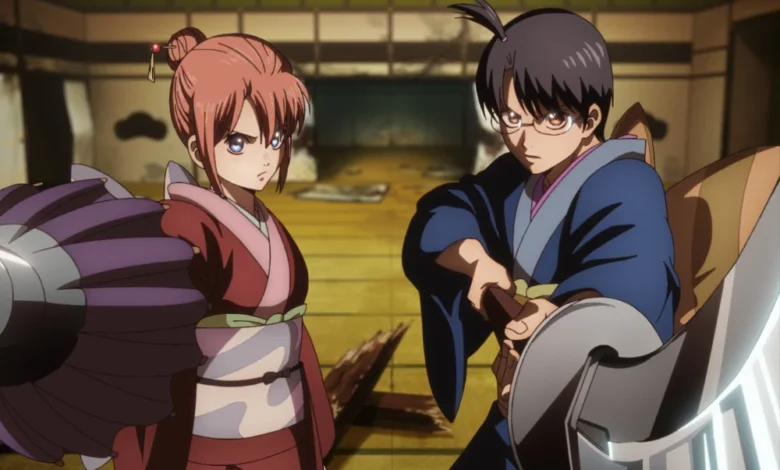
The Gintama phenomenon originated from the creative mind of Hideaki Sorachi, whose manga series first captivated audiences with its unique blend of historical fiction and absurdist science fiction. Set in an alternate, late-Edo-period Tokyo, the story presents a vision of Earth under the occupation of the Amanto—a collective of extraterrestrial species that have fundamentally altered the landscape of Japanese society. At the center of this world is Gintoki Sakata, a freelance samurai who, alongside his companions Shinpachi and Kagura, navigates the complexities of a world where traditional bushido clashes with advanced alien technology.
Since its inception, the franchise has blossomed into a multimedia juggernaut. Following the serialized success of the manga, the property spawned an anime series that spanned 367 episodes, characterized by its rapid-fire humor, meta-commentary, and moments of profound dramatic intensity. The "Yoshiwara in Flames" arc, which serves as the backbone for this new film, is widely regarded by the fanbase as a high-water mark for the series. It chronicles the struggle to liberate the hidden city of Yoshiwara from the grip of the tyrannical Housen, the King of the Night. While the television series previously adapted this arc, the production team identified it as the perfect candidate for a cinematic reimagining, citing the opportunity to leverage modern animation techniques to tell the story with a scale and intensity that was previously impossible.
Technical Ambition and the Shift to Cinema
The transition from television to film is rarely a simple matter of scale; it requires a fundamental reassessment of visual language. Director Naoya Ando and producer Ryo Nakamuray approached this project with a specific intent: to preserve the soul of the manga while embracing the technical affordances of the theatrical format.
"When we started planning this film, we already knew that there would be many action scenes," says Ando. "We were keen to use the CinemaScope ultrawide ratio as well as using 3D in order to be able to move the camera more, and give us more variety, as well as keep the camera a little distant from the subjects so we could frame the shots better and really appreciate the design and setting."
This focus on cinematography marks a departure from the restricted, frame-limited constraints often associated with long-running television anime. By utilizing 3D assets to augment traditional 2D animation, the production team has been able to choreograph complex sequences that require fluid camera movement, particularly during the film’s climactic fire sequences. The decision to "burn the city," a creative choice that pushes beyond the limits of what was depicted in the original television adaptation, serves as a testament to the team’s commitment to providing a fresh experience for long-time fans.
Production Chronology and Iterative Refinement
The road to the current version of Gintama: Yoshiwara in Flames has been unconventional. The film initially saw a Japanese theatrical release in February, driven by strict production timelines. However, the production team, driven by a desire to reach a standard of perfection consistent with the high expectations of the audience, chose to treat the film as a living work.
Between the February release and the subsequent home media and international theatrical distribution, the studio undertook an extensive refinement process. This involved the manual retouching and enhancement of over 200 individual shots. This commitment to quality—even after a theatrical run had already concluded—highlights a growing trend in the anime industry where the digital nature of the medium allows for iterative post-release polishing.
Managing a project of this magnitude requires a highly sophisticated global logistics network. As noted by Ryo Nakamuray, the production involved a vast array of specialized studios spanning from China to Indonesia and Vietnam. "In animation, you’re always dividing elements into teams," Nakamuray explains. "Some will be experts in character, others in action scenes, etc. We are always choosing the collaborators and animators who will be best for each element. Every group has a team leader who is responsible for their work." This decentralized, highly coordinated approach is becoming the standard for major Japanese animation studios aiming to compete with the high-budget, high-frequency output of global streaming and film platforms.
The Lucca Comics and Games Showcase
The decision to preview the film at Lucca Comics and Games in Italy serves as a calculated entry point into the European market. As Europe’s largest comic convention, Lucca acts as a cultural barometer for the continent’s engagement with Japanese media. For many years, the Gintama films were primarily domestic affairs, intended for a Japanese audience well-versed in the intricate lore of the series. The enthusiastic reception at the festival indicates that the series’ core themes—friendship, rebellion, and the struggle to maintain one’s identity in a changing world—resonate across cultural and linguistic boundaries.
The directors acknowledge that the most significant hurdle in international distribution is the translation of the series’ distinct sense of humor. Gintama is famous for its meta-humor, which often involves the characters acknowledging their own fictional existence or referencing Japanese pop culture. To handle this, the production team opted for a character-centric approach to comedy. Rather than forcing humor directly onto the viewer, they focused on the organic banter between the characters, allowing the audience to engage with the humor as passive observers of the trio’s dynamic. This strategy appears to have paid dividends, as the international audience at the festival responded positively to the film’s irreverent spirit.
Implications for the Future of the Franchise
The successful rollout of Gintama: Yoshiwara in Flames carries significant implications for the broader anime industry. It demonstrates that long-running intellectual properties can be revitalized through theatrical re-imaginings that emphasize high-end production values over mere continuation. By investing in new music, advanced 3D-assisted cinematography, and a refined narrative arc, the production team has successfully bridged the gap between the franchise’s television roots and the expectations of modern cinema audiences.
Furthermore, the willingness to engage directly with the European market via high-profile festivals like Lucca suggests that Japanese production committees are increasingly viewing global audiences as a primary, rather than secondary, market. The financial performance of this film, coupled with the critical reception of its updated "director’s cut" style release, could set a precedent for how older, long-running anime franchises manage their back catalogs in the age of global digital streaming.
As Gintama continues to navigate the transition from a niche manga-based anime to a globally recognized cinematic property, the focus remains on balancing the demands of a fiercely loyal fanbase with the necessity of growth. With the "Yoshiwara in Flames" arc serving as the centerpiece, the film succeeds not only as a spectacle but as a reminder of why the story of Gintoki and his friends has remained relevant for over a decade. Whether through the technical prowess of its fire sequences or the subtle wit of its dialogue, the film serves as a compelling argument for the enduring power of Japanese animation to reinvent itself while remaining true to the spirit of its origins. For fans and newcomers alike, this theatrical outing represents the most polished and ambitious version of the Gintama story to date, signaling that the franchise still has plenty of fuel left to burn.
Related posts: