Unlocking the Epic: A Comprehensive Guide to Navigating Homer’s Odyssey and the Ancient Greek World


The enduring fascination with Homer’s Odyssey, a foundational pillar of Western literature, continues to captivate modern audiences, prompting a renewed interest in the intersection of myth, history, and archaeology. As contemporary media adaptations keep the narrative of the Ithacan king’s decade-long voyage in the public consciousness, scholars and educators are emphasizing the necessity of understanding the cultural and historical scaffolding that supports this 12,000-line epic. The poem, which chronicles the arduous return of Odysseus to his home after the fall of Troy, serves not merely as a tale of adventure, but as a complex tapestry of ancient Greek morality, cosmology, and geopolitical lore.
Historical Context and the Homeric Question
To fully grasp the magnitude of the Odyssey, one must first confront the "Homeric Question"—the ongoing academic debate regarding the authorship and origins of the Iliad and the Odyssey. Traditionally attributed to the blind bard Homer, these works emerged from a robust oral tradition in the 8th century BCE. Before being transcribed, these stories were performed by rhapsodes who navigated the shifting nuances of memory and performance.
The Odyssey stands as a landmark in the transition from oral history to written literature. It provides a unique lens into the Iron Age Aegean, reflecting the values of xenia (hospitality), the complex relationship between mortals and the Olympian deities, and the societal structure of the Mycenaean period. For the contemporary reader, the text is best approached as a synthesis of historical memory and mythological invention.
The Archaeology of Troy: Myth Meets Materiality
A recurring point of inquiry for students of the classics is the physical reality of the settings described in the poems. For centuries, the city of Troy was largely considered a construct of poetic imagination. However, the excavations initiated by Heinrich Schliemann in the 1870s at Hisarlik, Turkey, fundamentally altered the historical discourse.
Archaeological evidence now suggests that a site corresponding to the Troy of legend did indeed exist and was subjected to multiple phases of destruction and reconstruction. While the romanticized duels and divine interventions of the Iliad and Odyssey remain firmly in the realm of myth, the structural evidence of siege warfare and defensive fortifications aligns with the historical realities of the Bronze Age collapse. The burning of the city, as described in the cycle, mirrors the archaeological layers of "Troy VIIa," a settlement destroyed by fire around 1180 BCE.
Chronology of the Mythic Cycle
Understanding the sequence of events is vital for appreciating the depth of the narrative arc:
- The Origins (The Judgment of Paris): The root cause of the Trojan War, leading to the abduction of Helen and the mobilization of the Achaean fleet.
- The Siege of Troy (The Iliad): A ten-year conflict characterized by the rage of Achilles and the eventual tactical brilliance of the Greeks.
- The Fall of the City: The deployment of the Trojan Horse, a ruse that bypassed the impregnable walls, followed by the systematic destruction of the city.
- The Odyssey: The immediate aftermath of the war, detailing the decade of trials faced by Odysseus as he attempts to reclaim his throne in Ithaca.
- The Aftermath (The Underworld and Beyond): The journey of the hero through the liminal spaces of the Greek cosmos, including the descent into Hades and encounters with the divine.
Scientific and Symbolic Analysis of the Text
Modern scholarship has increasingly moved toward reconciling the "monstrous" elements of the Odyssey with natural phenomena. Experts such as Matt Kaplan have argued that the legendary encounters with figures like the Cyclops or the enchantress Circe may represent stylized accounts of real-world phenomena—such as seismic activity, volcanic eruptions, or the discovery of extinct megafauna (like dwarf elephant skulls, which may have inspired the myth of the one-eyed giant).
This analytical approach does not diminish the literary value of the work; rather, it enriches it by grounding the fantastical in the physical reality of the ancient Mediterranean. The presence of these elements highlights how the ancient Greeks utilized storytelling to codify their understanding of an unpredictable and often hostile natural world.
The Role of Deities and Moral Philosophy
The interaction between the Olympians and the mortal heroes serves as the moral compass of the epic. The myth of Baucis and Philemon, for instance, underscores the vital importance of xenia—the obligation of the host to provide for the guest. In the worldview of the Odyssey, the gods act as observers and judges, testing the hospitality and piety of humans.
The tragic fate of the seer Laocoön, who warned against the Trojan Horse, serves as a cautionary tale regarding the inevitability of divine will. His punishment, orchestrated by the gods to ensure the fall of Troy, serves as a profound reflection on the lack of agency individuals possess when faced with the grand, often inscrutable designs of the divine. This theme persists throughout the journey of Odysseus, who must navigate the competing interests of Poseidon, his antagonist, and Athena, his divine benefactor.
Educational Implications and Engagement
As educational institutions and digital platforms continue to modernize the presentation of classical literature, the focus has shifted toward interactive and immersive learning. The utilization of multimedia resources—such as detailed breakdowns of the Greek Underworld, visual guides to the Trojan War, and analyses of heroic archetypes—has proven effective in bridging the gap between ancient text and modern student engagement.
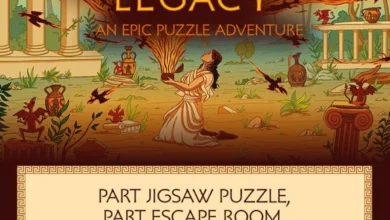
The shift is evident in the proliferation of tools that contextualize these stories. Whether through academic videos or interactive gaming experiences like "Pandora’s Legacy," the objective remains the same: to strip away the intimidation factor often associated with archaic language and long-form epics. By treating the Odyssey as a foundational human narrative rather than a static school subject, educators are finding new ways to preserve its relevance.
Broader Impact on Cultural Literacy
The implications of maintaining familiarity with the Odyssey extend beyond mere literary appreciation. The epic serves as a primary source for understanding the development of Western concepts of justice, governance, and individual identity. The archetype of the "hero’s journey," famously codified by Joseph Campbell, finds its most potent early expression in the trials of Odysseus.
Furthermore, the study of these myths informs modern art, politics, and psychology. The concept of the "Trojan Horse," for example, has entered the global lexicon as a metaphor for hidden dangers and strategic subversion. Similarly, the psychological trauma depicted in the return of a war-weary veteran to a home that has changed in his absence resonates with the contemporary experiences of modern soldiers.
Conclusion: A Living Legacy
The study of Homer’s Odyssey is an ongoing process of discovery. As archaeology reveals new layers of the ancient world and digital platforms provide new ways to interact with these texts, the epic remains as fluid and transformative as the sea that Odysseus traversed. Whether through the lens of historical science, mythological analysis, or the simple human desire to hear a good story, the Odyssey continues to function as an essential map of the human condition.
The integration of scholarly analysis with accessible, modern media ensures that these ancient voices will not be silenced by the passage of time. By understanding the monsters, the gods, and the flawed, complicated heroes that define this narrative, we gain a clearer understanding of the foundations upon which our own stories are built. The Odyssey is not just a relic of the past; it is an active participant in the ongoing dialogue of human history.