The Mechanics of a Planetary Transition
The emergence of Venus as a morning fixture is a predictable consequence of its orbital mechanics relative to Earth. As an inferior planet, Venus orbits closer to the sun than Earth does. Throughout its cycle, it periodically passes between our planet and the sun, an event known as inferior conjunction. During this phase, the planet is typically obscured by the sun’s intense glare. However, as it continues its orbital path, it pulls away from the sun’s proximity from our perspective on Earth, effectively "rising" higher into the predawn sky each morning.
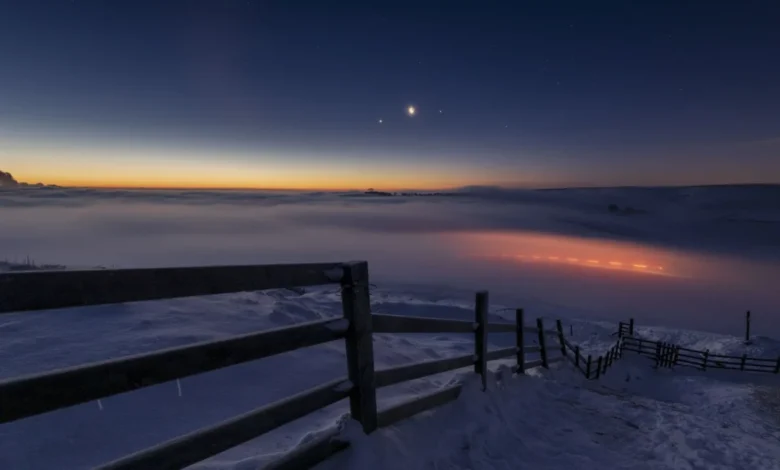
This current apparition is particularly notable for its speed and brightness. Because Venus is currently moving toward its point of greatest elongation, its altitude above the horizon increases rapidly. Astronomers note that the planet is currently rising more than 90 minutes before sunrise. This interval is projected to expand significantly; by mid-December, Venus will rise nearly four hours before the sun, providing an extended window of observation in a completely dark sky, free from the encroaching light of dawn.
Chronology of the Morning Apparition
The trajectory of Venus throughout the coming months provides a clear timeline for those interested in tracking its progress. Having passed the inferior conjunction on October 24, the planet is currently in its rapid ascent phase.
- Late October to Mid-November: Venus emerges from the solar glare, becoming increasingly prominent in the east-southeast horizon before dawn.
- November 29: The planet reaches its peak magnitude of -4.9. At this juncture, it achieves its maximum brightness for the current apparition, outshining all other celestial bodies except for the sun and the moon.
- Mid-December: Venus will achieve its most favorable viewing position, rising nearly four hours before the sun and remaining visible in dark skies for an extended duration.
- January to March: The planet begins a gradual descent, rising progressively later each morning as it moves toward a more southerly position in the sky relative to the sunrise.
- Late June to July: Venus will descend into the bright twilight of early morning, eventually disappearing from view as it approaches its superior conjunction—the point at which it passes behind the sun from the perspective of Earth.
Following this, the planet will undergo a "summer sabbatical," remaining hidden from view until it eventually transitions back into the evening sky late next year.
Comparative Brilliance and Observational Data
To understand why Venus appears so uniquely striking to the casual observer, one must look at the data regarding its magnitude. In astronomy, the magnitude scale is inverse, meaning lower numbers indicate greater brightness. Venus, at magnitude -4.9, is significantly brighter than any other planetary body.
For context, the planet Jupiter, which is often cited as a bright object in the night sky, pales in comparison to Venus during this phase. Venus is approximately 12 times brighter than Jupiter and 25 times more luminous than Sirius, the brightest star in the night sky. This extreme intensity is due to a combination of factors: the planet’s proximity to Earth, its large size, and its highly reflective atmosphere. The clouds of Venus, composed primarily of sulfuric acid, have a high albedo, reflecting a significant portion of the sunlight that strikes them.
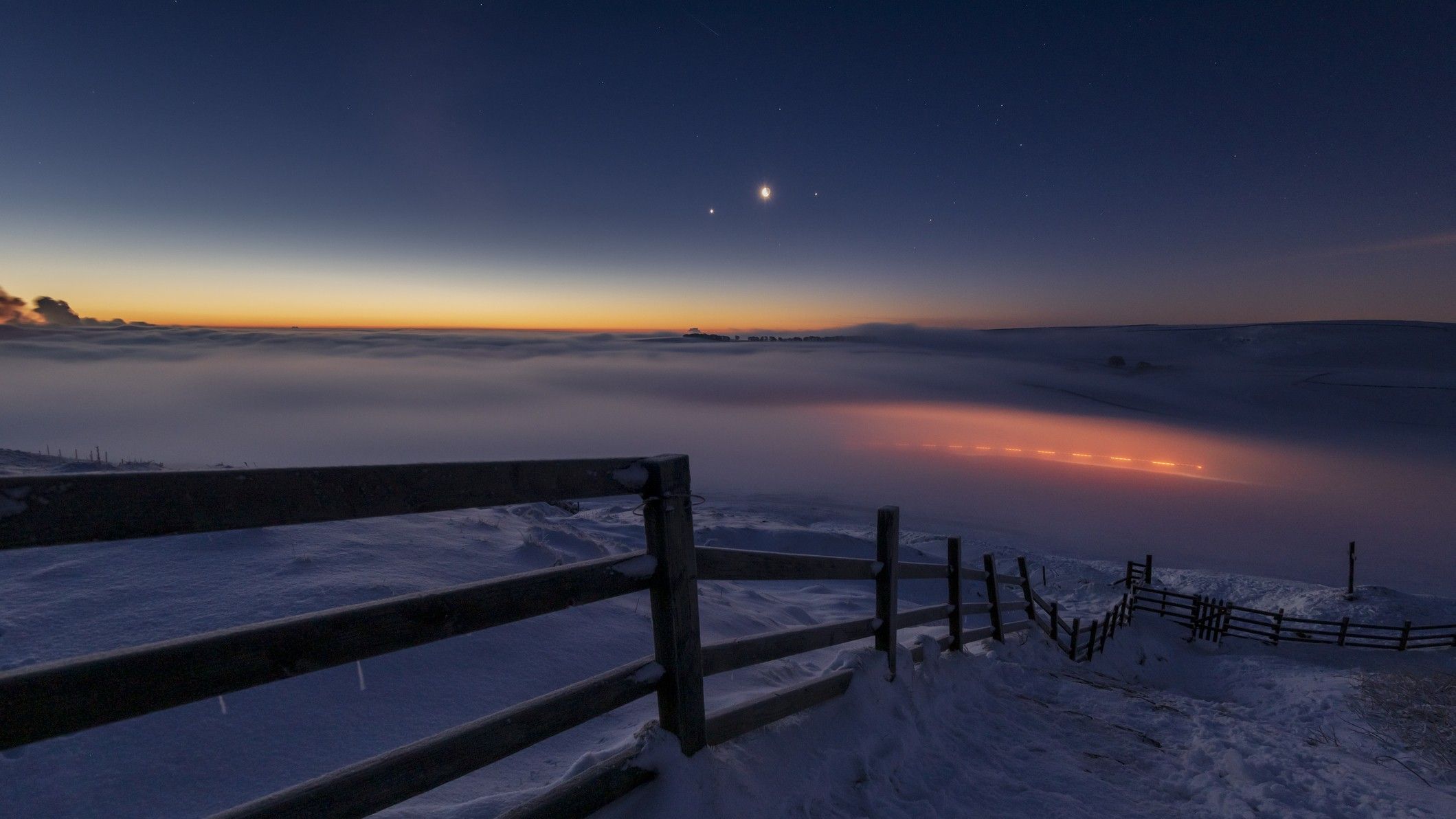
Under ideal conditions—such as a location with minimal light pollution—the radiance of Venus is sufficient to cast a visible shadow on the ground. Furthermore, because of its extreme brightness, observers with steady vision can track the planet even after the sun has risen. During the peak of its current cycle, Venus will appear as a distinct, brilliant white speck against the blue canvas of the daytime sky, a feat few celestial objects can accomplish.
Public Perception and the "UFO" Phenomenon
The sudden appearance of such a luminous object often leads to public confusion. In many instances, emergency services and astronomical societies report an uptick in inquiries regarding "strange lights" or "UFOs" during these transition periods.
Experts from institutions like the Hayden Planetarium emphasize that this is a recurring, natural event. When Venus is near the horizon, its light passes through a thicker layer of Earth’s atmosphere, which can cause the planet to twinkle or shift colors due to atmospheric turbulence. This "scintillation" can give the illusion of movement or flashing, which may be misinterpreted by those unfamiliar with planetary motion. Astronomers consistently clarify that these sightings are simply the result of Venus, the second planet from the sun, reaching a point in its orbit where it is most favorably positioned for viewing from Earth.
Broader Implications for Stargazing
The current apparition serves as a reminder of the dynamic nature of our solar system. For educators and science communicators, the presence of Venus acts as a "gateway" for public interest in astronomy. Its undeniable brilliance commands attention, allowing observers to engage with the movement of planets without the need for sophisticated equipment.
Furthermore, the "Christmas Star" comparison, while metaphorical, highlights the historical significance of such events. Throughout human history, the appearance of exceptionally bright objects in the sky has influenced culture, mythology, and navigation. While the current display is a purely scientific event, its impact on the public imagination remains profound.
As we move into the winter months, the clarity of the morning air, combined with the extended duration of the night, will provide optimal conditions for observing this planetary display. Those interested in the phenomenon are encouraged to look toward the east-southeast at least one hour before sunrise. The rapid shift in the planet’s rising time—moving three minutes earlier each day—ensures that the spectacle remains accessible to a wide range of observers, including those with varying work and school schedules.
In summary, the current visibility of Venus is one of the most prominent astronomical events of the year. It provides a rare opportunity to witness the solar system in motion, offering a stark, brilliant contrast to the pre-dawn darkness. Whether viewed as a subject of scientific inquiry or as a simple, awe-inspiring display of natural beauty, Venus serves as a timely reminder of the wonders visible to the naked eye. As the planet continues its ascent, observers are encouraged to take note of its position and brightness, as the current window of high visibility will slowly close over the coming months, marking the end of one of the most spectacular morning apparitions of the decade.
Related posts: