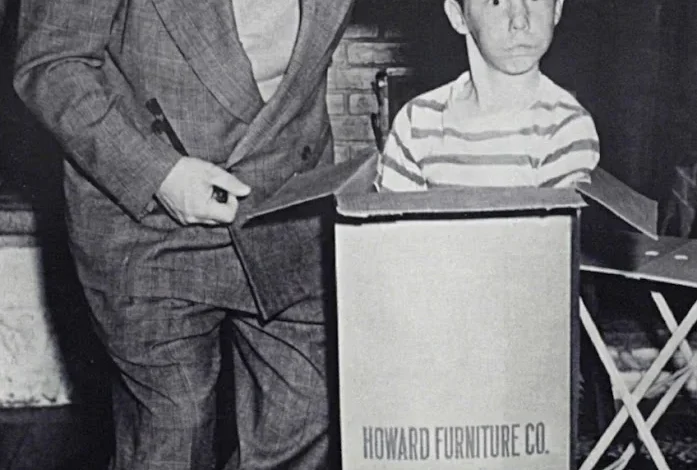
A Life Defined by Legacy
Born on July 8, 1935, in New York City, Paul Howard occupied a unique space in the history of comedy. While his father, Moe Howard (born Moses Harry Horwitz), spent his professional life as the "boss" Stooge—the short-tempered, bowl-cut leader who anchored the trio’s chaotic routines—Paul became the gentle, articulate steward of that history. Throughout his life, he was a fixture at conventions, film festivals, and commemorative events, where he offered fans a rare, intimate look at the man behind the persona.
For decades, the public image of the Stooges was defined by eye-pokes, slaps, and nonsensical "nyuk-nyuk-nyuks." Paul Howard’s contribution was to peel back those layers, reminding audiences that the man who orchestrated such controlled mayhem on screen was, at home, a devoted father who deeply valued his private life. By sharing stories of his father’s work ethic and the personal dynamics of the troupe, Paul Howard provided a humanizing counter-narrative to the slapstick violence that defined their professional output.
A Birth Story That Echoed the Screen
The circumstances of Paul Howard’s birth remain one of the most storied anecdotes in the Howard family archives, famously recounted in his sister Joan Howard Maurer’s memoir, Growing Up Stooge. The narrative serves as a testament to the chaotic, often surreal reality that seemed to follow the Stooges even in their private lives.
In 1934, as the Stooges were gaining national traction, Moe Howard expressed a fervent desire for a son. Upon learning that his wife, Helen, was pregnant, he famously quipped, "Honey, if it’s a boy, they’ll have to drag me out of the gutter, I’ll be so drunk." When the moment arrived in July 1935, Moe was mid-performance at the Metropolitan Theatre in Boston. A telegram from Helen informed him of the birth of an eight-pound boy, accompanied by the playful instruction: "Keep out of the gutter."
The subsequent events read like a classic Stooges short. While attempting to pick up his wife and newborn son from the hospital in a heavy Manhattan rainstorm, Moe Howard lost control of his rental car, slamming into a cement lamppost. The impact shattered the windshield, leaving Moe with a black eye and facial lacerations. To make matters more complicated, his sister-in-law, Clarice, who was a passenger, went into labor due to the shock of the accident. As the story goes, Moe was treated for his injuries while his cousin, Carole, was delivered prematurely just down the hall. Moe, looking at his own bruised reflection, famously remarked to his wife, "This didn’t happen on stage stooging around."
The Hey Moe, Hey Dad! Docuseries
Perhaps the most significant professional milestone in Paul Howard’s life was his 2015 docuseries, Hey Moe, Hey Dad!. Spanning nine episodes, the series served as a definitive retrospective on the Stooges, utilizing an extensive library of archival footage, private family home movies, and personal accounts.
The project was ambitious, seeking to contextualize the work of Moe Howard, Larry Fine, Curly Howard, Shemp Howard, and Curly Joe DeRita within the broader scope of 20th-century American comedy. By interviewing a cross-section of cultural figures—including Whoopi Goldberg, legendary film historian Leonard Maltin, and voice actor Billy West—Paul Howard successfully bridged the gap between the vaudeville era and modern appreciation for the group’s influence. The series did not merely recount the "bits"; it explored the business of show business, the physical tolls of the performances, and the profound, lifelong bonds formed between the ensemble members.
Historical Context: The Impact of The Three Stooges
To understand the importance of Paul Howard’s work, one must look at the unprecedented longevity of The Three Stooges. Formed in the early 1920s and finding their greatest success in Columbia Pictures shorts between 1934 and 1959, the group pioneered a brand of "aggressive" physical comedy that has remained a staple of American pop culture for nearly a century.
Statistical analysis of the group’s impact reveals a massive footprint. Between 1934 and 1959, the trio produced 190 short films for Columbia. During the 1950s, when these films were syndicated to television, they gained a second life that introduced their brand of anarchy to the baby boomer generation, effectively turning the Stooges into a multi-generational cultural phenomenon. Paul Howard’s efforts in the later years of his life helped transition the Stooges from mere "slapstick icons" to subjects of serious academic and historical study, ensuring that their contribution to the evolution of the American comedy format was properly documented.
Preserving a Legacy
The role of a "celebrity child" is often fraught with the burden of expectation, but those who knew Paul Howard describe a man who embraced his heritage with dignity. In the years following his father’s death in 1975, the Stooges’ brand faced various iterations, including licensing deals and merchandise. Paul remained a vigilant protector of the family name, ensuring that the legacy of his father was handled with respect.
His passing leaves a void in the community of Stooges enthusiasts, a group that has grown increasingly niche but remains intensely loyal. For these fans, Paul was not just a relative of a star; he was the primary source of the "unwritten history" of the trio. His personal anecdotes—the stories of Moe reading scripts at the kitchen table, the quiet evenings, and the reality of the grueling travel schedules—provided a necessary texture to the public’s understanding of the group.
Implications and Future Stewardship
With the passing of the elder Howard family members, the stewardship of the Three Stooges legacy shifts further into the hands of the third and fourth generations, as well as the organizations dedicated to the preservation of classic film history. The Hey Moe, Hey Dad! series remains the gold standard for the family’s own record of their history, serving as a template for how descendants can curate and protect the reputations of their forebears.
The cultural implication of Paul Howard’s work is that the Three Stooges are now viewed not merely as a relic of the past, but as a foundational element of comedy. By preserving the human side of the men behind the slapstick, Howard ensured that their legacy would endure beyond the screen.
Personal Life and Survivors
Despite the proximity to the glitz of the entertainment industry, Paul Howard lived a life that was remarkably grounded. A long-time resident of the Yorkville section of Manhattan, he lived just blocks from the site of his birth, maintaining a connection to the city that saw the rise and fall of his father’s troupe.
Paul Howard is survived by his wife, Joanne, and his daughter, Jennifer. As the family processes the loss, the tributes pouring in from the entertainment community underscore the respect in which he was held. He was, by all accounts, a man who understood that while his father was a giant of comedy, he was also a man who loved his family, worked hard, and—above all—tried his best to "keep out of the gutter."
In reflecting on his life, the focus remains on the immense value of his contributions to cinema history. Through his books, his docuseries, and his tireless engagement with fans, Paul Howard ensured that the laughter Moe Howard generated would never truly be silenced. He served as the final act in a story that began with a car accident and a telegram, proving that the most enduring legacy of the Stooges was the love and loyalty that bound their family together, long after the cameras stopped rolling.