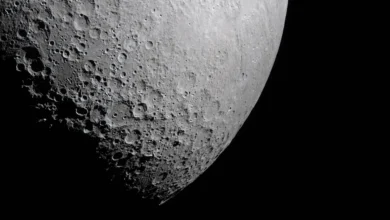
NASA GRAIL Mission Unlocked the Hidden Secrets of the Moon Through Precision Gravity Mapping


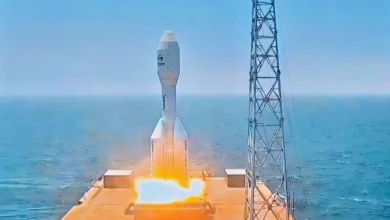
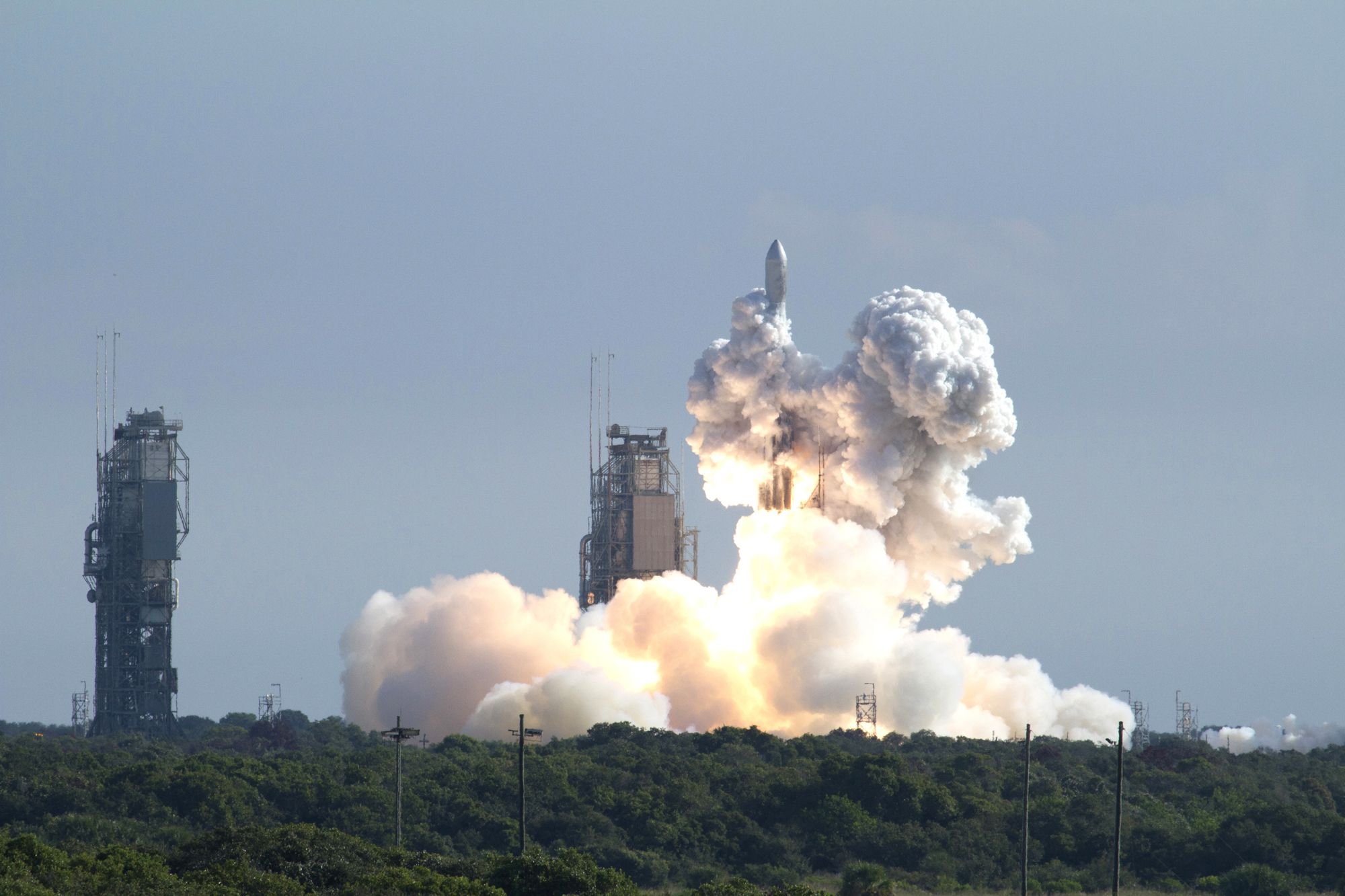
On September 10, 2011, a Delta II rocket roared into the Florida sky from Cape Canaveral Air Force Station, carrying two small but revolutionary spacecraft destined to rewrite our understanding of the lunar interior. The Gravity Recovery and Interior Laboratory (GRAIL) mission represented a significant leap in planetary science, shifting the focus from the moon’s surface features to the invisible, underlying forces that dictate its physical composition. Over the course of their mission, these twin probes—affectionately named Ebb and Flow—transformed how scientists perceive the lunar body, proving that our closest celestial neighbor is far more complex than a simple, homogeneous sphere of rock.
A Quest to Map the Invisible
The primary objective of the $496 million GRAIL mission was to provide the most precise map of the moon’s gravitational field ever achieved. While previous lunar missions had studied the moon’s topography and surface geology, GRAIL was designed to look beneath the crust. Because the moon’s density is not uniform, certain regions exert a stronger gravitational pull than others. These gravitational anomalies, known as "mass concentrations" or "mascons," occur where dense, subsurface material creates localized variations in the moon’s pull.
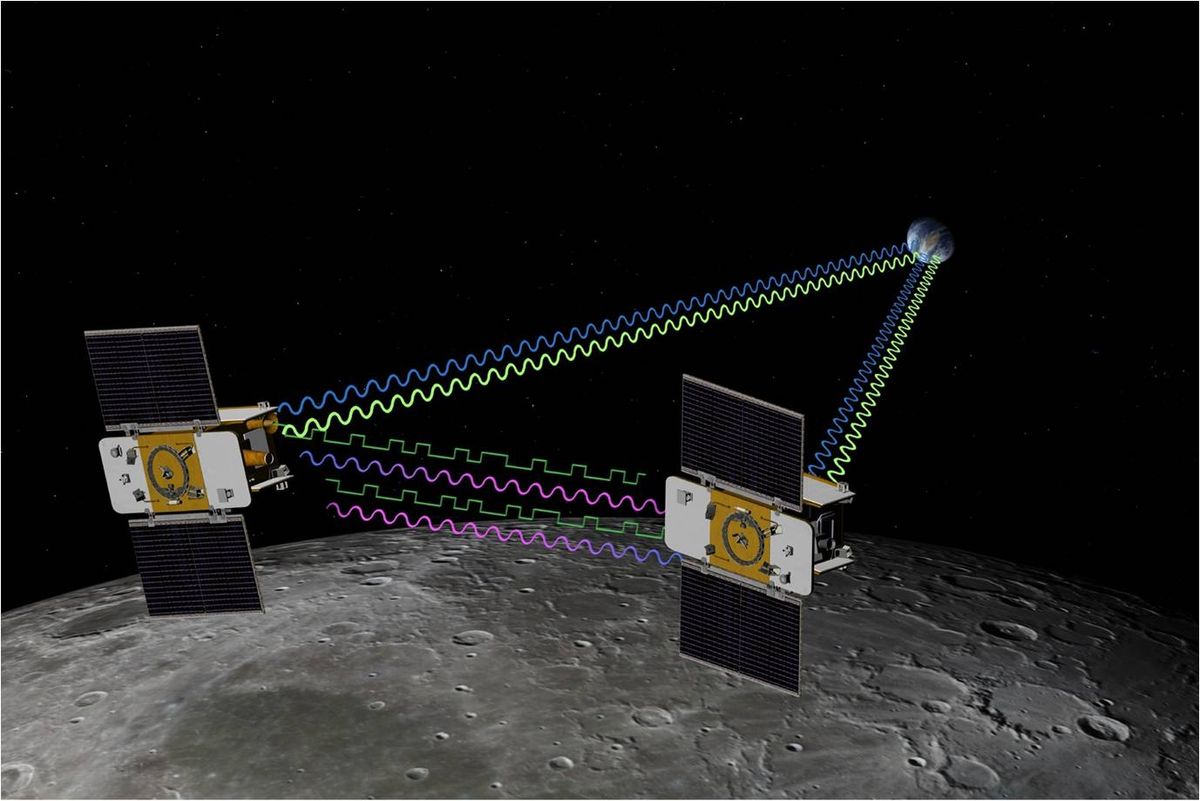
By deploying two spacecraft to fly in tandem, NASA scientists were able to measure the tiny variations in the distance between the probes as they orbited the moon. When the lead spacecraft (Ebb) passed over a region of higher gravity, it would be pulled slightly forward, momentarily increasing the distance between it and the trailing spacecraft (Flow). As the trailing craft reached that same region, it would be pulled toward the lead, shrinking the gap. By meticulously tracking these microscopic fluctuations in distance using a sophisticated microwave ranging system, researchers could map the lunar gravity field with unprecedented resolution.
Chronology of the GRAIL Mission
The mission’s lifecycle was marked by rapid progress and high-impact scientific returns. Following its September 2011 launch, the pair traveled through deep space for nearly four months before successfully entering lunar orbit on New Year’s Eve and New Year’s Day, 2012.
Once in their operational orbit, the probes maintained a remarkably low altitude, sometimes skimming just 30 miles (50 kilometers) above the lunar surface. This low-altitude "gravity drag" was essential for the high-resolution data collection required to map the mascons. The separation between the two probes remained consistent, ranging from 109 to 140 miles (175 to 225 kilometers).
After roughly nine months of data collection, the mission reached its conclusion. By December 2012, the fuel reserves for both Ebb and Flow were nearly exhausted. Rather than allowing the probes to drift into an unstable, uncontrolled trajectory, NASA engineers executed a controlled descent. On December 17, 2012, the twin spacecraft performed their final maneuver, crashing into a crater rim near the moon’s north pole. This site was later named in honor of the late Sally Ride, who had been instrumental in the mission’s public outreach and student engagement initiatives.
The Science of Mascons and Planetary Impacts
One of the most profound discoveries attributed to the GRAIL mission was the confirmation of the origin of lunar mascons. For decades, planetary scientists hypothesized that these dense regions were the scars of massive asteroid and comet impacts that occurred billions of years ago. GRAIL’s data provided the "smoking gun" for this theory.
Analysis of the gravity maps revealed that the mascons were concentrated in the moon’s large impact basins. The data indicated that these craters were formed when the moon’s interior was still significantly hotter and more geologically active than it is today. When massive projectiles struck the lunar surface, they excavated large volumes of crustal material, allowing denser mantle material to rise up and fill the void. As the moon cooled over eons, this material solidified, leaving behind the dense, gravity-altering structures detected by Ebb and Flow.
Beyond the mascons, the mission provided a clearer picture of the lunar crust’s thickness and fracturing. The data suggested that the moon’s crust is much more extensively fractured by past impacts than previously believed, a finding that has significant implications for our understanding of how rocky planets evolve in the early solar system.

Engaging the Next Generation
The GRAIL mission was unique not only for its scientific achievements but also for its commitment to public and student involvement. The "MoonKam" (Moon Knowledge Acquired by Middle School Students) project allowed students from across the United States to request images of specific lunar features from the spacecraft. This initiative was led by the Sally Ride Science foundation and undergraduates at the University of California, San Diego.
Furthermore, the names "Ebb" and "Flow" were not the result of a bureaucratic naming process but were selected via a national student competition. Fourth-grade students from Emily Dickinson Elementary School in Bozeman, Montana, submitted the winning names, which captured the rhythmic nature of the mission’s tandem orbital dance. This approach helped demystify the complexities of spaceflight for younger generations, fostering interest in STEM fields.
Implications for Future Exploration
The data gathered by GRAIL continues to be a cornerstone of modern lunar science. By establishing a baseline of the moon’s interior structure, the mission has provided essential information for future lunar exploration, including the Artemis program. Understanding the gravity profile of the moon is critical for spacecraft navigation and the future placement of permanent lunar habitats.
The successful disposal of the probes also underscored the importance of responsible space operations. By choosing to crash the spacecraft into a desolate, non-historic site near the north pole, NASA prevented the possibility of the defunct orbiters colliding with sensitive sites, such as the Apollo 11 landing zone. This commitment to "planetary protection" remains a standard for modern space agencies.
A Legacy in the Stars
The GRAIL mission stands as a testament to the power of collaborative, multi-instrument exploration. By using two spacecraft to act as a single, distributed sensor, NASA achieved what a single orbiter never could. The project proved that even after decades of telescopic and satellite study, the moon still held fundamental secrets waiting to be discovered.
While the hardware of Ebb and Flow now rests within the lunar soil, the intellectual legacy of their mission endures. The maps they created remain the gold standard for lunar gravity, serving as a vital resource for planetary scientists seeking to understand the history of our solar system. As humanity looks toward a future of renewed lunar presence, the data from 2011 and 2012 remains as relevant as ever, serving as a reminder that the most significant discoveries often come from looking not just at the surface of a world, but at the unseen forces that define it.
The GRAIL mission did more than map gravity; it provided a narrative of the moon’s violent and formative past. Through the data collected, scientists have gained a better understanding of the chaotic conditions of the early solar system—a time of intense bombardment that shaped the surface and interior of the moon and, by extension, the Earth itself. The mission serves as a bridge between the early era of space exploration and the modern, data-driven age of planetary science, ensuring that the work of Ebb and Flow will continue to influence our understanding of the cosmos for decades to come.