Tesla to Phase Out Cybertruck Production as Focus Shifts Toward Autonomous Cybercab Operations

Tesla is set to wind down production of the Cybertruck at its Gigafactory Texas facility by the middle of next year, marking a significant strategic pivot for the electric vehicle manufacturer. Elon Musk confirmed the decision in a post on X (formerly Twitter) on Friday, stating that the company intends to reallocate manufacturing capacity to accommodate the increasing production requirements of the autonomous Cybercab. This development signals the end of a tumultuous seven-year journey for the polarizing stainless-steel pickup, which was once heralded by Musk as the company’s “best product ever.”
The transition reflects a broader shift in Tesla’s corporate roadmap, moving away from high-end consumer hardware that struggled to achieve mass-market penetration and toward a future predicated on artificial intelligence, robotics, and driverless transportation. As Tesla navigates a challenging regulatory landscape and changing federal incentives, the retirement of the Cybertruck represents a calculated, if controversial, attempt to prioritize growth in the high-margin autonomous mobility sector.
A Chronology of a Controversial Launch
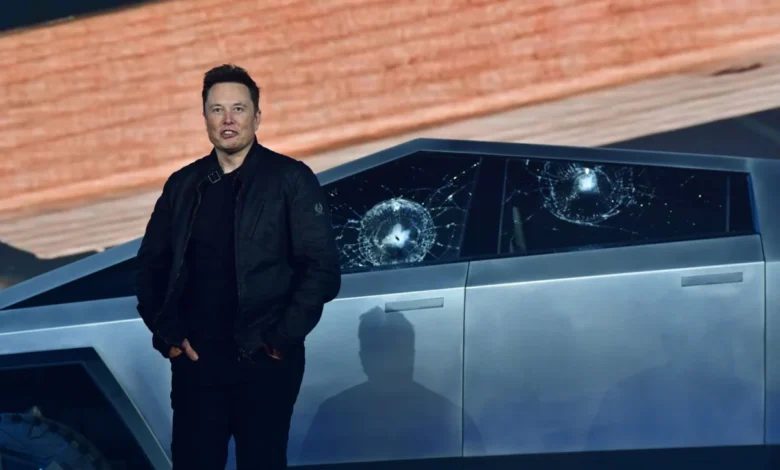
The saga of the Cybertruck began in November 2019 at a high-profile design studio event in Hawthorne, California. The debut was marked by theatricality, featuring pyrotechnics and a demonstration of the vehicle’s "armor glass." During the presentation, a live test intended to prove the durability of the windows resulted in the glass shattering upon impact with a steel ball, a moment that quickly became a defining, albeit unintended, symbol of the vehicle’s long road to market.
Despite the rocky unveiling, Musk maintained high optimism. During the company’s third-quarter earnings call in 2019, he told investors, "This could be totally wrong. I could be totally out to lunch here, but I think the Tesla Cybertruck is our best product ever."
The path from concept to assembly line was fraught with obstacles. Originally slated for a 2021 release, production delays pushed the official launch to late 2023. By the time the vehicle finally reached customers, the initial promise of a $39,900 price point had been abandoned, with the vehicle launching at a significantly higher cost. The production ramp-up also failed to meet the ambitious targets set by Musk, who had previously predicted that Tesla would eventually manufacture between 250,000 and 500,000 units annually.
Sales Performance and Market Reality
Market data suggests that the Cybertruck struggled to mirror the widespread adoption seen by Tesla’s flagship Model 3 and Model Y. According to reports from Kelley Blue Book, the vehicle failed to maintain momentum after its initial release. Tesla sold approximately 38,965 Cybertrucks in the United States in 2024. By 2025, that figure plummeted to 20,237 units—a year-over-year decline of 48%. Estimates from Cox Automotive for the first half of 2026 indicate that the downward trend has continued, with only 7,263 units sold, placing the vehicle on a trajectory for further losses.
The financial barriers to entry played a significant role in these results. While Tesla initially marketed the truck as an accessible, futuristic workhorse, the current reality involves a starting price of $92,490 for the remaining models. This price point represents a substantial escalation from the $84,990 mark established in August 2026, following a series of price hikes. Tesla’s attempt to introduce a lower-cost rear-wheel-drive variant in 2025 was short-lived, as the model was pulled from the lineup just months after its introduction. Furthermore, Tesla recently discontinued orders for the Dual Motor AWD model, further restricting options for prospective buyers and effectively turning the Cybertruck into a niche luxury vehicle.
Regulatory Hurdles and the Pivot to Autonomous Tech
As Tesla moves to sunset the Cybertruck, its focus has shifted almost entirely to the Cybercab. Unveiled in 2024, the Cybercab is a two-seater vehicle designed specifically for autonomous ride-hailing, characterized by its lack of a steering wheel or pedals. Tesla currently operates Robotaxi fleets utilizing the Model Y in major Texas cities—including Austin, Houston, Dallas, and Fort Worth—as well as across Florida in Miami, Orlando, and Tampa.
However, this transition is not without friction. In September 2026, federal safety regulators at the National Highway Traffic Safety Administration (NHTSA) opened an investigation into whether Tesla had properly certified the Cybercab’s compliance with federal safety standards. The inquiry centers on the vehicle’s design, which eliminates traditional manual controls. Tesla has provided responses to the NHTSA; however, the company requested that its submissions be kept under seal, citing "confidential business information." As of early November 2026, the status of this confidentiality request remains pending, leaving the regulatory future of the project in a state of uncertainty.
Furthermore, Tesla faces stiff competition in the autonomous space. Alphabet’s Waymo has already established a significant footprint, currently operating in 15 U.S. cities and reportedly facilitating approximately 500,000 rides per week. For Tesla, which has historically relied on selling consumer vehicles to fuel its revenue, the transition to a service-based model represents a high-stakes gamble in a market where they are currently a late entrant.
Broader Economic and Industrial Implications
The decision to end Cybertruck production also occurs against a backdrop of shifting macroeconomic pressures. Since the expiration of federal electric vehicle tax credits last year, the broader EV market has experienced a contraction in sales growth. Tesla, while still the leading EV manufacturer in the U.S., has seen traditional vehicle sales soften, forcing the company to look for alternative revenue streams to satisfy investor expectations.
Beyond the financial metrics, the Cybertruck’s reputation has been tempered by ongoing quality control issues. Since deliveries began in November 2023, the vehicle has been subject to 11 separate recalls. These range from software glitches to physical hardware defects, which have collectively contributed to a perception of the vehicle as an unfinished or experimental product.
The Legacy of the Cybertruck
For the existing owners of the approximately 60,000-plus Cybertrucks currently on the road, the news of the production wind-down raises questions about long-term support. While Tesla has not released a formal statement regarding the duration of its replacement parts supply chain or service support for the model, industry standards suggest that manufacturers typically maintain support for several years following the end of a product’s lifecycle.
Musk himself remains defiant regarding the vehicle’s legacy. When asked on X if the end of production marked the "end of an era," he responded, "True, but the Cybertruck fleet will be around for a long time."
Moving Forward
The conclusion of the Cybertruck program marks the end of an experimental chapter for Tesla. The vehicle served as a brand-building exercise, showcasing the company’s ability to push the boundaries of automotive design and material science. However, the move to cease production underscores a pragmatic shift toward the company’s "Master Plan" for an autonomous future.
Whether Tesla can successfully navigate the transition to a software-first, autonomous transportation provider while simultaneously addressing the regulatory and competitive challenges facing the Cybercab remains to be seen. With production scheduled to taper off by mid-2027, the coming months will likely see Tesla focus its resources on proving the viability of its driverless technology, effectively closing the book on one of the most controversial and widely discussed automotive projects of the decade. As investors monitor the company’s upcoming earnings reports, the success of the Cybercab will undoubtedly become the primary metric by which Tesla’s future growth—and the wisdom of its current pivot—is measured.