On this day in space! Nov. 4, 2015: A rail-launched Super Strypi rocket carrying 13 baby satellites failed during its…

The Ambition of the Super Strypi Program
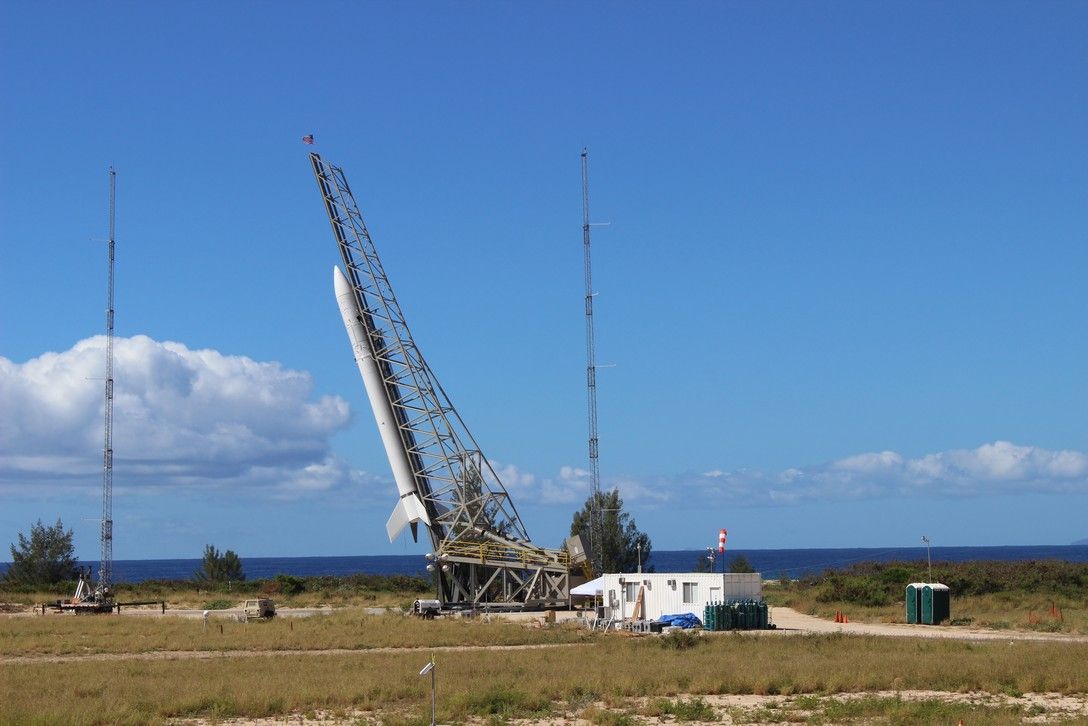
The Super Strypi was not merely a rocket; it was a technological evolution of the historic Strypi sounding rocket, a platform that had served the U.S. military since the 1960s. While the original Strypi was a reliable workhorse used primarily for suborbital ballistic testing, reentry vehicle research, and anti-missile defense simulations, the "Super" iteration represented a fundamental redesign. Developed under the Operationally Responsive Space (ORS) office, the goal was to create a three-stage, spin-stabilized launch vehicle capable of reaching low Earth orbit (LEO).
The primary engineering innovation was the use of a rail-launch system. Unlike traditional vertical launch pads that require complex fueling and stabilization towers, the rail system allowed the rocket to be launched at an angle, significantly reducing the infrastructure footprint. By leveraging Aerojet Rocketdyne solid rocket motors, the Air Force sought to create a "tactical" launch capability. The design was optimized for speed and cost-efficiency, with a target launch price of approximately $15 million per mission—a figure that, if realized, would have made the Super Strypi a disruptive force in the burgeoning market for small satellite deployment.
A Chronology of the Failure
The events of November 2015 represent a stark lesson in the complexities of aerospace engineering. The launch window opened on the evening of November 3 (local Hawaii time), with the vehicle poised on its rail launcher. At roughly 9:45 p.m., the Super Strypi ignited, successfully clearing the rail and beginning its ascent.
However, the transition from the ground phase to the initial stage of flight quickly devolved into a crisis. Shortly after liftoff, telemetric data indicated that the vehicle began to experience severe stability issues. Observers and onboard sensors recorded the rocket spiraling out of control. The flight termination was not a controlled maneuver; rather, the vehicle’s instability led to its destruction before it could achieve orbital velocity. Subsequent analysis by the Air Force pointed toward a potential malfunction within the first-stage motor, which failed to provide the necessary thrust vectoring or stability required to maintain the flight path.
The impact of this failure was absolute. Because the Super Strypi was designed as an integrated, single-use system, the loss of the vehicle meant the instantaneous destruction of its entire payload. The 13 cubesats, which represented years of academic research and specialized military testing, were reduced to debris in the Pacific Ocean.
Payload Overview and Scientific Loss
The manifest of the ill-fated mission was diverse, representing a collaborative effort between the military, NASA, and the academic community. The primary payload was the ORS-4 satellite, also known as HiakaSat. Developed by engineers at the University of Hawaii, HiakaSat was a sophisticated instrument designed to capture high-resolution Earth imagery and perform environmental monitoring over a one-year mission lifespan. Its loss was a significant blow to the university’s aerospace research department.
Beyond the primary satellite, the mission carried 12 additional payloads. Among these were eight cubesats belonging to NASA’s Edison Demonstration of Smallsat Networks (EDSN) mission. The EDSN project was intended to demonstrate the viability of using a swarm of small satellites to coordinate and perform distributed scientific observations. Additionally, four other satellites, contributed by various universities, were intended to test new communication protocols and sensor technologies in the harsh environment of space. The loss of these 13 units represented not just a financial deficit, but a "lost year" of data collection and technological validation for the researchers involved.
Analysis: Why the Program Stalled
The failure of the Super Strypi program was not solely the result of a single mechanical flaw. In the aftermath, the U.S. military conducted a thorough internal review of the ORS-4 mission. While the technical cause was traced to the first-stage motor performance, the strategic decision to abandon the platform stemmed from broader shifts in the aerospace industry.
At the time of the 2015 launch, the commercial space sector was in the early stages of a massive transition. Companies like SpaceX, and later Rocket Lab, were proving that commercial off-the-shelf technology could provide reliable, frequent, and increasingly affordable access to space. The military, which had invested heavily in the proprietary, government-led Super Strypi project, found that the commercial market could provide similar "responsive" launch capabilities with less overhead and higher reliability.
The Super Strypi required specialized facilities and a high degree of integration that proved difficult to maintain on a "quick-response" timeline. By contrast, the commercial industry moved toward standardizing launch interfaces and increasing the cadence of launches. The Air Force—and subsequently the U.S. Space Force—found that it was more cost-effective to purchase launch services from private vendors than to maintain a bespoke, government-owned rocket program that had proven susceptible to high-risk failure.
The New Era of Responsive Space
The legacy of the Super Strypi is best understood as a bridge between the old model of government-led aerospace development and the modern era of commercial-military partnership. The Space Force’s current philosophy emphasizes "Tactically Responsive Space" (TacRS), which focuses on the ability to launch, deploy, and operate assets on extremely short notice to meet urgent national security requirements.

This shift was vividly illustrated in June 2024, when the U.S. Space Force collaborated with Rocket Lab for the "Victus Haze" mission. In a demonstration of what modern responsive space looks like, the team successfully launched a satellite with less than 17 hours of notice. This capability stands in stark contrast to the months of preparation required for the 2015 Super Strypi mission.
The failure of the Super Strypi served as a pivotal moment that forced the Department of Defense to reevaluate its procurement strategies. Instead of building the rocket itself, the government now acts as an anchor customer for commercial providers. This model has effectively offloaded the financial and technical risk of launch failures to private companies while fostering a competitive environment that drives innovation in launch speed and cost.
Conclusion
The Super Strypi project remains a sobering chapter in the history of the Pacific Missile Range Facility. While it was conceived as a bold attempt to lower the barrier to space entry, the tragic failure of its 2015 flight highlighted the unforgiving nature of orbital mechanics and the difficulty of maintaining a niche launch platform in an rapidly evolving industry.
Ultimately, the program succeeded in one vital way: it helped define what the U.S. military did not need. By learning from the limitations of the rail-launch system and the fragility of the Super Strypi’s design, the Department of Defense pivoted toward a more resilient, commercially-driven infrastructure. Today, as the Space Force continues to shatter records for rapid launch deployment, the lessons of the 2015 Hawaii failure continue to inform the protocols that ensure the reliability and efficacy of modern American space operations. The Super Strypi may have crashed, but the ambition behind it catalyzed a transformation that defines the current landscape of space exploration and national security.